
TECHNOLOGICAL DEVELOPMENT
OUR SOLUTION
Crystal Lagoons® Sustainable Cooling Technology
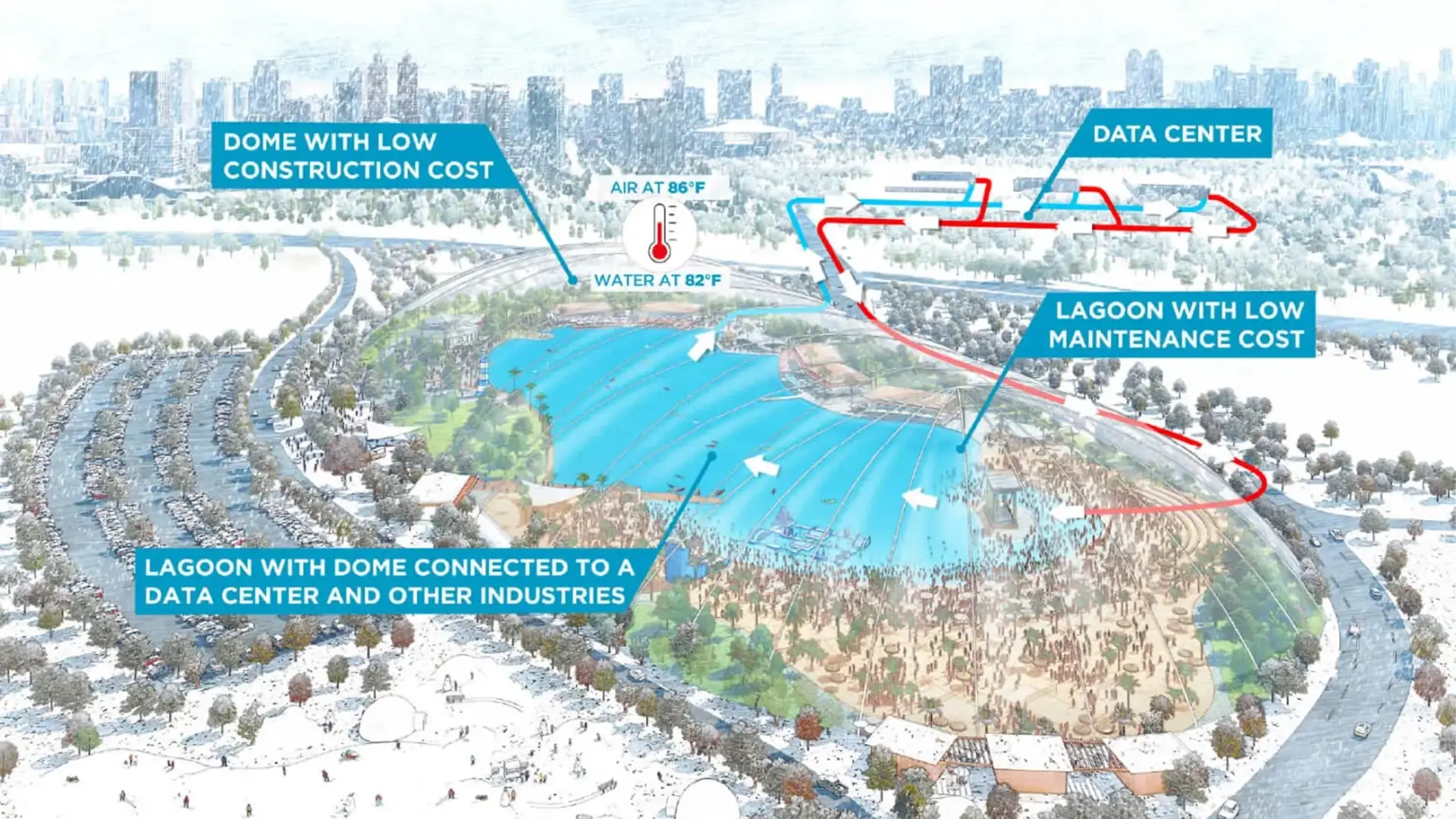
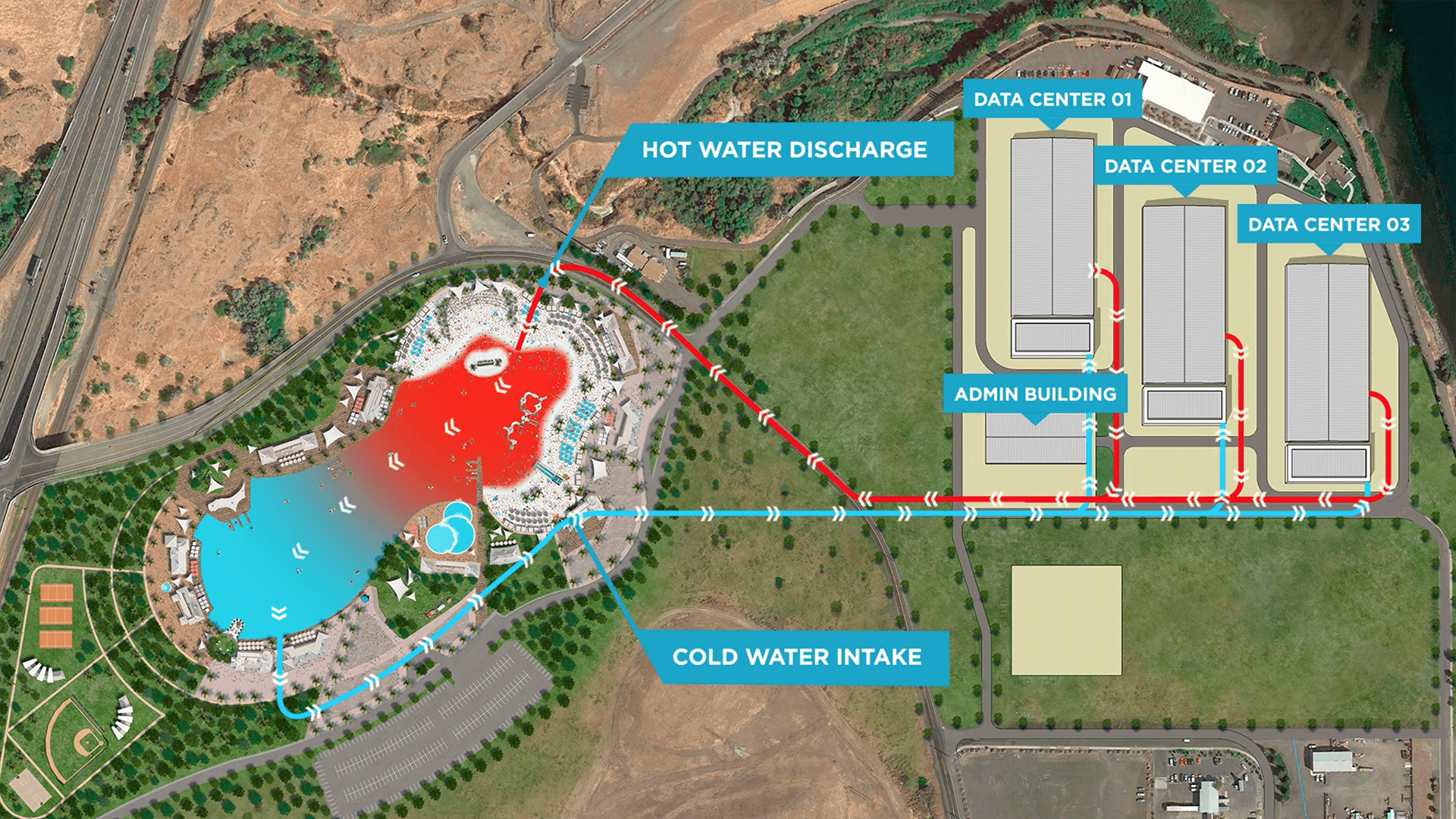
Crystal Lagoons has developed and patented a sustainable cooling system for industrial processes, such as thermal power plants and data centers, where a sustainable temperature-controlled lagoon is built in connection to an industrial process to provide high-quality cooling water for its cooling stage.
This technology has many advantages over current cooling technologies like “once-through cooling systems,” which are open cooling systems that produce environmental damage due to the withdrawal of large volumes of water from natural sources and the discharge of heated water back to the source, producing thermal pollution; and also when compared with cooling towers, which have high energy and water consumption, as well as high capital costs.
Current cooling technologies release large amounts of waste heat into the environment. In contrast, the cooling technology developed by Crystal Lagoons allows huge amounts of energy that are currently lost to be recovered and used for processes such as greenhouse heating, residential heating, and drying processes, to name just a few; or it can even be used to provide year-round pleasantly heated lagoons, used for recreational purposes, never before seen. Furthermore, the waste heat can be used to desalinate water with no additional energy by using Crystal Lagoons membrane distillation technologies, which help solve one of the world’s biggest problems: water scarcity.
THE CURRENT PROBLEM
Conventional Thermal Power Plant Cooling Systems
Approximately 80% of the world’s electricity is generated by fossil fuel power plants that require a cooling stage, and such facilities currently use very large volumes of water to cool their processes. Two commonly used cooling systems are OTC or once-through cooling systems, which have negative environmental impacts, and wet cooling tower systems, which have high capital and operational costs, large water and energy consumption, and produce pollution due to water discharge (blowdown) and drift. The other one is the wet cooling tower system, which has high capital and operating costs, generating pollution due to water discharge with high concentrations of chemicals and salts into natural water bodies. Additionally, it produces drift, consisting of a spray with water microparticles containing additives that are subsequently dispersed in the surrounding area, causing harmful effects on the ecosystem.
Once-through Cooling Systems:
Most thermal power plants in the world use once-through cooling systems, which operate by withdrawing large volumes of water directly from the sea or other natural sources (rivers, lakes, etc.). This system produces severe environmental damage during the water intake, because many aquatic organisms are caught up and subsequently killed in the process and at the water outlet, where hot water is discharged back into the sea (or lakes and rivers), generating thermal pollution and altering ecosystems. This process has been banned in various countries, including the U.S., due to its environmental impact on aquatic flora and fauna, requiring the use of closed circuit cooling systems.
Wet Cooling towers:
The current alternative to once-through cooling systems is the use of wet cooling towers. These cooling towers operate by transferring the heat into the atmosphere through an exchange between the hot water and the air inside evaporation towers. This technology is costly to install and operate, because it uses large amounts of energy, through the fans and pumps that are required. Furthermore, cooling towers dissipate heat through evaporation, and these high evaporation rates lead to high water consumption. Finally, cooling towers are prone to drift (water droplets carried in the air away from the tower that land on nearby terrain), and also require a permanent water flow to be discharged to maintain water quality in the towers; this increases water consumption even more, because large water volumes are needed for refill, due to evaporation and discharge.
CRYSTAL LAGOONS®
Sustainable Cooling Technology
Crystal Lagoons has developed and patented a state-of-the-art sustainable closed cooling system for industrial processes. This system can be used by thermal power plants, paper mills, refineries, foundries, concentrated solar power plants, and data centers, among others, to dissipate waste heat from industrial processes by using man-made sustainable lagoons in a closed-circuit cooling cycle.
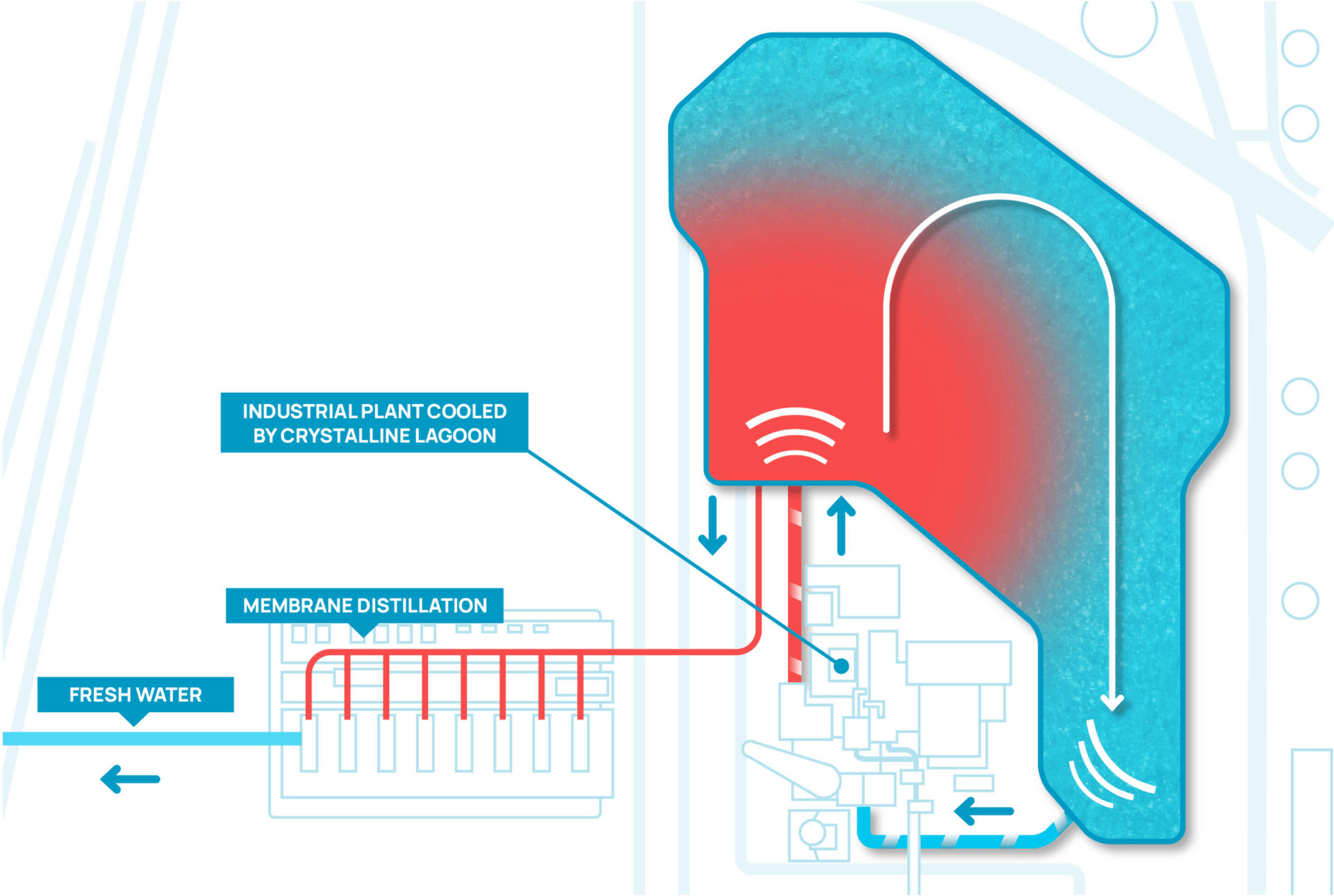
The sustainable cooling system Crystal Lagoons® operates by capturing high-quality water from a transparent lagoon to power the cooling cycle of the industrial process. The cooling water absorbs heat as it passes through the industrial process, and it is then discharged back into the lagoon, thus completing the closed cycle. The water cools as it flows through the man-made lagoon, where the heat is dissipated by evaporation, conduction, convection, and radiation.
It is important to mention that this technology has been patented in the United States under the Fast Track Green Technology Program of the United States Patent and Trademark Office (USPTO), where only 1 out of 1,500 patents are granted through this program, confirming the sustainable nature of our state-of-the-art cooling lagoons.
KEY ADVANTAGES
Benefits of Crystal Lagoons® Sustainable Cooling Technology
Advantages Compared to Once-Through Cooling Systems:
Advantages Compared to Wet Cooling Towers:
CASE STUDY
First Plant in Operation Using Crystal Lagoons® Sustainable Cooling Technology
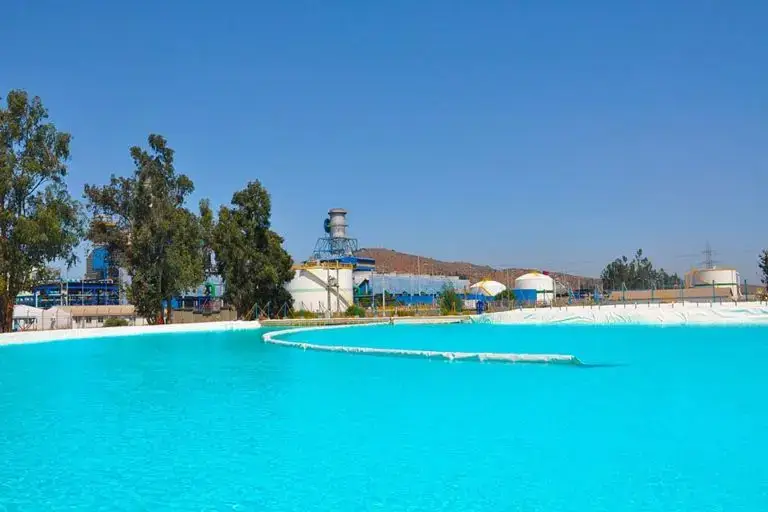
The San Isidro Sustainable Cooling Lagoon was the first sustainable cooling lagoon in the world, and was part of a combined cycle power plant owned by Endesa (a subsidiary of Enel from Italy). Crystal Lagoons carried out the design, construction, commissioning and operation of the San Isidro Cooling Lagoon, cooling down a portion of the power plant’s water flow, which was previously operated using a cooling tower system fed by well water. This experience and project have validated the computational simulation models and laboratory tests of the cooling technology analysis. It also facilitated empirical testing of the lagoon’s heat dissipation capacity. The overall results confirmed the capacity of the sustainable cooling technology; water analysis confirmed its excellent quality and that it eliminates scaling and biofouling in the piping and equipment. The cooling lagoon also provides an important feature for the power plant, generating a source of reserve water for the facility, as well as an aesthetical improvement to previously unused land, combining industrial and recreational opportunities.
ENERGY RECOVERED
Waste Heat Utilization
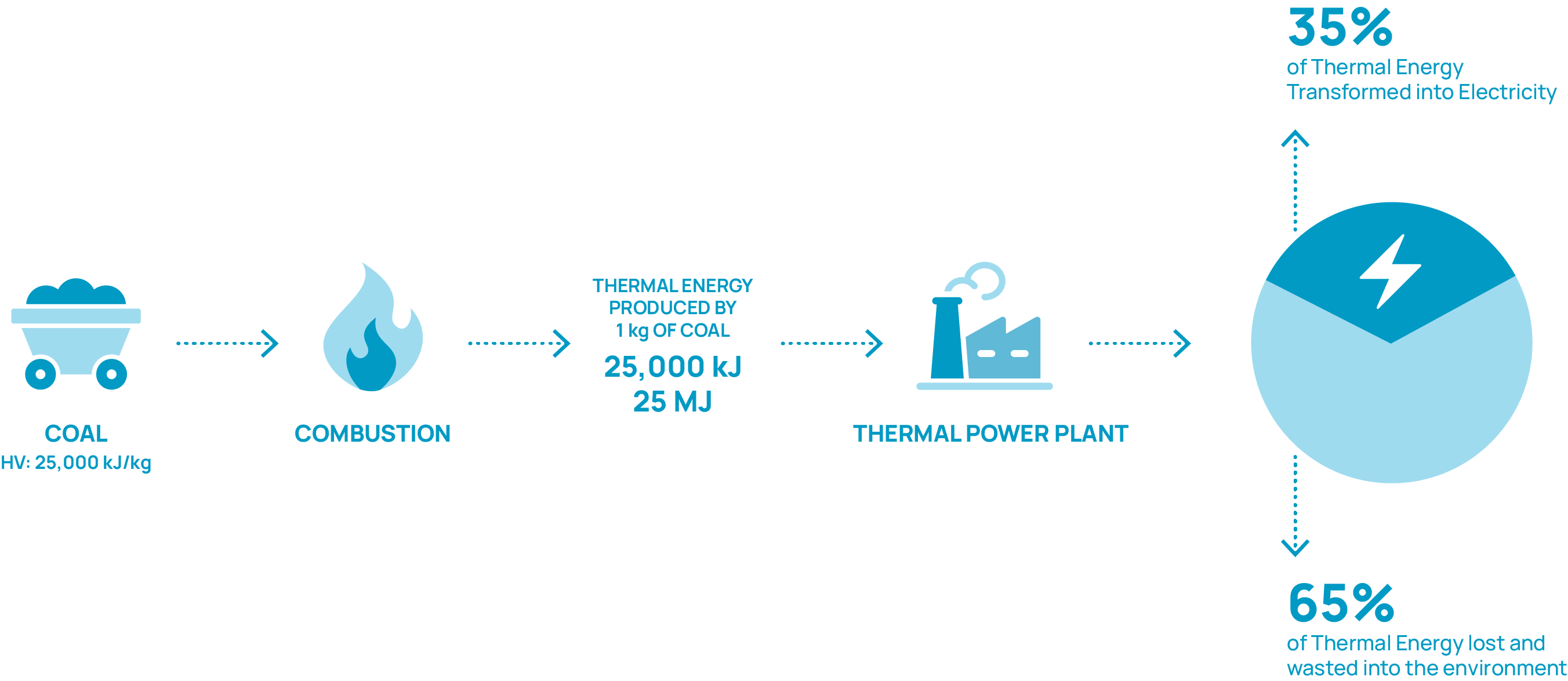
In conventional coal-fired power plants, only one third of the energy is transformed into electricity, while the remaining two thirds are lost to the environment through waste heat. Therefore, considerable amounts of thermal energy, in the form of large volumes of hot water, are wasted mainly through the cooling systems. It is estimated that the total amount of thermal energy wasted from industrial processes amounts to up to 10 times more than the energy produced by renewable energy plants (such as photovoltaic and wind power plants). In addition, if we were able to use all of the available thermal energy from power plants, carbon dioxide (CO2) emissions would be reduced by 50%. Crystal Lagoons® sustainable cooling technology allows facilities to capture waste heat from these processes and use it in different applications, such as residential heating, thermal desalination, greenhouses and pre-heating of fluids, among others.
The cleanest energy in the world
Utilizing Waste Heat Lost by Industrial Processes

Two-thirds of the energy generated by power plants is lost to the environment as waste heat. Crystal Lagoons has developed and patented a state-of-the-art technology that can sustainably cool power plants, data centers, and other industrial processes while also capturing and taking advantage of the waste heat that would otherwise be lost. This waste heat is equivalent to two times the energy produced by all renewable sources combined. Most importantly, the waste heat captured can be used for desalinating water using membrane distillation with no additional energy, helping solve one of the world’s biggest problems: water scarcity.
High-quality hot water is generated as a sub-product of the sustainable cooling system, where a cooling lagoon is connected to a thermal power plant that operates in a closed circuit. Such hot water flow can be used directly from the lagoon to generate fresh water through a Membrane Distillation process without requiring additional energy consumption. This technology promises to be a major breakthrough for the world.
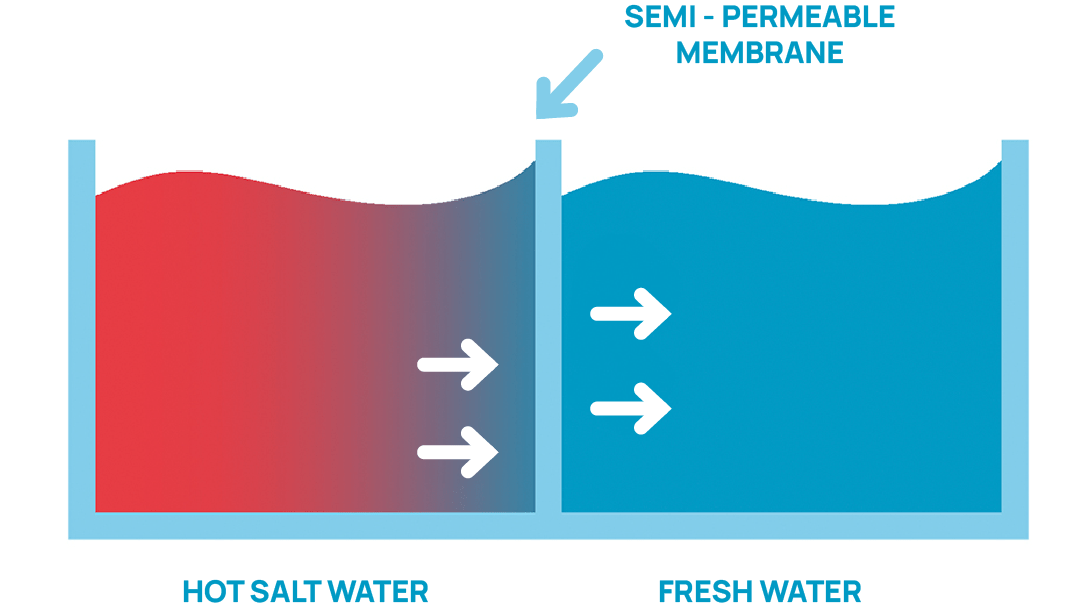
Membrane distillation is a desalination technology driven by a temperature gradient that allows fresh water to be extracted from hot salt water. The technology consists of water vapor passing through the membrane, forced by the temperature difference of the water that flows on both sides of the membrane. This technology requires hot seawater of high purity to avoid the membrane getting clogged, and to maintain the efficiency of the process.
In the world, there are more than 50,000 power plants and other industrial facilities that currently waste huge amounts of energy mainly through their cooling systems.
Crystal Lagoons has developed a technology that allows large amounts of waste thermal energy from industrial processes to be used in order to produce freshwater through membrane distillation, all at low costs, providing a possible solution to the most important problem in the world currently: water scarcity.
BEACH ALL YEAR-ROUND
Year-round Recreational Lagoons Heated with Wasted Energy
The energy recovered from industrial processes can also be used to heat PAL® lagoons year-round at no additional cost, using only residual energy. This creates a tropical-style lagoon with hot bathing water and warm air if a dome is incorporated. Thus, the lagoon is not only used for cooling but also opens up a new sustainable business opportunity that allows the community to enjoy beach life and water sports in any climate through ticketed entry to the lagoon.
50% LESS ENERGY
Conventional Air Conditioning and Heating Systems (HVAC)
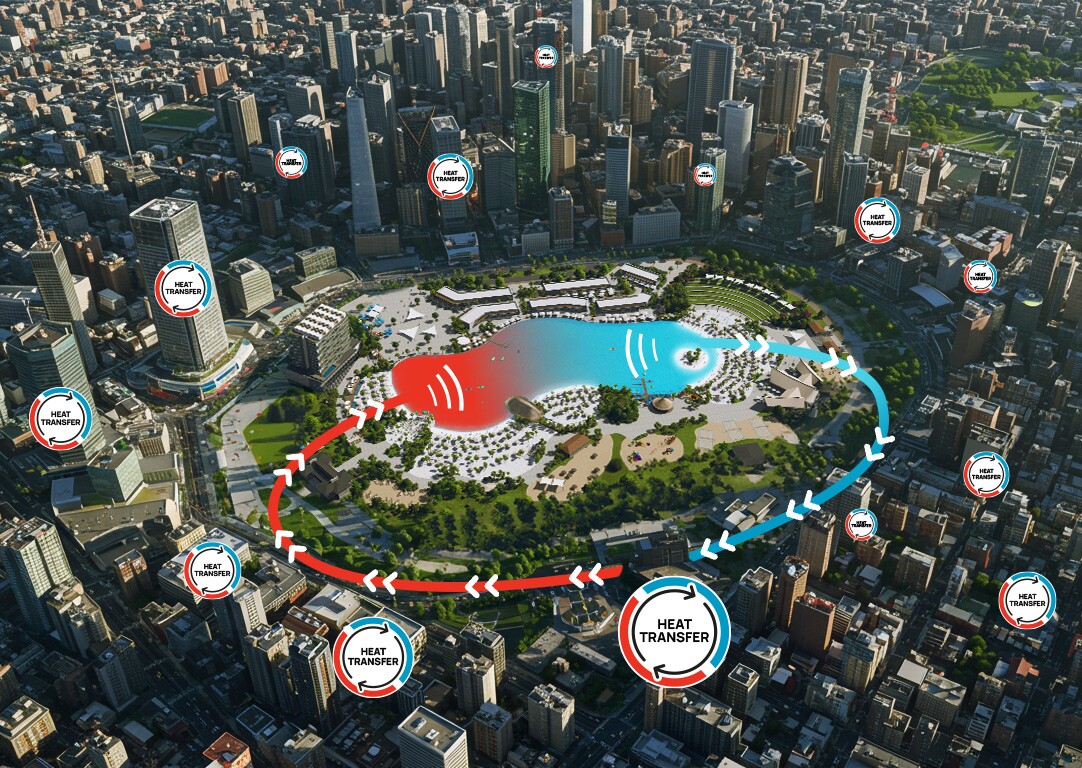
Crystal Lagoons has developed a technology that enables large bodies of water to be maintained with excellent water quality and at a very low cost. They can be built on the side of a commercial or residential facility in order to provide a stable media for heat transfer with Heat Pump systems and, therefore, provide air conditioning or heating to the facilities at very low costs, saving 50% in energy consumption compared to conventional systems.
Conventional air conditioning and heating systems (HVAC) operate by transferring heat to the outside air through heat pump systems. However, water has about four times more capacity for heat transfer; therefore, using water for cooling or heating spaces or facilities is more efficient than using air.
The Crystal Lagoons® solution provides turquoise, clear lagoons with excellent water quality at very low costs that can be built next to residential communities or commercial facilities (such as hotels, airports, etc.). This is ideal for supplying high-quality water for heat transfer and for providing air conditioning or heating as well to such facilities, all at low cost and generally saving up to 50% of energy consumption compared to conventional HVAC systems. Such lagoons can also be used for recreational purposes, enhancing the local landscape as the World’s Top Amenity.
OTHER APPLICATIONS
New Developments
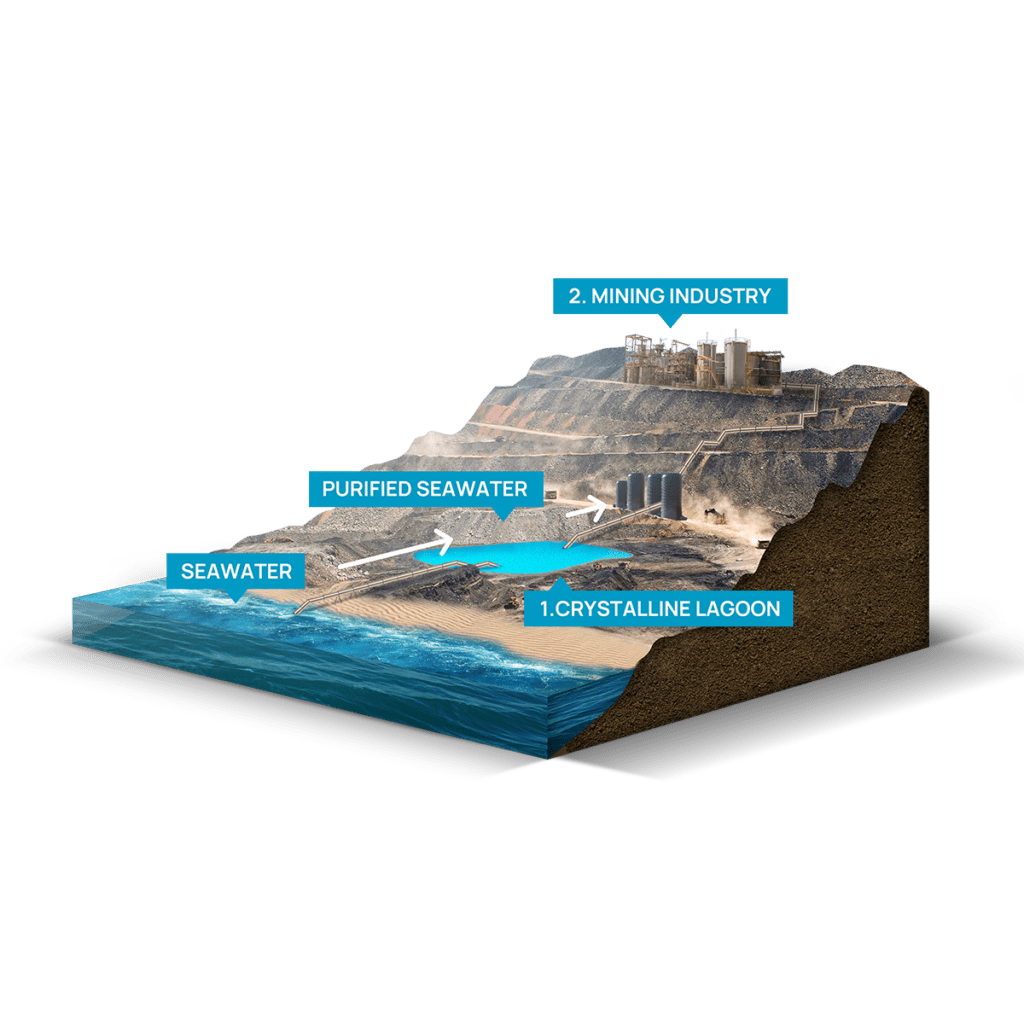
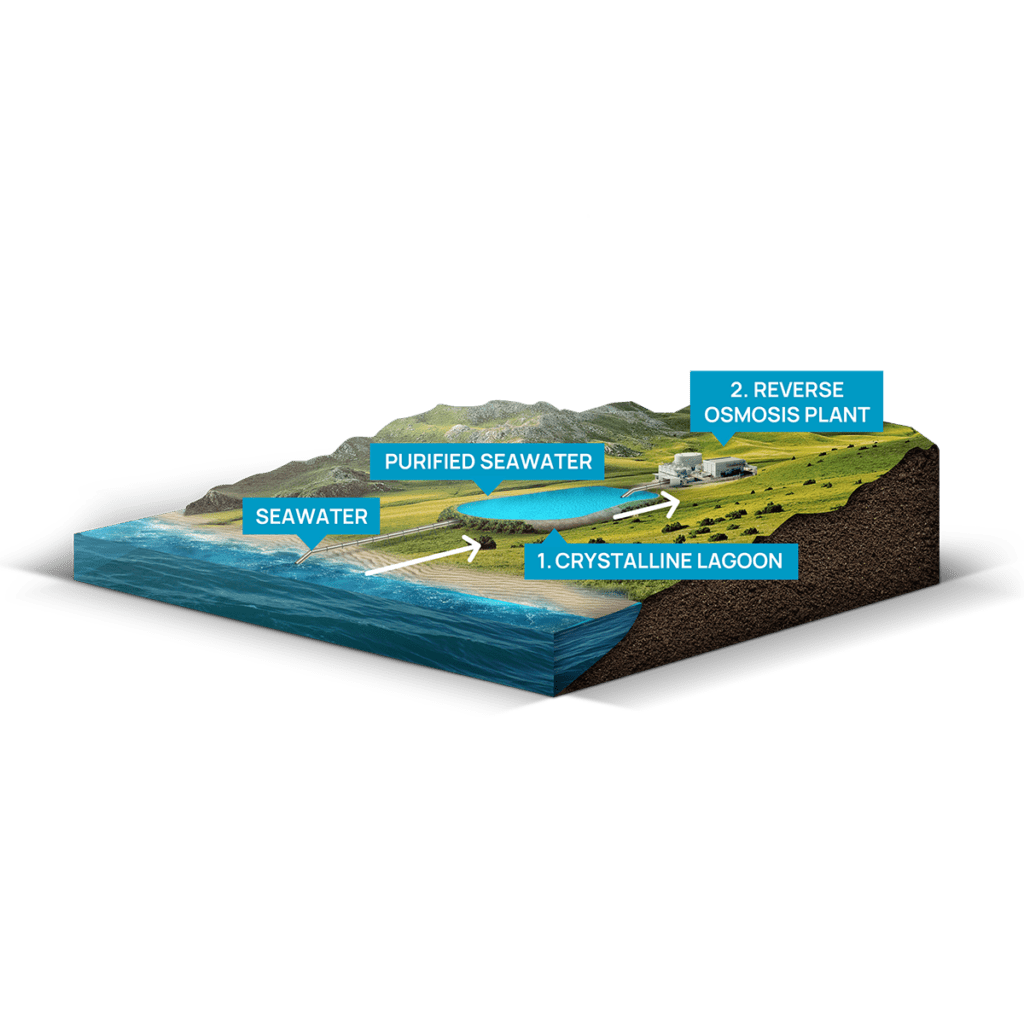
Crystal Lagoons® technology allows seawater to be pre-treated at low cost through a treatment lagoon, providing high-quality water for feeding the reverse osmosis process. This method considerably reduces investment and operational costs at the pretreatment stage, generating an efficient and sustainable alternative to current pre-treatment processes while creating a high-quality water reservoir that allows recreational use.
ON THE WATER
Floating Lagoons
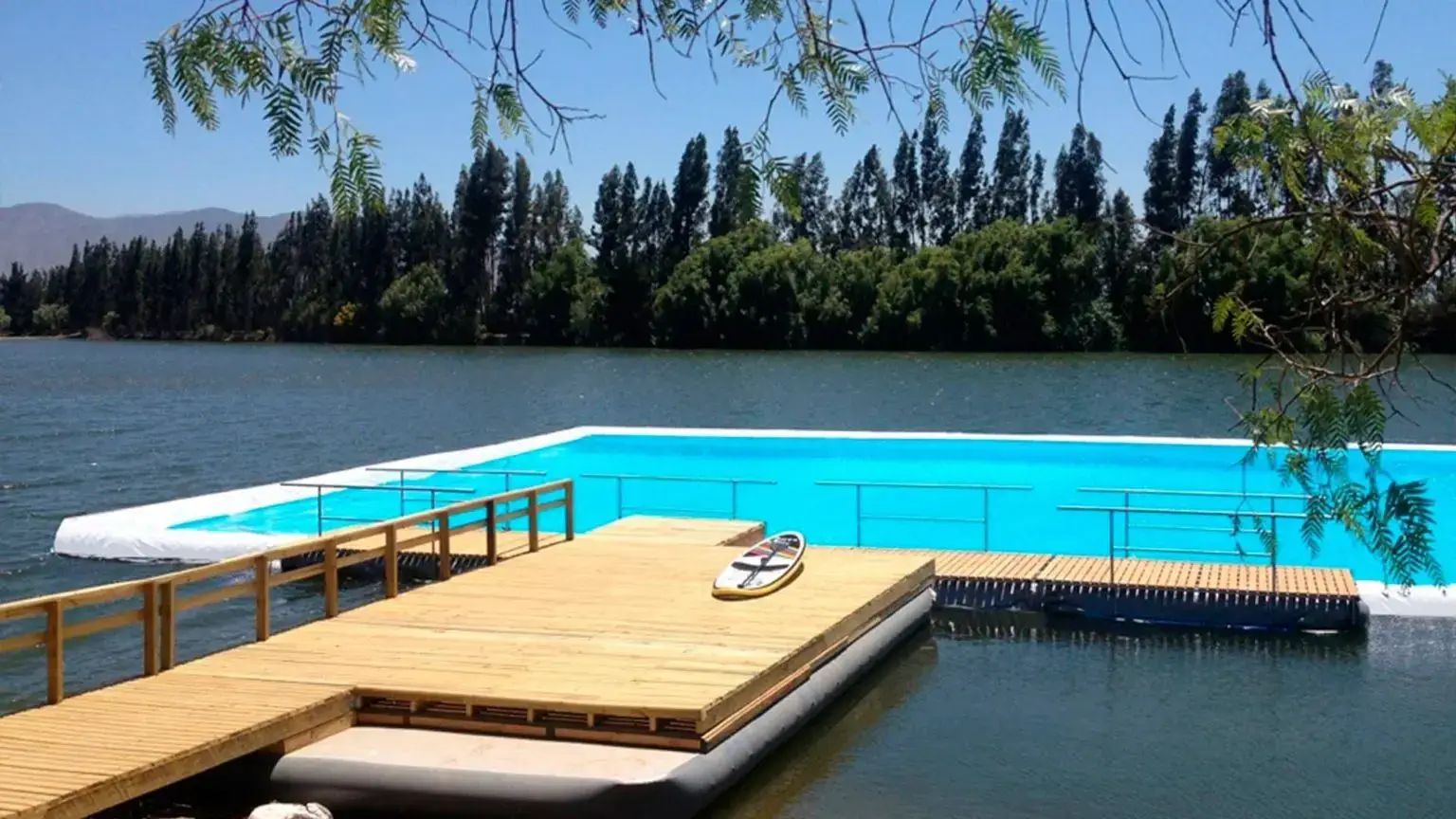
This new development by Crystal Lagoons allows floating crystalline lagoons to be built without using land in natural or man-made lakes with low water quality. Thanks to these floating lagoons, an idyllic beach paradise can be created, and water sports can be practiced safely, giving new value to spaces that could not be used for recreational purposes.
There are more than 50 million bodies of water in the world that are not used for recreational purposes due to poor water quality or unattractiveness. In the United States alone, there are more than 140,000 of these types of water bodies. Our new development, Floating Crystalline Lagoons, is changing this reality and generating a global impact by creating an idyllic beach-like environment where you can also practice watersports. This concept provides endless possibilities for using lakes, lagoons, rivers, bays, and the sea, with an attraction never before seen.
Imagine a city with lakes that are currently unused, which can become an unparalleled attraction by including a crystalline floating lagoon. This concept can change and revitalize city life, generating a new and refreshing look. Another relevant aspect is that the floating lagoons also allow industrial uses by generating floating cooling systems to provide high microbiological quality water to thermoelectric plants and other industrial processes.
These floating crystalline lagoons apply their proven and patented water treatment technology through floating structures installed inside larger bodies of water connected to the land via floating decks and bridges. Several projects are currently being developed around the world.
THE FULL VISION
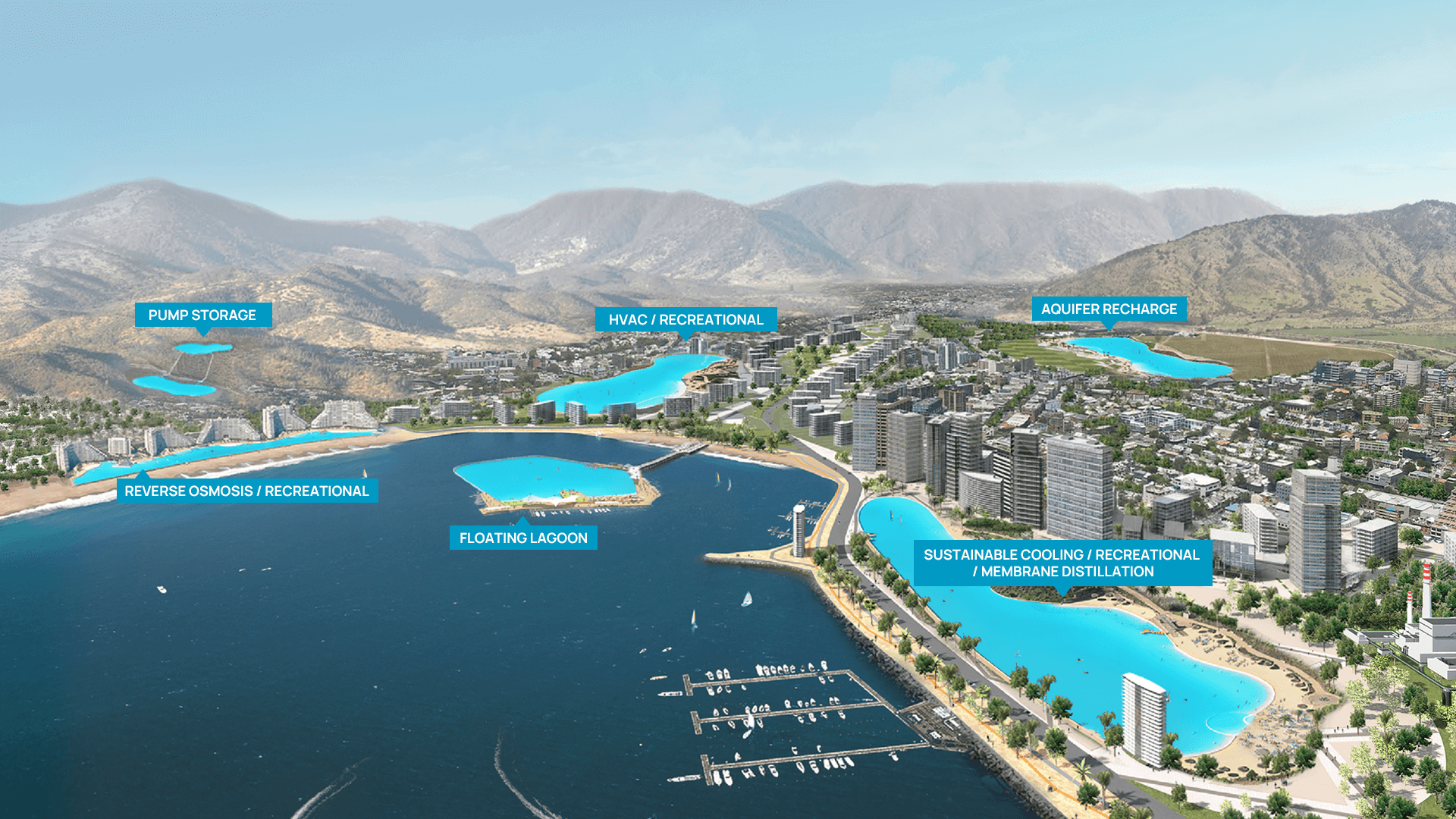
Crystal Lagoons® City
The Crystal Lagoons® city is a conceptual project that brings together all the different recreational and industrial applications of the technologies Crystal Lagoons offers, in both the public and private sectors, and for local communities to benefit from clean energy and water at very low costs, solving large global problems, while enjoying all the benefits of an idyllic beach lifestyle that Crystal Lagoons® technology provides.
The Crystal Lagoons® city includes several pristine clear lagoons with different applications: solving problems of pollution, producing freshwater without energy, improving the quality of life for people around the world, generating a safe recreational amenity without the use of land, providing continuity to renewable power plants, reducing pre-treatment costs for reverse osmosis processes, purifying seawater at low costs, and generating high-quality water reservoirs for their use in times of drought.
In the image, we can see the main park with a pristine clear lagoon and beach life as a main attraction that allows the safe practice of water sports while providing air conditioning and heating for a large number of nearby residential and commercial buildings, through heat pump systems. We can also see a floating lagoon that enables developers to take advantage of lakes and water bodies with poor water quality, creating a unique attraction that enables recreational uses such as swimming and sailing in a safe environment without using additional land.
A sustainable cooling lagoon can also be found in the industrial area, whose function is to cool the electricity generation process of a thermal power plant. The high quality hot water (by-product of the cooling system) is then sent to a membrane distillation process, where fresh water is produced without the use of additional energy, which can be used as drinking water, for irrigation, or other applications.
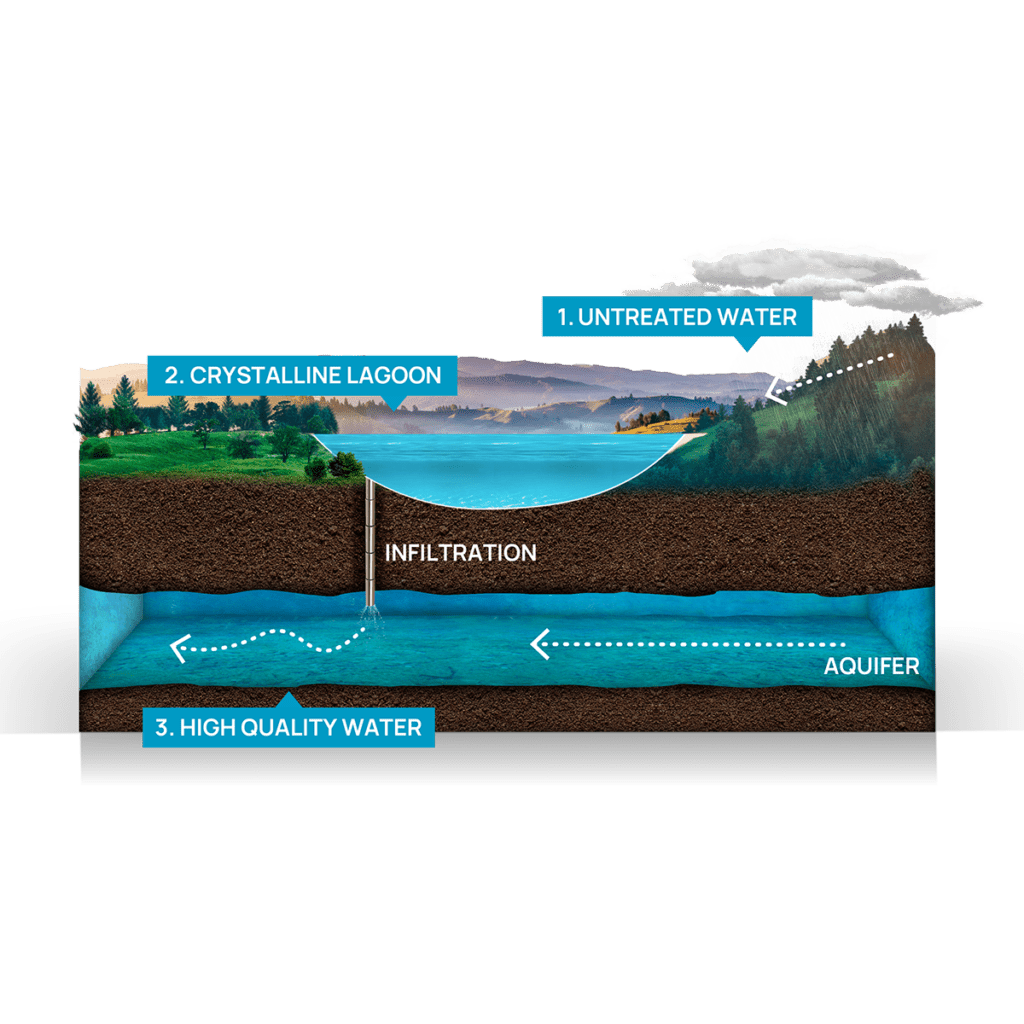
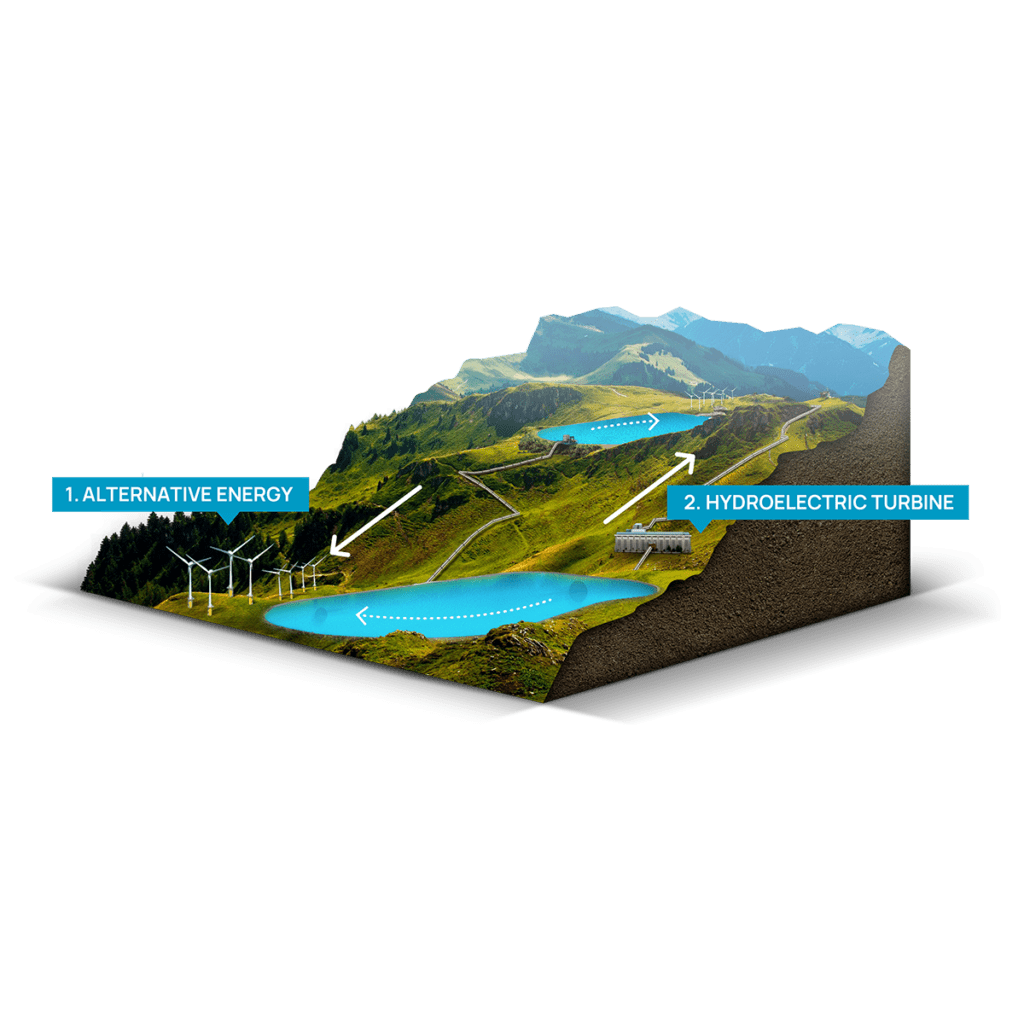
Furthermore, we can use this technology in a pump storage system for the pre-treatment of seawater for reverse osmosis systems and finally for artificial aquifer recharge processes, creating underground water reservoirs that can be used in times of drought.
To provide the best experiences, we use technologies like cookies to store and/or access device information. Consenting to these technologies will allow us to process data such as browsing behavior or unique IDs on this site. Not consenting or withdrawing consent may adversely affect certain features and functions.
To provide the best experiences, we use technologies like cookies to store and/or access device information. Consenting to these technologies will allow us to process data such as browsing behavior or unique IDs on this site. Not consenting or withdrawing consent may adversely affect certain features and functions.