Latin America shaping up as the Crystal Lagoons main market

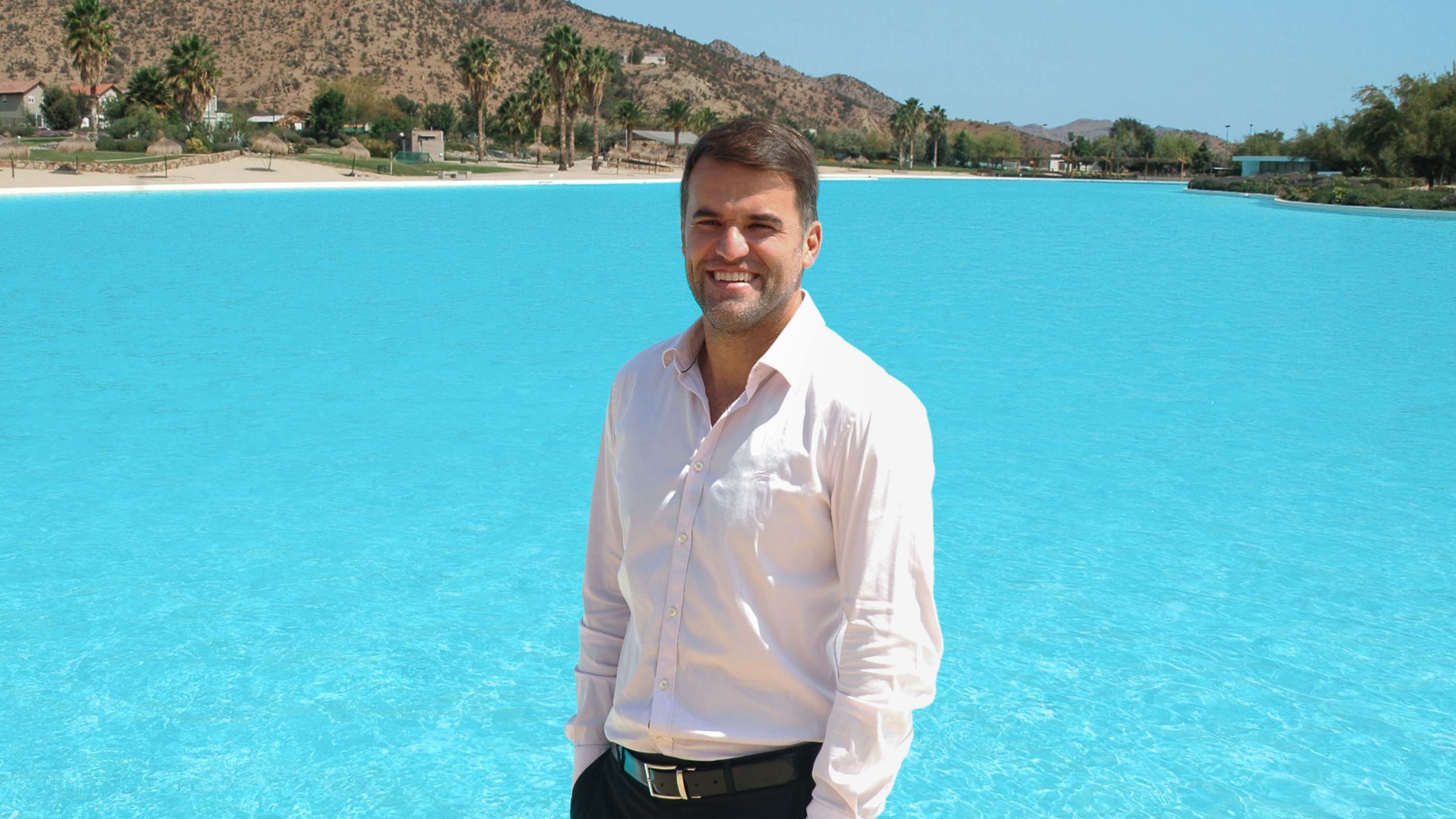
Interview to Jean Pierre Juanchich, regional director of Crystal Lagoons for Latin America

Crystal Lagoons totals 197 projects in different stages of development in Latin America. In fact, it is the continent where the innovation multinational totals the largest number of projects with a long list of successful developments and non-stop growth.

According to Jean Pierre Juanchich, regional director of Crystal Lagoons for Latin America, “ten new lagoon complexes are due to be inaugurated in 2022 in countries such as Argentina, Colombia, Mexico, Paraguay and Bolivia”.

What is the country that leads the inauguration of new projects in the continent?

Argentina will see the largest number of new lagoons officially opened this year, bringing the total to 43 either under negotiation or at varying stages of development in several cities. This year will see the inauguration of lagoons in: Aquavista, in Córdoba; Remeros Beach, in Buenos Aires; La Mansa, in Pinamar; and Developer Aqua, in Mar del Plata adding to the already successful developments of Terralagos, Lagoon Pilar, Lagoon Hudson and Vida Lagoon.

Are there any relevant contracts in Latin America that have been recently signed?

One of the largest contracts to be signed recently by Crystal Lagoons in Latin America was in Colombia. Based on the success of the multinational’s first Colombian complex, Baia Kristal, in association with AED Constructores, this led both firms to sign a second contract; a master agreement for 13 new Public Access Lagoons™ projects, also known as PAL™ developments, that will add value to two local tourist areas – the Coffee Region and the Colombian Caribbean.

What other market stands out in the region?

In Mexico, Crystal Lagoons has projects in Mazatlán, Cabo San Lucas, Cancun, Toluca, Veracruz and Monterrey. The 5-hectare Bluú Habitat Lagoons complex in Mazatlán is the most recent to be inaugurated, this year.

Is there any country that, despite the economic contraction, is standing out in its dynamism of contracts?

Paraguay’s recent economic growth has opened up opportunities for Crystal Lagoons in the areas of real estate and under the PAL™ model. In this country, the firm has 18 projects at different stages of development and negotiation, of which two will be inaugurated this year – Costa del Lago (Hernandarias) and Aqua Terra (Luque).

Which country in the region has a special characteristic?

Bolivia is another market with great potential. This landlocked country is home to Playa Turquesa, a 13-hectare crystalline lagoon, the second largest in the world, and Mar Adentro a 3.4-hectare lagoon. At the moment, Crystal Lagoons is in advanced negotiations for new developments in Bolivia.

Outstanding news

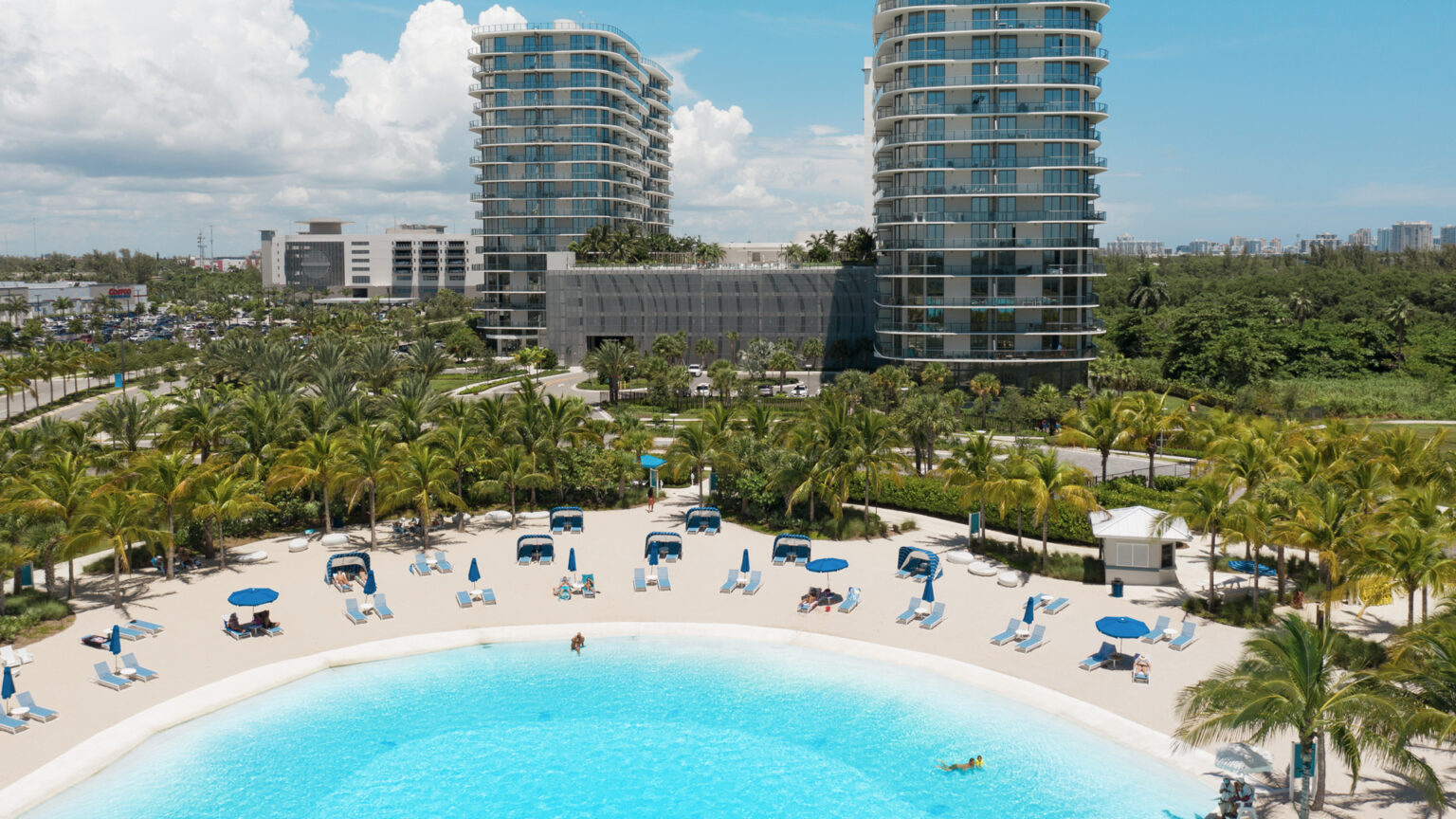
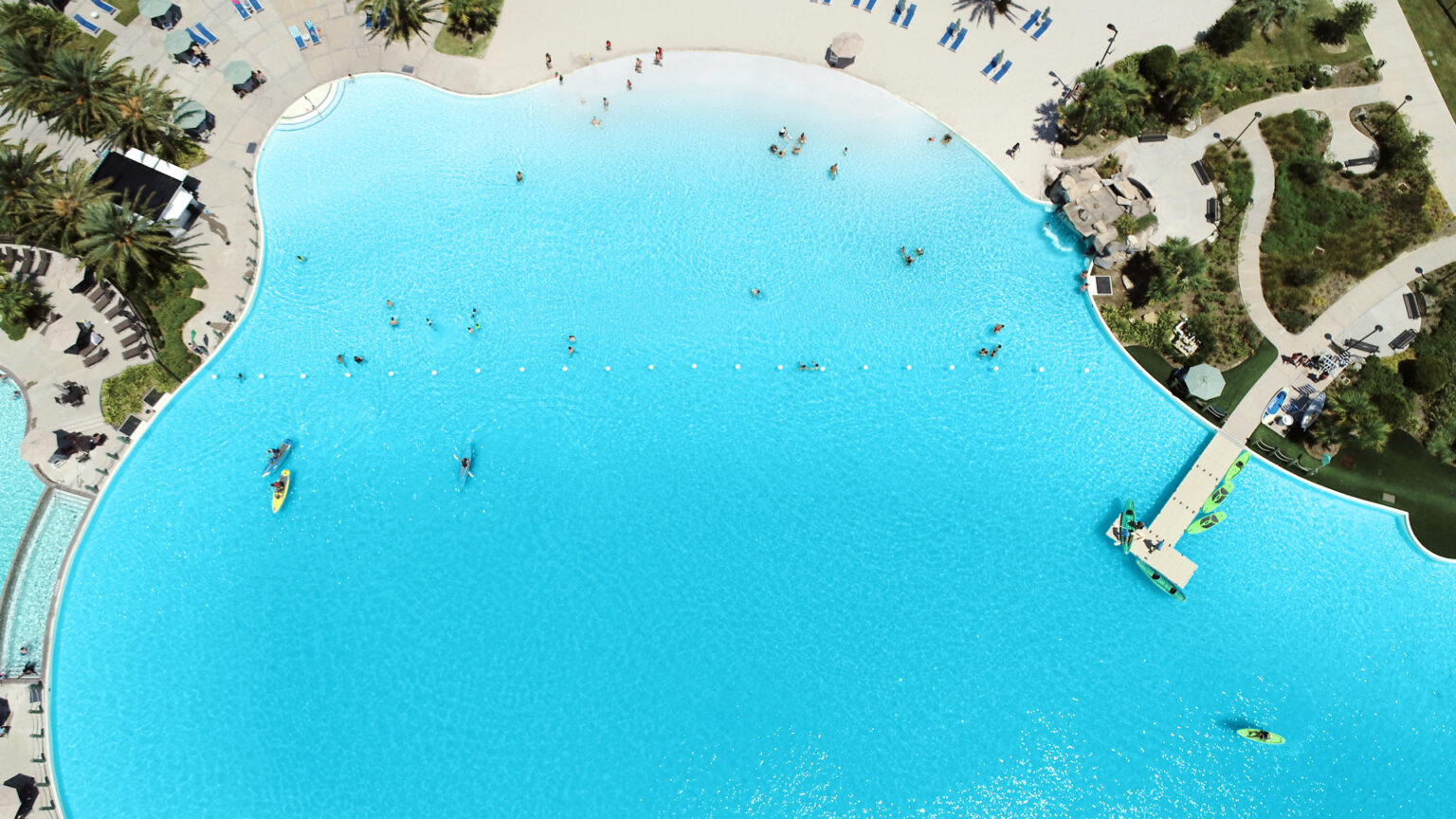
These are compact-sized lagoons that outperform traditional pools, generating greater value for real estate developers and hospitality projects with a sustainable, iconic, and highly profitable amenity.

In real estate and hospitality development, the choice of aquatic amenity is no longer just an architectural decision; it is a financial and strategic one. The difference between a traditional swimming pool and a Small Lagoons by Crystal Lagoonscan determine the project’s positioning, its sales velocity, its economic sustainability, and, ultimately, its return on investment.

Small Lagoons by Crystal Lagoons combine the “wow” effect of a Crystal Lagoons® amenity (turquoise waters, beaches, and a resort-like atmosphere) with an optimized format in terms of area, investment, and operation, ideal for projects that do not require a large-scale lagoon but do need a top-level, differentiating amenity.

What is a Small Lagoons by Crystal Lagoons™?

These compact-sized lagoons are smaller-scale crystalline lagoons, designed specifically for:

  • Medium- or high-density real estate projects (residential buildings, condominiums, mixed-use).
  • Hotels and boutique resorts that need a major differentiator without a large footprint.
  • Urban or second-row developments that require a Crystal Lagoons® amenity, but with more contained economic and financial indicators.

They retain all the attributes of Crystal Lagoons® technology:

  • Turquoise, crystalline water.
  • Closed-circuit operation with low water and energy consumption.
  • Versatility for swimming, non-motorized water sports, and recreational use.

But at a scale that facilitates its integration into more compact sites, with faster execution times and lower initial investment.

Small Lagoons vs. traditional pools: the comparison that matters to investors

  1. CapEx and OpEx: efficiency per square meter of amenity

At first glance, a traditional pool may seem like the “safe” option. However, when you analyze the value generated for every dollar invested, the equation changes.

Traditional pools

  • They are perceived as standardized: guests or residents consider them as something basic, not as a plus.
  • To create visual impact, they require greater depth and surface area, which means more structure, more concrete, and more equipment.
  • Filtration and chemical costs increase in direct proportion to the volume of water.

Small Lagoons by Crystal Lagoons

  • They offer a much greater visual and experiential impact thanks to their horizontal scale, turquoise color, and natural-lagoon design.
  • They allow for optimized water and energy use through Crystal Lagoons® technology, specifically engineered to reduce consumption and operating costs.
  • They generate a perception of a “premium” amenity, comparable to that of a luxury beachfront resort, even on inland or second-row sites.

In simple terms, a Small Lagoons by Crystal Lagoonsturns the “pool” budget into a flagship asset of the project, not just a checklist cost.

  1. Perception of value: from “having a pool” to “living in front of a lagoon”

From the end user’s perspective (unit buyer, guest, or tourist), the difference is radical:

  • A traditional swimming pool is an expected amenity.
  • A Small Lagoons by Crystal Lagoons is a lifestyle promise:
    • Your own beach within the project.
    • Space for recreational and family activities.
    • An iconic landscape visible from apartments, rooms, and common areas.

For the investor, this translates into:

  • Greater willingness to pay for units facing the lagoon versus those facing a standard pool.
  • Better commercial positioning on listing sites, with brokers, and in campaigns (it’s not the same to promote a “pool” as a “crystalline lagoon with beaches”).
  • Higher price per square meter for units with views of or close access to the Small Lagoon.
  1. Profitability in hospitality: revenue beyond the room

In hospitality projects, a Small Lagoons by Crystal Lagoons can become the centerpiece of an entire revenue ecosystem:

Direct impact

  • Higher ADR (Average Daily Rate): the hotel or resort can charge higher rates by offering a differentiated and visually striking experience.
  • Higher occupancy: a smaller-scale lagoon becomes a travel motivator in itself, not just an additional service.

Indirect impact

  • Increase in F&B revenue (restaurants, bars, and beach clubs by the lagoon).
  • Opportunity for waterfront events (weddings, brand launches, boutique concerts).
  • Possibility of special packages and experiences (sunset experiences, water sports, day passes).

While a traditional swimming pool rarely generates storytelling, Small Lagoons by Crystal Lagoonsfuels campaigns, content, and commercial partnerships.

  1. Sustainability and ESG: a key argument for banks and funds

ESG criteria have become a decisive factor in evaluating real estate and hospitality projects. Here, Small Lagoons by Crystal Lagoons offer clear advantages over many large-scale traditional pools:

  • Closed-circuit operation, with replacement only of the water lost through evaporation.
  • Possibility of using fresh, salt, or brackish water, avoiding competition with potable water resources, which is especially relevant in areas of water stress.
  • Treatment and filtration technology designed to reduce energy and chemical use compared to conventional systems.

For the institutional investor or financing bank, this strengthens the project as:

  • More environmentally responsible assets, with a stronger ESG narrative.
  • Projects with long-term amenities that are less exposed to regulatory or social scrutiny.

For the institutional investor or financing bank, this strengthens the project as:

When does a Small Lagoons by Crystal Lagoons™ make more sense than a traditional swimming pool?

These smaller lagoons are especially recommended when the investor is looking to:

In real estate developments

  • Differentiate a condominium or residential building in saturated markets.
  • Increase land value in inland urban plots or in second-row beachfront sites.
  • Create a premium amenity in mixed-use projects (retail + residential + offices).

In hospitality projects

  • Elevate a hotel or resort into a destination category without relying on a prime beachfront location.
  • Renovate an existing asset by replacing an unappealing traditional pool with a high-impact Small Lagoons by Crystal Lagoons
  • Reposition a hotel as a regional benchmark for innovation and vacation experience.

Small Lagoons by Crystal Lagoons™: Maximum return per cubic meter of water

In a context where every CapEx decision must justify its impact on sales, rates, occupancy, and resale value, Small Lagoons by Crystal Lagoons offer investors something a traditional swimming pool can hardly deliver:

  • A true market differentiator.
  • An iconic amenity that enhances the project’s positioning.
  • A catalyst that accelerates the project’s sales velocity.
  • The justification for a price premium per square meter.
  • An asset aligned with demand for high-end vacation experiences, as well as sustainability and ESG criteria.

In today’s market, true innovation isn’t about building bigger; it’s about building smarter. Small Lagoons by Crystal Lagoons represent that applied intelligence, delivering a high–value-added real estate investment that combines luxury, sustainability, and profitability at any scale.

Original content

More than a world record: How the project that “seemed impossible” validated a business model that is now redefining global real estate development.

For real estate developers and leaders in the hospitality industry, innovation is not just a buzzword; it is the difference between a project that stalls and one that redefines the market. In the modern history of real estate amenities, there is a clear “before and after” marked by a specific turning point: the inauguration of the crystalline lagoon at San Alfonso del Mar in Chile.

Located in Algarrobo, about 90 km from Santiago, Chile, this second-home complex was built around an approximately 20-acre crystalline lagoon powered by Crystal Lagoons® patented technology. From that point on, the paradigm changed forever. San Alfonso del Mar was not just the first large-scale project; it was the ultimate proof of concept, the living laboratory that demonstrated to the financial and real estate world that the “lagoon effect” was real, profitable, and sustainable.

San Alfonso del Mar: the lagoon that changed the amenities industry

Before San Alfonso del Mar, the idea of maintaining a crystalline body of water, even of limited size, was economically unfeasible. The innovation developed by Fernando Fischmann made it possible to create and operate monumental lagoons with low water, energy, and chemical consumption, opening up an entirely new amenity category.

Today, that first lagoon triggered an expansion to more than 1,000 projects in different stages of development and negotiation across over 60 countries, consolidating Crystal Lagoons as a global benchmark.

The 5 key milestones of the San Alfonso del Mar lagoon

Milestone 1: The first crystalline lagoon with Crystal Lagoons® technology

San Alfonso del Mar was the world’s first project to incorporate Crystal Lagoons® technology to create a large lagoon with turquoise waters and high transparency next to the Pacific Ocean.

For developers, this meant something unprecedented:

  • Testing, at real scale, a technology that made it possible to build lagoons of virtually unlimited size.
  • Transforming a traditional coastal site into a second-home resort with controlled and safe “beach life.”

This first pilot became the “before and after” for the company and for the entire aquatic amenities market.

Milestone 2: Guinness World Record and unprecedented scale

In 2007, the San Alfonso del Mar lagoon was awarded the Guinness World Record as the world’s largest crystalline lagoon/pool, thanks to its dimensions:

  • More than 1,013 meters in length.
  • Approximately 20 acres of surface area.
  • 250 million liters of seawater.

Although Citystars Sharm El Sheikh in Egypt later surpassed it, the symbolic impact of the record remains: it proved that Crystal Lagoons® technology could successfully operate at scales that were previously considered impossible.

For the positioning of real estate and hospitality projects, this record meant:

  • Turning the amenity into global news.
  • Associating the development with a worldwide milestone, raising its perceived value and tourist appeal.

Milestone 3: From pilot to one of the most successful second-home resorts in the region

Originally, San Alfonso del Mar was conceived for around 400 apartments. The success of the crystalline lagoon led the project to grow to approximately 1,400 units, all with views of the ocean and the lagoon.

The lagoon:

  • Transformed Algarrobo into one of Chile’s most successful beach resorts.
  • Positioned the complex as the most successful second-home resort in the region, doubling the initial sales prices.

For a developer, this milestone demonstrates that a crystalline lagoon can:

  • Accelerate the sales velocity.
  • Justify higher prices per square meter.
  • Extend the high season and overall occupancy.

Milestone 4: A global media icon that positioned the brand

More than two decades after its inauguration, San Alfonso del Mar continues to appear in international media, rankings, and lists of “places you must see at least once in your life.”

Media outlets from different countries have described it as:

  • “A portion of ocean encapsulated” or “the most impressive swimming pool in the world.”

This media magnetism turned the lagoon into:

  • The global calling card for Crystal Lagoons® technology.
  • A case study in organic marketing for the company and for the resort itself.

For developers and hospitality operators, this translates into:

  • Global reach without an equivalent additional investment in media.
  • An amenity that generates constant organic content (photos, videos, social media) created by the visitors themselves.

Milestone 5: Platform for global expansion and model for new developments

San Alfonso del Mar was not just a one-off success: it became the reference model that allowed Crystal Lagoons to scale its business to more than 1,000 projects in different stages across over 60 countries, from the Middle East to the United States, Asia, and Europe.

From this project onward, the technology was applied to:

  • Residential and second-home developments.
  • Luxury resorts and hotels.
  • Public Access Lagoons® projects, also known as PAL® developments, a public-access model that opens up new revenue streams through ticketing, events, dining, and retail.

For investors and developers, the strategic message is clear:

  • San Alfonso del Mar served as a successful “prototype,” proving the technical, economic, and commercial viability of the technology.
  • This success story now supports large-scale projects around the world, reducing the perceived risk for banks, funds, and hotel chains.

The lagoon that opened a new chapter for resorts and amenity-driven developments

San Alfonso del Mar proved that a large-scale crystalline lagoon can:

  • Change the destiny of a project and an entire city.
  • Generate added value, faster sales velocity, and global positioning.
  • Be the starting point for a scalable, sustainable, and highly profitable technology for real estate and hospitality developments.

For developers, the question is no longer whether a Crystal Lagoons® amenity works, but how to replicate the “San Alfonso del Mar effect” in their next project and turn an amenity into the true value driver of the master plan.

Original content.

Behind the multinational innovation company’s iconic turquoise lagoons lies a sustainable technology that minimizes water, energy, and chemical use, enhancing maintenance and operating costs for developers and operators.

For visionary real estate developers and investors, the image of a crystalline turquoise water lagoon is an undeniable magnet for a project’s value and demand. However, a critical question usually arises immediately: How is a body of water of this size kept in pristine condition? Is the maintenance of Crystal Lagoons a financial and operational challenge?

Behind this multinational innovation company’s lagoons lie a combination of patented technologies designed to be efficient and scalable in any project.

For those considering integrating this amenity into a residential, mixed-use, or PAL® development, understanding the cost of lagoon maintenance and how it works is key to making informed investment decisions.

The End of the Conventional Filtration Era

A common point of comparison is between the maintenance of a Crystal Lagoons® amenity and that of a swimming pool or water park. If traditional filtration technology were used, the energy, chemical, and staffing costs would be prohibitive for bodies of water measuring several hectares in size.

Crystal Lagoons addressed this challenge by developing a technology that does not require constant filtration of all the water. Instead, it uses a telemetry-based disinfection approach that addresses issues before they spread, maintaining water quality with minimal chemical intervention.

The Three Pillars of the Sustainable Purification Process

Crystal Lagoons® technology is based on a system of three integrated components that work in harmony to ensure water transparency with minimal resource consumption.

  1. Pulsed Disinfection Treatment (Fewer Chemicals)

Unlike swimming pools, which require constantly high levels of chlorine or other disinfectants, Crystal Lagoons® amenities use a system of controlled pulses of additives.

  • How it works: Strategically placed sensors continuously monitor water quality in real-time. When a need is detected, the system injects micro-pulses of disinfecting agents only at the specific points and exact moments where they are required.
  • Key fact: This method enables the use of up to 100 times fewer chemicals than traditional swimming pool treatment systems, drastically reducing operating costs and environmental impact.
  1. Low-Cost Ultrasonic Filtration (Less Energy)

This is the heart of energy efficiency. The technology does not filter the entire volume of water. Instead, it applies ultrasonic waves that cause dirt particles to agglomerate at the bottom of the lagoon.

  • How it works: A mobile suction system, similar to a large-scale robotic cleaner, moves along the bottom, collecting these agglomerated particles. Only the water drawn in by this device passes through a small and efficient filtration system.
  • Key fact: Thanks to this, Crystal Lagoons technology uses only 2% of the energy required by a conventional filtration system for an equivalent body of water. This is a key factor in the lagoon’s low maintenance cost.
  1. Telemetric Control and Remote Monitoring (Less Staff)

The operation does not depend on an army of on-site technicians. The entire process is supervised 24/7 from Crystal Lagoons headquarters through a cloud-based telemetric platform.

  • How it works: Sensor data is constantly sent to the central control center, where advanced algorithms and specialists monitor the physicochemical parameters. The system automatically adjusts disinfection pulses and filtration cycles without direct human intervention on-site.
  • The benefit: This ensures consistently optimal water quality and reduces the need for permanent specialized staff at the development, simplifying management for the developer.

A Luxury Amenity with Low-Cost Operation

Crystal Lagoons® technology has transformed what seemed like an insurmountable obstacle, the maintenance of large bodies of water, into one of its greatest strengths.

For real estate developers, this means being able to offer a world-class amenity capable of increasing property value and attracting massive demand, with the confidence that the maintenance of Crystal Lagoons is a sustainable, automated process and that the lagoon maintenance cost is marginal compared to the value it generates. The turquoise lagoons are not just an aesthetic dream; they are a solid operational and financial reality thanks to intelligent, 21st-century lagoon purification.