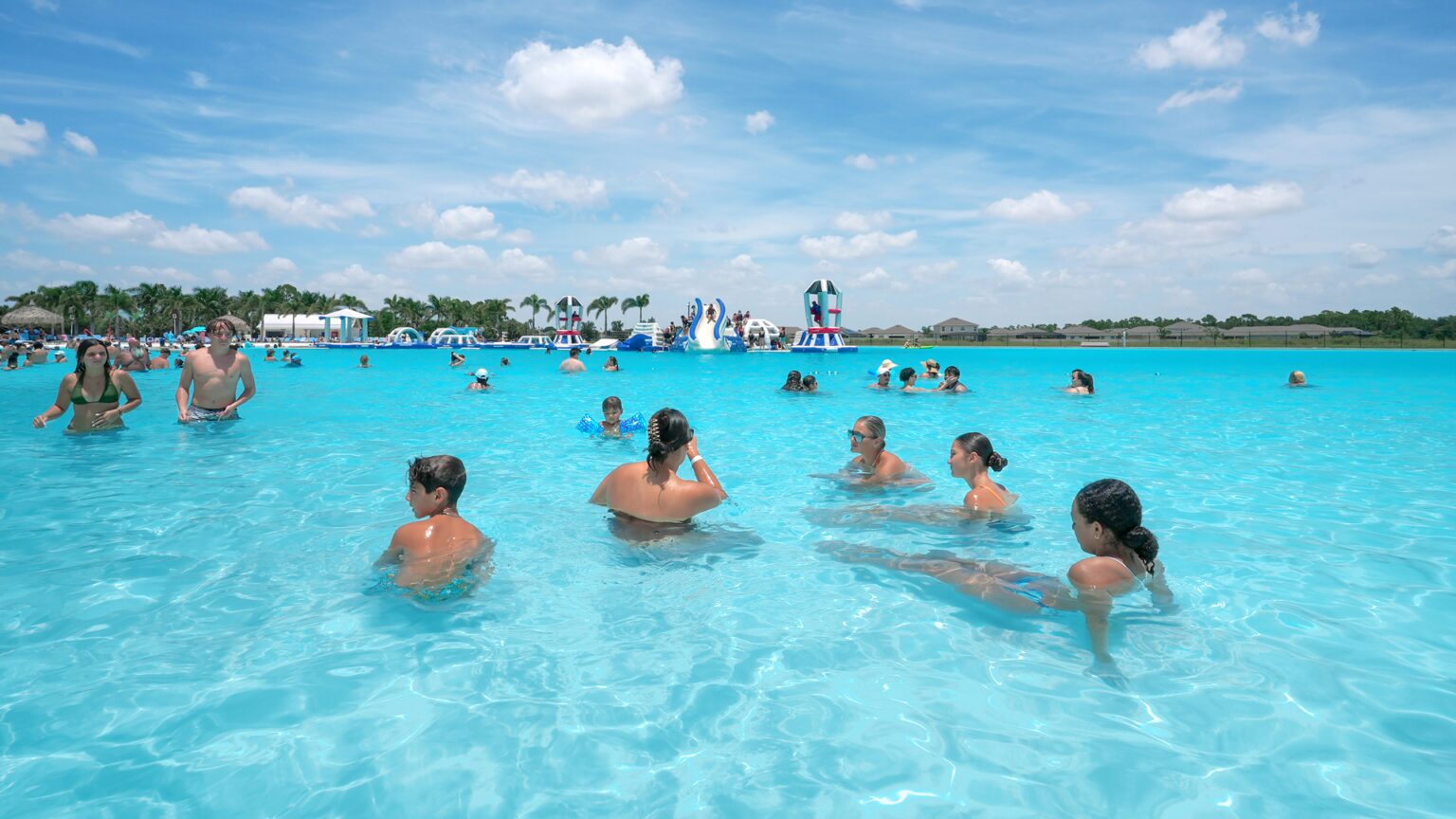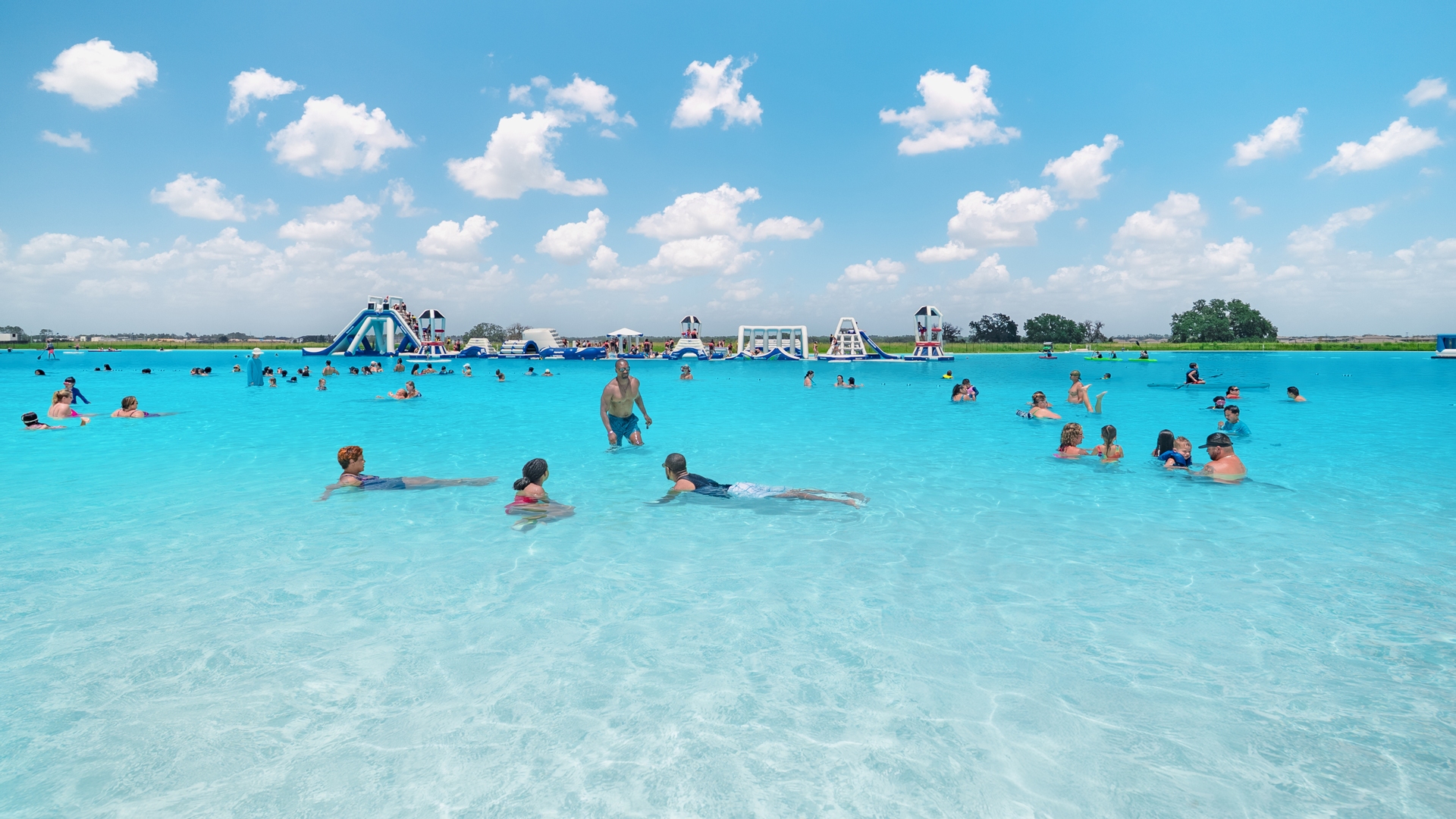
Not Just Idyllic Beach Lifestyle, a Crystalline Lagoon Also Increases Return on Investment and Property Value.

A lagoon powered by Crystal Lagoons® technology changes the game: it doesn’t operate as an “add-on,” but as the project’s commercial centerpiece, capable of turning a development into a destination, increasing value per square meter, accelerating sales, and opening new revenue streams.

In real estate, ROI isn’t something you “feel”: it’s measured. And when we talk about amenities, the critical question for any developer isn’t whether something looks spectacular, but how much it increases value, how much it accelerates sales velocity, and how sustainable (and defensible) those results are over time.

That’s where a lagoon powered by Crystal Lagoons® technology changes the game: it doesn’t operate as an “add-on,” but as the project’s commercial centerpiece, capable of turning a development into a destination.

The Direct Impact on Price per Square Meter

Integrating a crystalline lagoon transforms a project’s economic geography. By bringing idyllic beach life to any location—whether it’s inland, in the heart of a city, or in the middle of the desert—it creates immediate value.

What does “increasing value” really mean in a real estate project?

In practice, “value uplift” is expressed through four variables that directly impact returns:

  1. Price premium per square meter (pricing power)
  2. Faster sales velocity (absorption)
  3. Greater asset appreciation (resale/capital appreciation)
  4. New revenue streams (in public-access models), where the lagoon can operate with paid entry and create additional income streams.

The data-driven answer: how much value can increase with a crystalline lagoon

There isn’t a single percentage that applies to every market, but real-world cases show consistent impacts on pricing and commercial performance.

Case 1: Epperson (Florida, USA) — pre-sale premium and accelerated sales velocity

At Epperson, once the addition of a crystalline lagoon was announced, sale prices increased by 21% in the pre-construction phase, while competitors rose only 1% to 5%.

In addition, between January and June 2021, sales increased by +174% (compared to 2020), reaching 342 units sold.

The result: the “lagoon effect” doesn’t just allow you to charge more but also reduces the time it takes to convert interest into signed contracts.

Case 2: Baía Kristal (Cartagena, Colombia) — appreciation and accelerated sell-out

At Baía Kristal, the sale value per m² doubled (100%) in 2.3 years, while comparable projects grew only 5% to 15% over the same period.

The project sold 1,560 apartments in 2.3 years, averaging 56 units per month, when it was originally projected to take 7 years to sell out.

The result: when an amenity becomes “iconic,” appreciation can be accompanied by an equally—or even more—powerful advantage: sales velocity.

Why a crystalline lagoon truly moves ROI (and isn’t comparable to a pool)

The key difference is that a crystalline lagoon doesn’t compete in the “amenity” category: it competes in the “lifestyle” category. And that changes willingness to pay.

1) True differentiation (not a commodity)

A traditional pool is replicable. A crystalline lagoon creates an immediate “wow factor” and a sellable narrative (“beach lifestyle”) that multiplies appeal and memorability.

2) Sustainability and efficiency that support the model

The value proposition isn’t just aesthetic: it’s also operational efficiency. Crystal Lagoons® sustainable technology can operate using up to 100 times fewer chemicals and only 2% of the energy used by conventional swimming pool filtration systems.

In addition, it enables low water consumption: up to 33 times less water than a golf course and 40% less water than a park of the same size, and it can use fresh, salt, or brackish water.

What this means for ROI: an amenity that drives pricing and sales, while also helping meet sustainability/ESG criteria, tends to be more defensible over time.

4. The PAL® Model: Monetization Beyond Real Estate Sales

A unique innovation maximizing ROI for investors are Public Access Lagoons® projects, also known as PAL® developments. This business model allows the lagoonto operate as a public tourist attraction through ticket sales.

This turns the amenity into an independent business unit that generates perpetual revenue through:

·   Daily ticket sales (ticket revenue).

·   Corporate events and weddings.

·   Retail, food & beverage, and watersports around the lagoon, plus concerts, outdoor cinema, and hundreds of other activities.

How to estimate “how much” ROI increases in a project

If you’re evaluating integrating a crystalline lagoon, a simple, but solid, model typically includes:

  1. Projected premium by unit type and view (lagoon-front vs. interior)
  2. Absorption effect: expected monthly sales with and without the lagoon
  3. Impact on CAC / commercial efficiency: more organic leads, better conversion, less reliance on discounts
  4. Land value / early-phase uplift: pre-sales and construction stage (where much of the upside is captured)
  5. Comparative OPEX: energy, chemicals, maintenance (and the impact on NOI, especially in hospitality)
  6. Complementary revenues (if applicable): ticketing + events + F&B + commercial lease income

When an amenity is measured in sales, it speaks for itself.

So, how much does a property’s value increase with a crystalline lagoon?

The cases demonstrate that the impact can show up as a price premium (e.g., +21% in pre-sales at Epperson), faster sales velocity (+174%), and appreciation that far outperforms the market (e.g., +100% in 2.3 years at Baía Kristal).

In a market where differentiation is no longer optional, a crystalline lagoon isn’t a “nice-to-have” expense: it’s a business tool to sell faster, sell better, and sustain value with a sustainable value proposition.
Outstanding news

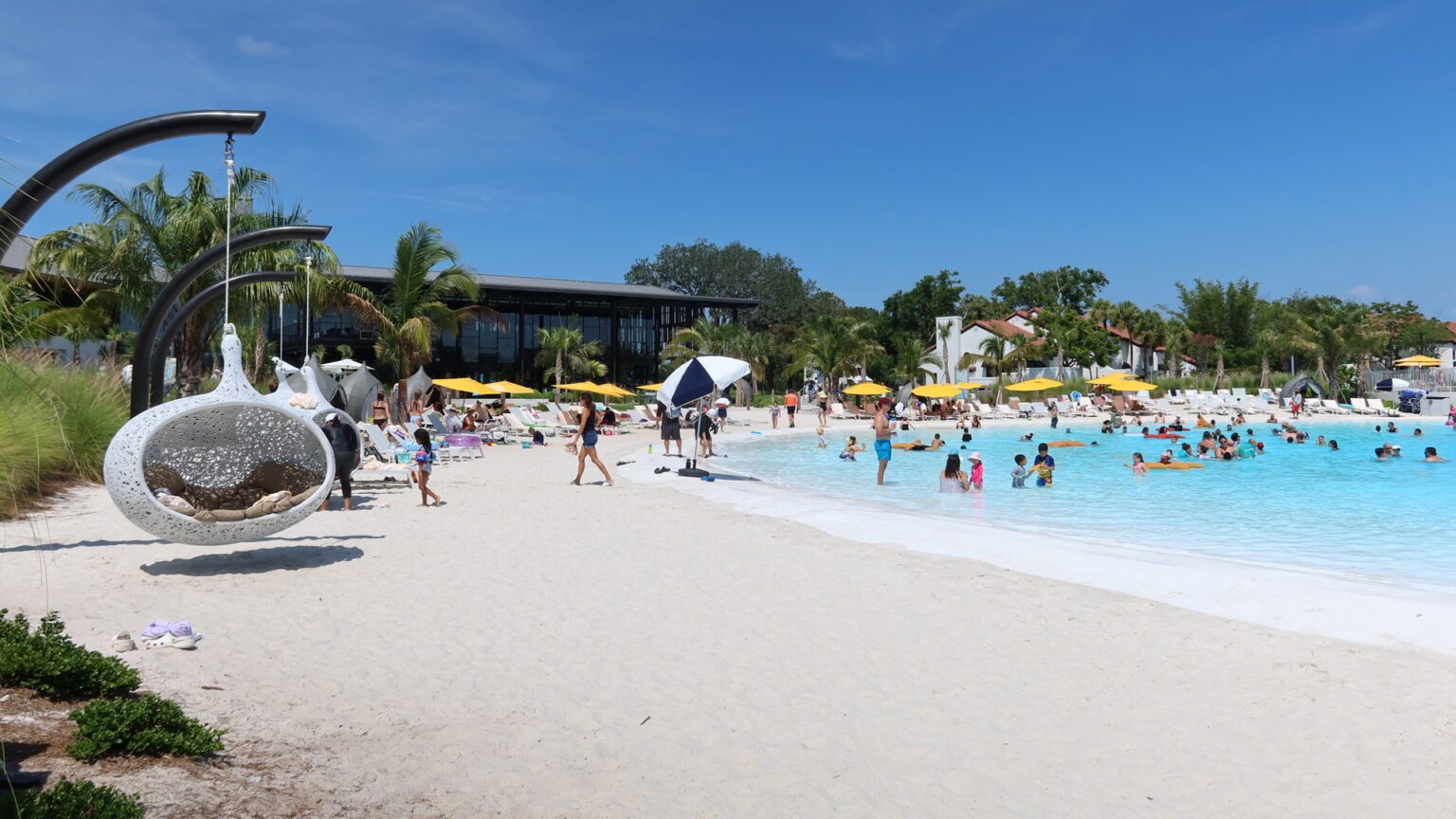
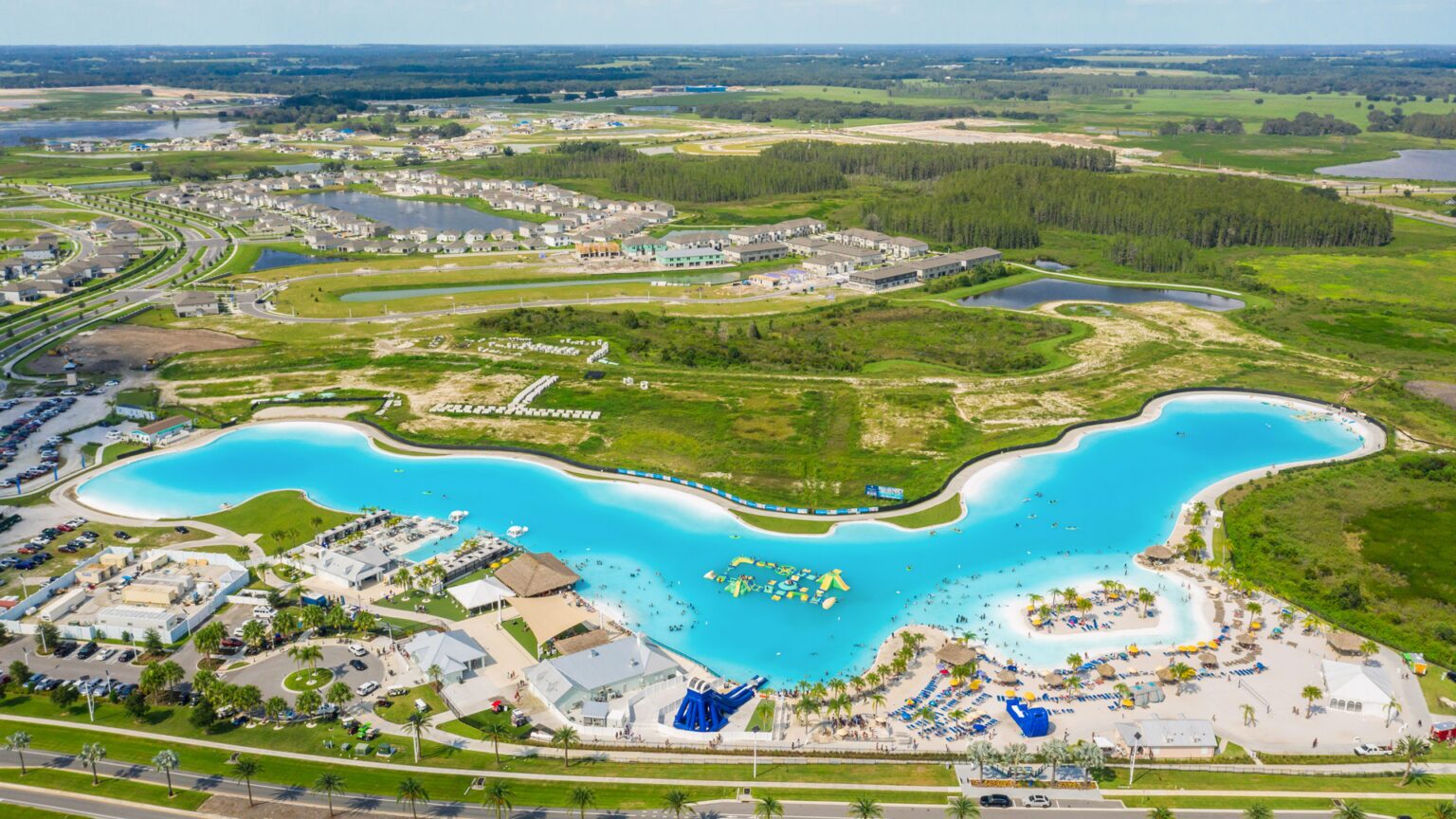
  • From 5,400 sq ft to 1 acre: Small Lagoons by Crystal Lagoons™ is emerging as the new amenity trend for urban, multifamily, and boutique projects, offering a more efficient value proposition and leaving commercial swimming pools as a thing of the past.

Leading international media outlets are highlighting a groundbreaking concept in architecture and urban development: Small Lagoons by Crystal Lagoons™. This time, it was Clarín, one of Argentina’s most important newspapers, that featured it as a new trend in the real estate market, with the conversation already amplified through republished articles on other platforms.

However, the attention is not limited to a single country: the smallest format of these crystalline lagoons has already generated significant media reach, with coverage across multiple outlets in the U.S., Germany, the United Kingdom, France, Spain, Latin America, Indonesia, Vietnam, and other markets.

Why they are becoming a trend: when the amenity stops being “decoration”

The logic behind the editorial interest is clear: the traditional swimming pool has become commoditized. When “everyone offers the same thing,” the amenity stops moving the needle in terms of sales, pricing, and preference. In this context, Clarín describes Small Lagoons by Crystal Lagoons™ as an alternative to traditional swimming pools and conventional amenities, precisely because of its ability to create a beach-like experience in compact spaces.

For real estate developers, this translates into a practical advantage: an amenity that creates identity, strengthens the commercial narrative, and helps sustain the project’s perceived value in competitive markets.

What is Small Lagoons by Crystal Lagoons™ (and what sizes are available)?

Small Lagoons by Crystal Lagoons™ is a sustainable, patent-protected product designed to allow projects of different scales to incorporate a beach lifestyle experience. The proposal is based on standardized formats that accelerate design and implementation.

The standard sizes available for Small Lagoons are: 5,400 sq ft, 0.25 acres, 0.5 acres, 0.75 acres, and 1 acre. 

The technological difference compared to a commercial swimming pool

Part of the “why” (and of the media interest) lies in the construction and operational paradigm shift behind these smaller lagoons. Instead of following the traditional logic of painted concrete + large filtration systems + machine rooms, Small Lagoons by Crystal Lagoons™ incorporates:

  • A liner system, eliminating the need for repainting and concrete repairs.
  • Ultrasonic flocculation, reducing the infrastructure and energy associated with filtration.
  • The 5,400 sq ft model, positioned as a replacement for traditional commercial swimming pools.

Benefits for developers: commercial impact + efficiency per square foot

The advantage of this multinational innovation company’s latest model is not merely aesthetic. The proposal is designed to maximize the return on common areas, turning the heart of the project into a destination amenity, an anchor that drives foot traffic, encourages visitors to linger, and sparks conversation.

Key benefits for real estate:

  • Construction and maintenance costs: significantly lower construction cost of a swimming pool of the same size.
  • Less infrastructure complexity thanks to its construction and operational logic.
  • More than swimming: a beach-like experience, recreational uses, and social activation. 

In marketing terms, the value is usually concentrated in three “levers”:

  1. Immediate differentiation through visual iconicity: turquoise waters + white sand.
  2. Stronger commercial storytelling: selling a “lifestyle,” not just amenities.
  3. Versatility across project types: urban, multifamily, boutique, mixed-use, and hospitality.

Sustainability and efficiency: a key factor in permitting, CAPEX, and ESG

Crystal Lagoons® technology is a sustainable solution thanks to its resource efficiency. It requires up to 50 times less energy than traditional filtration systems. It also consumes up to 100 times fewer chemicals than conventional swimming pools, 33 times less water than a golf course, and 40% less water than a park of the same size.

This is complemented by a relevant point for developers’ risk management: the company has a portfolio of more than 2,200 patents in 135 countries, supporting standardization, know-how, and technological protection.

Argentina: from mega-projects to compact formats

The coverage in Argentina provides context for two simultaneous movements:

  • The growth of the compact format (5,400 sq ft–1 acre) as a trend.
  • The continuity of larger-scale lagoon projects in gated communities and residential developments, with cases mentioned in the local market such as Terralagos, Lagoon Pilar, Openn Pilar and Remeros Beach.

A new standard in amenities

Market demands have changed, and consumers are unquestionably prioritizing developments that offer immersive, safe, and environmentally responsible experiences. For real estate developers focused on high profitability and innovation, the size options ranging from 5,400 sq ft to 1 acre represent more than just an aesthetic upgrade; they are a proven business strategy that redefines the standard of urban and suburban living worldwide.

Clarín

  • From residential communities to luxury resorts and shopping centers transformed into urban destinations, Crystal Lagoons consolidates its impact in Latin America with projects that combine innovation, sustainability, and profitability for real estate developers.

Latin America has become one of the most dynamic markets for Crystal Lagoons, driven by real estate developers seeking to differentiate their projects with sustainable, iconic amenities capable of generating measurable commercial value. In an industry where simply building square meters is no longer enough, the true competitive advantage lies in creating destinations.

Crystal Lagoons® technology addresses precisely that need: it enables the development of large-scale crystalline lagoons suitable for swimming and water sports, with low water, energy, and chemical consumption. This amenity uses only 2% of the energy required by conventional swimming pool filtration systems, requires up to 100 times fewer chemicals, is filled only once, and operates in a closed circuit. In addition, it uses 33 times less water than an 18-hole golf course, 40% less water than a park of the same size, and can use any type of water: fresh, salt, or brackish.

For real estate and hospitality developers, this changes the equation. A crystalline lagoon no longer functions merely as a landscape feature: it becomes an anchor amenity capable of increasing property value, accelerating sales, improving occupancy, and positioning a project as a destination.

Why Latin America Is Key to the Growth of Crystal Lagoons

The impact of Crystal Lagoons in Latin America reflects a global trend: consumers are seeking beach experiences, wellness, recreation, and social life, even in locations far from natural coastlines. At the same time, developers need solutions that combine differentiation, operational efficiency, and sustainability.

In this context, the region has brought together projects that showcase the technology’s versatility: from residential communities and luxury resorts to shopping centers transformed into urban entertainment destinations.

1. San Alfonso del Mar, Chile: The Project That Changed the History of Amenities

The First Major Laboratory for Real Estate Innovation

San Alfonso del Mar, located in Algarrobo, Chile, was the project that marked the beginning of a new category of amenities for real estate and hospitality developments. Opened in 2005, this residential complex features 11 buildings and 1,300 apartments facing the ocean and the lagoon. Its centerpiece is a 19.64-acre lagoon, approximately 0.61 miles long, containing 66 million gallots of seawater.

What made this case innovative was not only its scale. San Alfonso del Mar demonstrated that it was possible to create a safe and controlled beach experience in an area where the ocean has strong currents and low temperatures, conditions that make swimming and water sports difficult.

Why It Is Relevant for Real Estate Developers

San Alfonso del Mar proved, at real scale, that a crystalline lagoon could become the center of gravity of a master plan. It was the proof of concept that demonstrated that the “lagoon effect” was real, profitable, and sustainable.

For the industry, this project delivered three key lessons:

  • An iconic amenity can transform the entire positioning of a development.
  • A beach experience can be created even where natural conditions do not allow it.
  • Sustainable innovation can become a driver of property value, sales, and media visibility.

2. AVA Resort Cancún, Mexico: Luxury Hospitality with Sustainable Technology

A New Way to Elevate the Hotel Experience

AVA Resort Cancún represents the application of the multinational water innovation company’s technology to the large-scale hospitality segment. Located in Cancún, Mexico, the resort features 1,622 oceanfront rooms and suites, with a 2.89-acre turquoise lagoon powered by Crystal Lagoons® technology at its heart.

This case is especially relevant because it demonstrates how a crystalline lagoon can be integrated into the architectural and operational design of a resort, not only as a visual attraction, but as a central guest experience. The lagoon enables activities such as swimming and water sports in a safe, family-friendly, and controlled environment.

The Value for Hotel Operators and Developers

In the hospitality industry, differentiation increasingly depends on memorable experiences. AVA Resort Cancún shows how Crystal Lagoons can transform a hotel into a destination in itself, increasing the project’s appeal and creating a stronger value proposition compared to other all-inclusive resorts.

For developers and operators, the model offers clear advantages:

  • Greater differentiation from traditional resorts.
  • A controlled, safe, and visually iconic aquatic experience.
  • Potential to increase length of stay, satisfaction, and perceived value.
  • Integration of sustainability as part of luxury positioning.

3. Kristal Mall Cartagena, Colombia: The Country’s First “Shopping Resort”

When Retail Becomes Urban Entertainment

Kristal Mall, in Cartagena de Indias, is one of the most innovative Crystal Lagoons projects in Latin America because it brings the technology into the world of retail and public entertainment. The project features a 5.43-acre crystalline lagoon under the Public Access Lagoons® model, also known as PAL® developments.

The initiative seeks to transform the largest shopping center in the Colombian Caribbean into the country’s first “Shopping Resort,” combining retail, leisure, gastronomy, events, and beach life in one place.

A New Revenue Model for Developers

The strategic value of Kristal Mall lies in the fact that it expands Crystal Lagoons’ reach beyond traditional residential or tourism projects. Under the PAL® model, anyone can access the beach experience through ticketed entry, memberships, events, gastronomy, retail, concerts, fairs, and recreational activities.

For real estate developers, this model opens new opportunities:

  • Transforms commercial spaces into experiential destinations.
  • Generates recurring traffic and longer dwell time.
  • Diversifies revenue streams.
  • Increases appeal for brands, operators, and visitors.
  • Repositions urban assets through sustainable entertainment.

What These Projects Teach the Real Estate Industry

San Alfonso del Mar, AVA Resort Cancún, and Kristal Mall Cartagena show three different paths for the same innovation:

  • Residential real estate: turning a community into a high-value destination.
  • Hospitality: elevating the guest experience through an iconic amenity.
  • Public entertainment and retail: transforming urban assets into centers of experience and consumption.

In all cases, Crystal Lagoons serves as a differentiation platform, capable of changing perceptions of the project, improving its positioning, and generating new business opportunities.

Latin America as a Global Showcase for Sustainable Innovation

The impact of Crystal Lagoons in Latin America confirms a decisive trend for the future of real estate: the most competitive developments will be those capable of combining experience, profitability, and sustainability.

For real estate developers, the lesson is clear. Innovation is no longer just about building more or designing better. It is about creating memorable, efficient, and commercially powerful destinations. In this transformation, Crystal Lagoons is positioned as a technology capable of redefining the value of real estate, tourism, hospitality, and public entertainment projects in Latin America and around the world.

Original Content

  • Crystal Lagoons® amenities make it possible to create beach lifestyle experiences anywhere in the world, free from dangerous currents, undertows, marine animals, or sargassum blooms, increasing the value of residential, tourism, and hospitality projects.

For real estate developers and investors in the hospitality and luxury residential sectors, the coastline has always been the most coveted asset. However, climate change and global environmental dynamics have turned the natural coastline into a highly uncertain environment. Destructive storm surges, dangerous rip currents, and—critically this season—massive biological crises such as the arrival of sargassum are challenging the commercial viability of traditional coastal projects.

Against this backdrop, Crystal Lagoons® patented technology has evolved from being a nice-to-have amenity into a tool for resilience and financial stability. By offering a fully controlled recreational body of water, it enables construction companies to protect the value of their assets and guarantee the promise of “beach life” under any circumstance.

1. Full Protection Against Sargassum: Business Continuity in Critical Areas

During the current season, the sargassum phenomenon has struck the Caribbean and the Gulf of Mexico with unprecedented force, burying natural beaches under tons of decomposing macroalgae that release hydrogen sulfide gas, producing pungent odors that damage the local ecosystem. For a resort or residential complex, this translates into cancellations, a decline in value per square meter, and costly cleanup operations that rarely provide a definitive solution.

In Crystal Lagoons® amenities, sargassum simply cannot reach the water. Because the amenity is a self-contained body of water with no connection to the ocean, the seaweed that currents drive onto natural shorelines has no way in. While natural coastlines are buried under tons of macroalgae, projects with Crystal Lagoons® amenities continue operating as usual, offering an oasis of turquoise waters and clean sands. The same patented technology also keeps that water pristine and inhibits the growth of algae and bacteria within the lagoon, but its decisive advantage against the sargassum crisis is isolation: a beach experience the open ocean cannot disrupt.

A conventional pool can also keep sargassum out, but that is where the comparison ends. A pool sidesteps the seaweed without replacing what guests and residents actually come to the coast for. Crystal Lagoons® amenities deliver the full beach experience — swimmable turquoise waters, expansive white-sand shores, and water sports — anywhere in the world. That is the ultimate advantage: not merely an escape from sargassum, but idyllic beach life recreated in full, unaffected by the seaweed, currents, and hazards of the natural coastline.

Success Stories in Affected Regions:

  • AVA Resort (Cancun, Mexico): Located in one of the areas most affected by sargassum, this hospitality landmark maintains its luxury standards thanks to its crystalline lagoon, allowing guests to enjoy the water without interruption.
  • The Beach (Punta Cana, Dominican Republic): This successful mixed-use residential development has demonstrated how to secure property value appreciation and sales velocity in the Caribbean by separating the beach experience from the natural cycles of the natural coastline.
  • Sole Mia (Miami, U.S.): In the strategic South Florida market, this urban project proves that it is possible to offer an environment free from seaweed, sludge, and decomposing odors, attracting high-net-worth buyers seeking aesthetic and environmental perfection. The market response is measurable: units facing the crystalline lagoon lease at a premium over those with an ocean view, a direct signal of how much residents value a guaranteed, sargassum-free beachfront.

2. 100% Safe Environment: Eliminating the Physical Risks of the Ocean

The open sea presents physical variables that are impossible for a hotel or condominium management team to control. Artificial lagoons completely remove these threats from the design and operational equation:

  • No currents or undertows: With no strong waves or dangerous rip currents, the environment is ideal for swimming for both children and adults, minimizing the need for critical lifeguard interventions and reducing civil liability risks.
  • Protection from dangerous marine wildlife: Unlike open beaches, the controlled design of these lagoons eliminates encounters with jellyfish, stingrays, and other marine wildlife—factors that often ruin the user experience.
  • High-Precision Automated Monitoring: Through cloud-based telemetry systems, the lagoons continuously measure and adjust water chemical and microbiological parameters, ensuring compliance with the world’s strictest international health standards.

3. Sustainability and Operational Efficiency: The ESG Advantage

Today’s developer understands that financial markets and investment funds demand rigorous compliance with ESG criteria: Environmental, Social, and Governance. Crystal Lagoons® technology is designed around a logic of resource scarcity and maximum efficiency:

Eco-Heated Lagoons by Crystal Lagoons™: Thermal Beach Life, Without Additional Energy 

Through the Eco-Heated Lagoons by Crystal Lagoons™ technology, these lagoons can be heated in a fully sustainable way. The system makes it possible to capture and reuse waste heat from cooling of nearby industrial processes or critical technology infrastructure, such as data centers. This industrial symbiosis allows the water to be kept at an ideal temperature during colder seasons, extending the amenity’s operation year-round without additional energy or costs. 

Optimization and Low Resource Consumption

  • Water savings: By operating in a closed circuit, the lagoon only requires water to compensate for natural evaporation. It consumes significantly less water than a park or golf course of the same size.
  • Minimal use of additives: Its automated disinfection system uses up to 100 times fewer chemicals than traditional swimming pool filtration technologies, drastically reducing OpEx, or operating expenses.

A Solution for Transforming Spaces into Destinations

The future of real estate amenities does not lie solely in offering more infrastructure, but in creating memorable, safe, sustainable, and commercially active experiences. In this context, Crystal Lagoons® amenities offer a concrete solution to the main challenges facing contemporary real estate and hospitality.

While the natural coastline can present risks associated with currents, waves, marine wildlife, pollution, or sargassum, crystalline lagoons deliver the full beach experience — turquoise waters, white-sand shores, and water sports — anywhere in the world. A pool can keep sargassum out; only a Crystal Lagoons® amenity recreates idyllic beach life itself.

For real estate developers, this represents a strategic opportunity: transforming inland land, resorts, urban properties, residential projects, or underutilized spaces into high-value waterfront destinations.

Crystal Lagoons not only makes it possible to bring beach life to places where it once seemed impossible. It also redefines the way real estate projects can create value, attract residents, foster a sense of community, and unlock new revenue streams through sustainable, efficient, and globally proven technology.

Frequently Asked Questions: Sargassum and Crystal Lagoons® Amenities

How can resorts and developments offer a sargassum-free beach experience? Resorts and real estate developments can offer a sargassum-free beach experience by building a Crystal Lagoons® amenity: a self-contained crystalline lagoon with turquoise water and white-sand shores. Because the lagoon has no connection to the ocean, sargassum carried in by currents cannot reach it, so the beach experience continues uninterrupted even when nearby natural beaches are closed.

Why is sargassum a problem for Caribbean and Gulf of Mexico beaches? Sargassum is a problem because massive amounts of the seaweed are carried by ocean currents and wash ashore on natural beaches, where it piles up and decomposes. As it breaks down it releases hydrogen sulfide gas, producing strong odors. For resorts and residential projects this leads to cancellations, lower property values, and costly, recurring cleanup that rarely solves the problem permanently.

Does a Crystal Lagoons® amenity remove sargassum, or keep it out? A Crystal Lagoons® amenity keeps sargassum out rather than treating it. The lagoon is an isolated body of water disconnected from the sea, so the seaweed never enters in the first place. Its patented technology separately keeps the water crystal-clear and inhibits algae and bacteria within the lagoon, but the decisive protection against the sargassum crisis is isolation from the ocean.

Why can’t a regular swimming pool solve the sargassum problem? A regular pool avoids sargassum but cannot replace the beach experience that drives coastal property value. A Crystal Lagoons® amenity delivers swimmable turquoise water, white-sand beaches, and water sports at a scale a pool cannot match, recreating natural beach life in a controlled environment that sargassum, currents, and marine wildlife cannot disrupt.

Are there real examples of sargassum-free Crystal Lagoons® destinations? Yes. AVA Resort in Cancún, Mexico, sits in one of the most sargassum-affected regions yet keeps guests in the water without interruption thanks to its crystalline lagoon. The Beach in Punta Cana, Dominican Republic, and Sole Mia in Miami, U.S. show the same model creating value in markets exposed to coastline hazards.

Original content