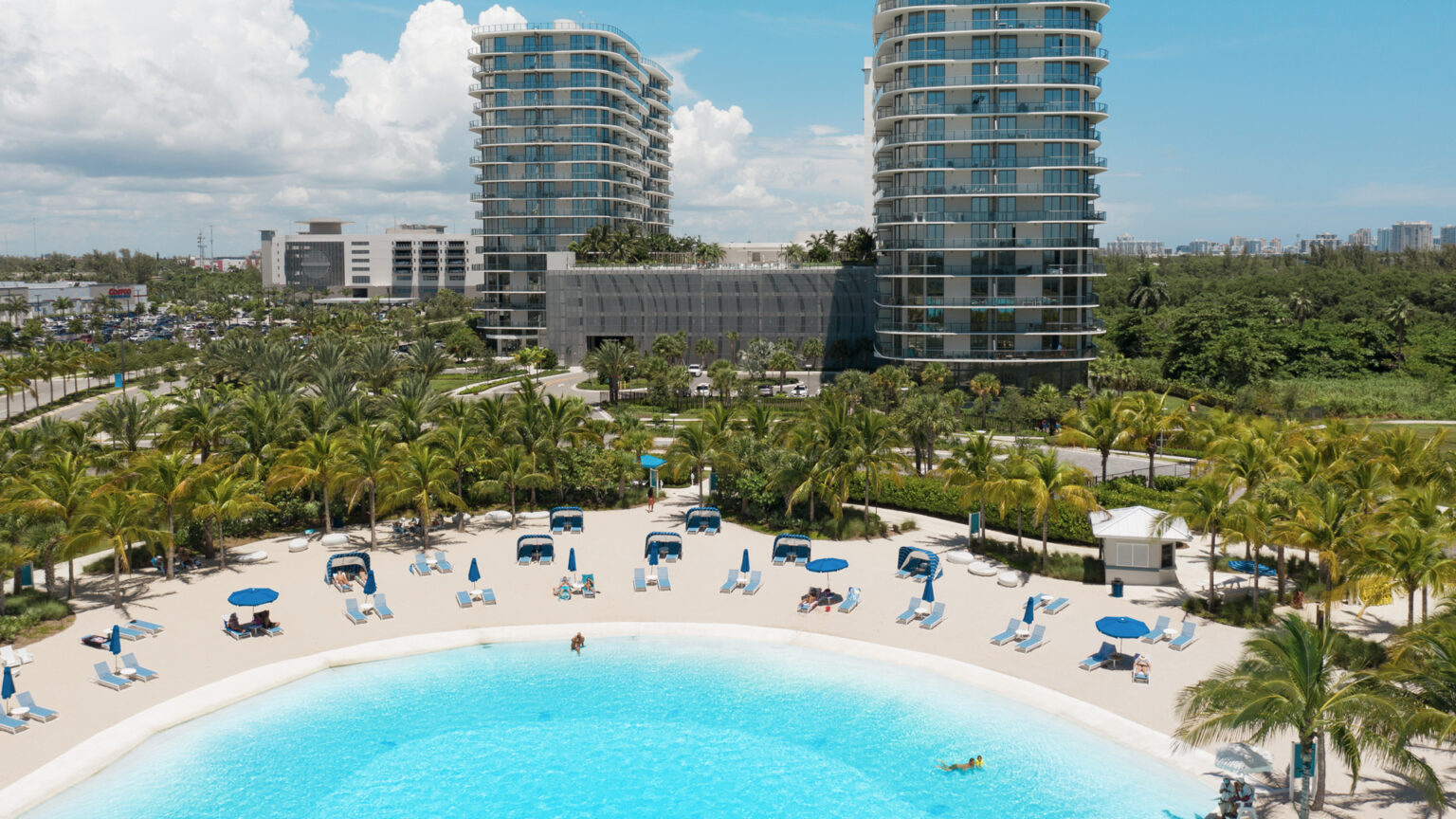
Crystal Lagoons U.S. Corp.® Sees Strong Sales Performance and Potential

With a number of successes in master-planned community amenity developments under its belt, Miami-based technology company Crystal Lagoons® is pursuing a new business model for amenity development, which consists of master licensing agreements for Public Access Lagoons™. The following is a publication released by Builder Online, a U.S. magazine that recently covered the firm’s success in the U.S. market.

The company’s exclusive partners are set to use Crystal Lagoons technology package to create public amenities across the U.S. anchored by beaches, retail, and other attractions. Between December 2019 and May 2020, the company had signed master licensing agreements for 16 new lagoons in the U.S., as well as many more overseas.

While the COVID-19 pandemic has placed restrictions on the company’s activity and prompted the closure of some amenities at the beginning of the pandemic—including the one at the Epperson community in Wesley Chapel, Fla.—Crystal Lagoons anticipates that its amenities will play important roles in a future economic recovery, particularly as sites for “mini-vacations” in a time when air travel is limited.

“Given that these are long-term projects that will not be completed in less than one-and-a-half years, the business’ dynamism hasn’t been affected by the pandemic,” says Iván Manzur, who is expected to assume the position of vice president of sales at Crystal Lagoons U.S. Corp. “On the contrary, we’ve seen investors moving forward, and these projects have been perceived as having a potential of reactivating the economy.”

BUILDER magazine spoke with Manzur about the company’s future plans and sales performance, as well as its management of the COVID-19 pandemic, opportunities as travel and recreation habits shift, and expectations for business under the “new normal.”

BUILDER: How has your public access lagoon business expanded in the U.S. over the past year? Can you tell me about the status of some of your projects?

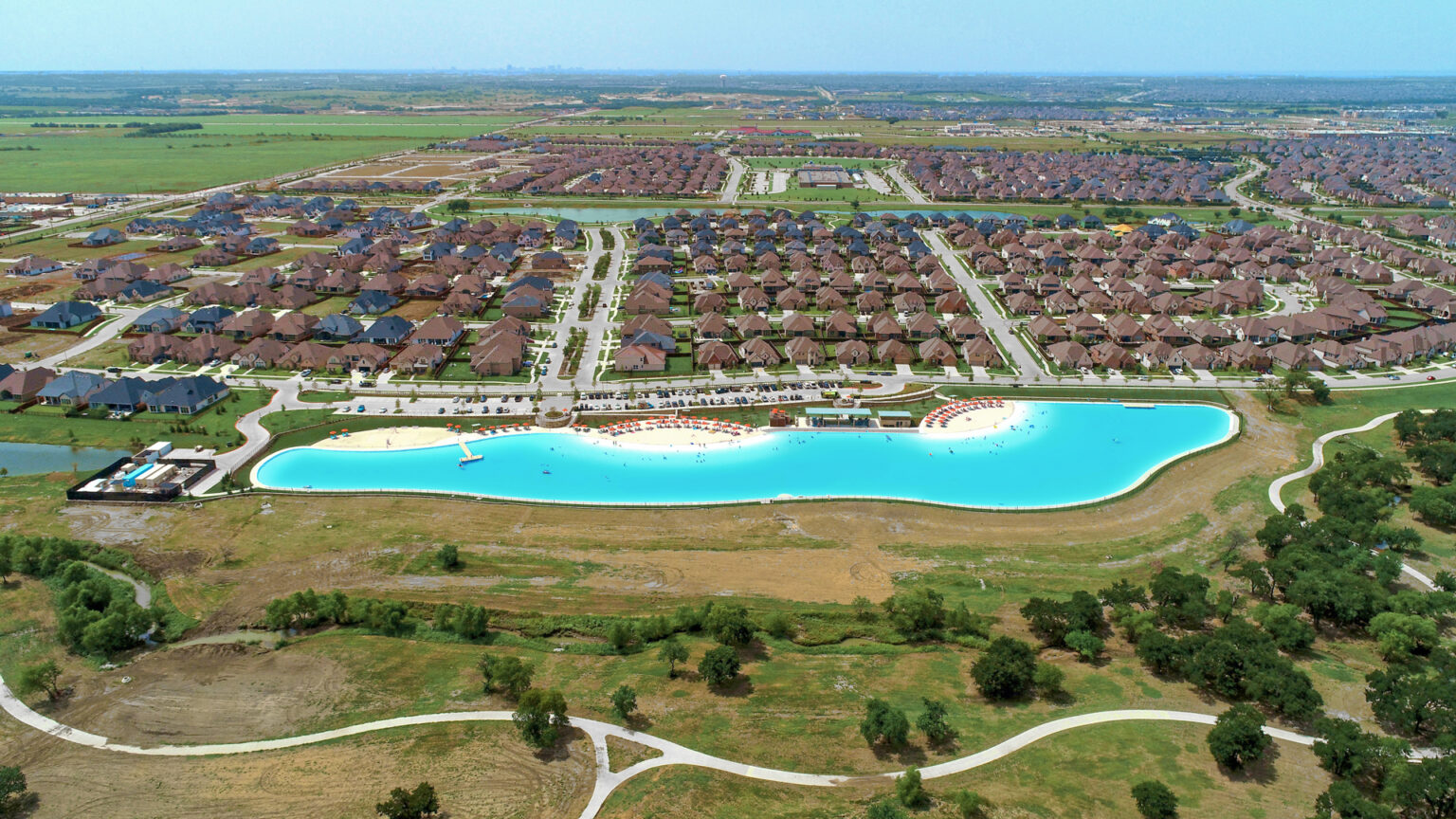
Manzur: The United States is one of the main markets for Public Access Lagoons™, also known as PAL™. Although these projects started as real estate, they quickly converted to the PAL business model, as in the case of Epperson, which opened up a section of the lagoon allowing public access. People started going to the beach, and the outcome has been so remarkable that the development has often had to close the doors to control the flow of visitors.

Later, PAL projects emerged, with public access only, which were in association with amusement parks, for example. Since, the growth has spiked producing the first master licenses with renowned multinational companies, such as the signing with Epic to develop 16 projects across the U.S. Our business plan shows a potential projection of 1,000 developments of this type in the U.S. alone.

BUILDER: How do you believe economic reactivation measures will affect Crystal Lagoons?

Manzur: Every reactivation measure promoted by the U.S. is important. In the case of Crystal Lagoons, we can divide ours into two aspects. Regarding real estate projects that are currently in development, the measures will allow, in the short term, to increase the purchase of properties while also allowing people to partially restore the normality they are accustomed to.

In the case of PAL projects to be developed in the medium or long term, these reactivation measures will likely not have a major impact.

BUILDER: According to Crystal Lagoons, the company expects that families will look to have “mini holidays” in lieu of air travel this summer. Can you elaborate on this idea?

Manzur: The pandemic, even if it’s controlled in the future (vaccines, etc.), may change certain social habits, such as avoiding plane trips to distant locations due to risks associated with large groups of people boarding planes, at airports, confinement in planes, coming into contact with people from other countries where infection rates are possibly unpredictable, etc.

Being able to have beach life and recreational activities close to home reduces considerably many of these risks and could become a future trend.

Touristic destinations and public beaches are difficult to control on a sanitary level. On the other hand, on a private beach, such as is the case of PAL, access can be controlled by using tests, regulating its capacity, ensuring distances are respected, etc.

In fact, investors have identified that people will prefer to unwind in areas close to home, which will require infrastructure to be developed. These types of areas within cities will be especially necessary after confinement.

This concept of beach life just steps away from home positively impacts people’s carbon footprint and reduces the impact on biodiversity in natural places.

BUILDER: How have Crystal Lagoons amenities in residential communities fared? How are communities implementing safety measures?

Manzur: Epperson reopened its doors once COVID restrictions were lifted and has received a large number of people. What’s surprising is that, despite the current economic situation, commercial activity has been maintained, confirming the good results that Crystal Lagoons projects have always experienced in the U.S. An example of this are three new projects soon to open in Florida (Southshore Bay, Mirada, and Avenir) and Sierra Vista in Houston.

As for preventive measures, although the amenities and lagoons in the real estate projects were closed for a month, they are reopening and starting to operate normally.

BUILDER: What do you believe the future will hold for Crystal Lagoons?

Manzur: As previously mentioned, Crystal Lagoons is undergoing a structural change, registering the highest sales in its history, and is dynamically closing contracts.

Along with the master licenses previously signed around the world and the above mentioned negotiations, we’ve seen that there is a large market in the main U.S. mall chains, as several need to reinvent themselves and we’re in advanced conversations with them. The fall in their sales caused by e-commerce and an increase in unoccupied spaces has forced them to introduce new functional alternatives and new experiences, such as these lagoons.

Malls see in PAL a new hook or “anchor” to attract public. There is an important market here, and we foresee a great future reconverting these shopping centers.

Crystal Lagoons is an international innovation company, founded by scientist Fernando Fischmann, which has developed a patent-protected technology that allows the construction and maintenance of unlimited-size clear water lagoons at very low costs.
Outstanding news

Behind the multinational innovation company’s iconic turquoise lagoons lies a sustainable technology that minimizes water, energy, and chemical use, enhancing maintenance and operating costs for developers and operators.

For visionary real estate developers and investors, the image of a crystalline turquoise water lagoon is an undeniable magnet for a project’s value and demand. However, a critical question usually arises immediately: How is a body of water of this size kept in pristine condition? Is the maintenance of Crystal Lagoons a financial and operational challenge?

Behind this multinational innovation company’s lagoons lie a combination of patented technologies designed to be efficient and scalable in any project.

For those considering integrating this amenity into a residential, mixed-use, or PAL® development, understanding the cost of lagoon maintenance and how it works is key to making informed investment decisions.

The End of the Conventional Filtration Era

A common point of comparison is between the maintenance of a Crystal Lagoons® amenity and that of a swimming pool or water park. If traditional filtration technology were used, the energy, chemical, and staffing costs would be prohibitive for bodies of water measuring several hectares in size.

Crystal Lagoons addressed this challenge by developing a technology that does not require constant filtration of all the water. Instead, it uses a telemetry-based disinfection approach that addresses issues before they spread, maintaining water quality with minimal chemical intervention.

The Three Pillars of the Sustainable Purification Process

Crystal Lagoons® technology is based on a system of three integrated components that work in harmony to ensure water transparency with minimal resource consumption.

  1. Pulsed Disinfection Treatment (Fewer Chemicals)

Unlike swimming pools, which require constantly high levels of chlorine or other disinfectants, Crystal Lagoons® amenities use a system of controlled pulses of additives.

  • How it works: Strategically placed sensors continuously monitor water quality in real-time. When a need is detected, the system injects micro-pulses of disinfecting agents only at the specific points and exact moments where they are required.
  • Key fact: This method enables the use of up to 100 times fewer chemicals than traditional swimming pool treatment systems, drastically reducing operating costs and environmental impact.
  1. Low-Cost Ultrasonic Filtration (Less Energy)

This is the heart of energy efficiency. The technology does not filter the entire volume of water. Instead, it applies ultrasonic waves that cause dirt particles to agglomerate at the bottom of the lagoon.

  • How it works: A mobile suction system, similar to a large-scale robotic cleaner, moves along the bottom, collecting these agglomerated particles. Only the water drawn in by this device passes through a small and efficient filtration system.
  • Key fact: Thanks to this, Crystal Lagoons technology uses only 2% of the energy required by a conventional filtration system for an equivalent body of water. This is a key factor in the lagoon’s low maintenance cost.
  1. Telemetric Control and Remote Monitoring (Less Staff)

The operation does not depend on an army of on-site technicians. The entire process is supervised 24/7 from Crystal Lagoons headquarters through a cloud-based telemetric platform.

  • How it works: Sensor data is constantly sent to the central control center, where advanced algorithms and specialists monitor the physicochemical parameters. The system automatically adjusts disinfection pulses and filtration cycles without direct human intervention on-site.
  • The benefit: This ensures consistently optimal water quality and reduces the need for permanent specialized staff at the development, simplifying management for the developer.

A Luxury Amenity with Low-Cost Operation

Crystal Lagoons® technology has transformed what seemed like an insurmountable obstacle, the maintenance of large bodies of water, into one of its greatest strengths.

For real estate developers, this means being able to offer a world-class amenity capable of increasing property value and attracting massive demand, with the confidence that the maintenance of Crystal Lagoons is a sustainable, automated process and that the lagoon maintenance cost is marginal compared to the value it generates. The turquoise lagoons are not just an aesthetic dream; they are a solid operational and financial reality thanks to intelligent, 21st-century lagoon purification.

Crystal Lagoons® technology enables the creation of urban beaches in the middle of the desert, combining luxury, urban beach life, and sustainability by utilizing desert groundwater that has no other alternative use.

Historically, luxury real estate development in desert areas has faced an insurmountable barrier: the scarcity of water and the challenge of providing refreshing natural environments sustainably. The desert has been synonymous with aridity, not aquatic leisure. However, a technological innovation has rewritten this rule, proving that it is possible to bring idyllic beach life even to the most extreme climates.

Crystal Lagoons has achieved the unthinkable: bringing the ocean to the desert. Through its patented technology, the company has transformed vast expanses of sand into iconic real estate megaprojects, where turquoise-water lagoons and white-sand beaches become the central amenity, driving sales, added value, and quality of life.

For visionary developers, this means that geographic location is no longer a limitation. The dream of beach life in the city, even if dunes surround that city, is now a commercially viable and, crucially, environmentally sustainable reality.

Water Sustainability: The Fundamental Pillar in Arid Climates

The main concern when developing aquatic amenities in the desert is water scarcity. This is where Crystal Lagoons® technology stands apart radically from any other solution, becoming the only truly viable option for these ecosystems.

Far from being a waste of resources, these lagoons are examples of water and energy efficiency, a key persuasive factor for project approval and for attracting sustainability-minded investors:

Minimal Consumption:

  • The lagoons operate in a closed circuit and are filled only once, replenishing only the water lost through evaporation.
  • A crystalline lagoon uses 33 times less water than a golf course and around 40% less water than a park of the same size. This is vital in regions where every drop counts.
  • Use of Non-Potable Water: The technology can utilize any type of water, including fresh, salt, or brackish (the latter being abundant in many desert areas and having no alternative use).
  • Evaporation Control: This technology utilizes an additive film that reduces natural evaporation by up to 50%.
  • Energy Efficiency and Fewer Chemicals: Its pulsed filtration system uses only 2% of the energy required by conventional swimming pool filtration systems, allowing for the use of up to 100 times fewer chemicals.

Iconic Megaprojects: Proven Success in the Sand

The ultimate proof of Crystal Lagoons’ viability in the desert lies in its impressive portfolio of projects already operational or under development in the Middle East and North Africa (MENA) region. These developments have used the lagoon as a catalyst to create world-class destinations.

Citystars Sharm El Sheikh, in Egypt, is one of the milestones that demonstrates how beach life can be created in the desert.

  • Located in the heart of the Sinai Desert, on a 1,853-acre site.
  • Its crystalline lagoon covers approximately 28 acres and was recognized by Guinness World Records as the largest in the world.
  • It has established itself as a global attraction, a true oasis of turquoise waters and white-sand beaches in the middle of an arid environment.

For a master plan in the desert, the message is clear: a single lagoon can transform the project’s positioning, attract international tourism, increase land value, and extend the high season.

In turn, in Dubai, within the Mohammed Bin Rashid City (MBR City) development, Crystal Lagoons® technology powers several of the world’s most ambitious projects in desert areas.

One of them is Mohammed Bin Rashid District One:

  • It will feature what will be the world’s largest crystalline lagoon, with approximately 70.6 acres of turquoise water and 14 km of shoreline for walking, water sports, and outdoor living.
  • The master plan spans approximately 1,238 acres and features villas, apartments, and extensive green areas situated in the heart of the desert.

The lagoon becomes the central amenity, replacing the traditional “golf + clubhouse” combo, and creates a year-round resort lifestyle with a much more efficient use of water.

A variety of oases

Citystars Sharm El Sheikh and Mohammed Bin Rashid District One are just two examples of Crystal Lagoons’ ability to transform an arid environment into a refreshing setting through crystalline lagoons with turquoise waters.

Among the other projects that the multinational innovation company has in MENA are:

In the United Arab Emirates

  • Riviera. In the same MBR City, the Riviera project by Azizi Developments emulates life on the French Riviera, featuring a 32-acre lagoon powered by Crystal Lagoons® technology, which runs through the entire development from end to end.
  • Azizi Venice, located in Dubai South, is envisioned as a 336-acre community centered around a large crystalline lagoon, featuring a Venetian-inspired design, a floating opera house, and a climate-controlled boulevard.
  • Tilal Al Ghaf is a master plan spanning over 3 million m² in Dubai, with its heart comprising a monumental crystalline lagoon of approximately 70,000 m² and 400 meters of white-sand beach.

In Egypt:

  • SwanLake North Coast: combines three lagoons totaling 12.87 acres of crystalline water, integrating 950 high-standard residences across 207 acres on the Mediterranean coast.
  • SwanLake El Gouna: is developed around a 3.6-acre lagoon, featuring white-sand beaches, an 18-hole golf course, solar panels, and extensive green areas, which strengthen the eco-friendly profile of El Gouna, known as the “Venice of the Red Sea.”
  • Azha Ain Sokhna features two Crystal Lagoons® amenities in a project situated between the mountains and the Red Sea coast, offering a comprehensive lifestyle with a clubhouse, spa, gym, and diverse dining options.
  • Il Monte Galala is home to the world’s first crystalline lagoon located at the summit of a mountain, offering simultaneous views of the Red Sea and the surrounding mountain range. It has been recognized with international awards.
  • Fouka Bay is a development of around 1 million m², divided into 12 islands with approximately 24.3 acres of crystalline lagoons and 7 km of white-sand beaches.

Key benefits for developers in arid zones

Implementing a Crystal Lagoons® amenity in the Middle East offers concrete advantages for those developing in the desert or in water-stressed environments:

  1. Competitive differentiation and brand positioning
  • Transform a desert site into a destination resort with world-class urban beaches.
  • Associate the project’s brand with an iconic amenity recognized globally.
  1. Faster sales and higher value per m²
  • Cases like Tilal Al Ghaf show entire phases sold out in a matter of days and strong price increases for lagoon-front units.
  • Projects in MBR City, such as District One and Riviera, have experienced very high international demand and record-breaking sales, thanks to the lagoon serving as the central amenity.
  1. Sustainability and ESG compliance
  • Optimized use of water and energy compared to amenities such as golf courses or large parks.
  • Lower chemical footprint and remote, real-time monitoring of water quality.

Crystal Lagoons® technology has removed the word “impossible” from the vocabulary of developers in arid zones. It’s no longer just about building homes in the desert; it’s about building unparalleled lifestyles. By combining unprecedented aesthetic beauty with rigorous, proven sustainability, crystalline lagoons become the master key to unlocking the potential of the most challenging land on the planet, turning sand into real estate gold.

Original content

Santa Rosalía Lake and Life Resort, whose centerpiece is a vast crystalline lagoon, is consolidating its position as the “Best Resort in Spain” and rising to the top in Europe for the fifth year in a row.

The Santa Rosalía Lake and Life Resort project, on Murcia’s Costa Cálida, has become a benchmark for developers seeking to combine innovation, cutting-edge architecture, and high-impact amenities. The complex, anchored by a lagoon powered by Crystal Lagoons® technology, has just received new recognition at the European Property Awards in the categories of Best Resort in Spain and Best Mixed-Use Architecture in Spain.

However, the most significant milestone came after this initial victory. By winning in Spain, the project automatically advanced to the European finals, where it was recently announced as the winner of Best Mixed-Use Architecture across all of Europe.

In the latest edition of the prestigious European Property Awards, one of the most renowned competitions in the industry, which this year attracted more than 3,000 participants, the development located in the Region of Murcia not only swept the national level but also confirmed its leadership on a continental scale.

This recognition is not an isolated event. For five consecutive years, Santa Rosalía has been honored at these awards, consistently validating a real estate business model that integrates the revolutionary technology of Crystal Lagoons® as its centerpiece. The awards ceremony will take place on January 16 at the iconic Savoy Hotel in London, a stage where Europe’s real estate excellence is celebrated.

Santa Rosalía: An Oasis Redefining the Resort Concept

What makes Santa Rosalía stand out from thousands of competitors year after year? The answer lies in its bold value proposition: bringing beach life to the heart of the Costa Cálida.

The complex is a real estate development located in Torre Pacheco, Murcia, just minutes from the Mediterranean Sea and the Mar Menor. It is the largest project of Crystal Lagoons in Europe, featuring a crystalline lagoon of approximately 4 acres surrounded by white sand beaches, green areas, and more than 2,000 high-standard apartments, bungalows, and villas.

This lagoon is not just a landscape feature; it is a functional and sustainable amenity that offers:

  • A large-scale crystalline lagoon suitable for swimming and water sports
  • More than 8,000 m² of beaches with white sand and palm trees
  • Inner islands, a beach club, sports areas, and dining spaces
  • A mixed-use masterplan that integrates housing, leisure, and services

The development’s architecture, now recognized as the best in Europe, blends organically with this body of water, ensuring that both residential units and commercial areas enjoy views of and proximity to this man-made paradise.

Likewise, international media and industry players have described the project as the “Caribbean in the Mediterranean,” highlighting its exclusive character, sustainable approach, and strong appeal for both local and international buyers.

European Property Awards: Why This Recognition Matters to Developers

The European Property Awards, part of the International Property Awards, are one of the most prestigious award programs in the global real estate sector. They evaluate projects in Europe based on criteria such as:

  • Architectural and urban design
  • Construction quality and functionality
  • Innovation and amenity offering
  • Sustainability, social impact, and commercial value

In this context, Santa Rosalía has been recognized as:

  • Best Resort in Spain
  • Best Mixed-Use Architecture in Spain
  • And subsequently, Best Mixed-Use Architecture in Europe 

Represents a resounding validation of the development model that places Crystal Lagoons® amenities at the heart of the project.

For investors and developers, this is a highly relevant reputational KPI: the combination of award-winning architecture, distinctive amenities, and proven sustainability enhances the project’s brand value and strengthens its long-term commercial appeal.

The “Crystal Lagoons Effect”: The Key to Real Estate Success

For real estate developers, the case of Santa Rosalía is empirical proof of the return on investment and prestige generated by incorporating a crystalline lagoon.

The European Property Awards recognize not only aesthetics, but also innovation, sustainability, and the quality of the environment created. In the case of Santa Rosalía, the lagoon is not just an aesthetic feature:

  • It structures the mixed-use architecture, organizing housing, leisure, sports, and services around the water
  • It creates an ideal setting for activities such as swimming, paddleboarding, kayaking, and other water sports in a safe environment
  • It increases the value per square meter, both residential and commercial, by transforming an inland plot into a true waterfront location

Whether in an exclusive resort or in a development community-open , the ability of Crystal Lagoons to create an authentic beach life in the city or in inland areas is unique and remains the most powerful amenity in today’s real estate market.

In an increasingly competitive market, the new awards for Santa Rosalía send a clear message: Crystal Lagoons’ amenities not only transform the landscape, but also redefine the standard of excellence for the real estate and amenities projects of the future.