Eco-Heated Lagoons by Crystal Lagoons™: Turning Waste Heat into Tropical Paradises 365 Days a Year

  • Innovative technology transforms waste heat into a competitive advantage, allowing people to enjoy crystalline lagoons with pleasant water temperatures year-round, while offering greater energy efficiency and a sustainable approach for real estate developers.

At the intersection of the digital revolution and urban sustainability, a critical question emerges for developers: How can industrial waste be transformed into a luxury asset? The answer comes from Crystal Lagoons and its innovative Eco-Heated Lagoons by Crystal Lagoons™ technology.

This solution not only makes it possible to maintain idyllic water temperatures year-round, but does so by redefining the concept of the circular economy. By capturing the waste heat generated by industrial processes—specifically from data centers and crypto mining Crystal Lagoons creates a perfect symbiosis between technological infrastructure and human well-being.

What Are Eco-Heated Lagoons by Crystal Lagoons™?

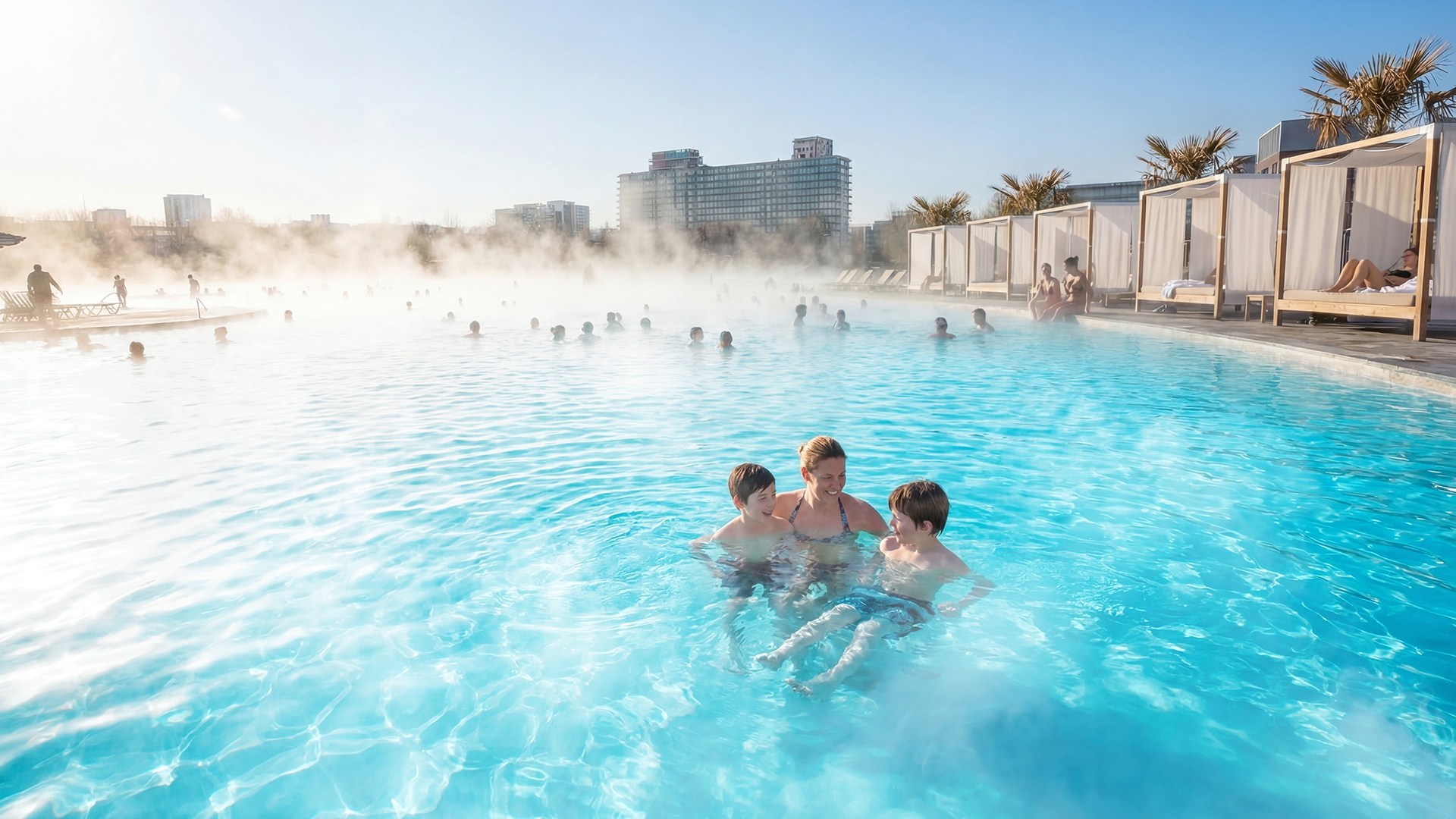
Eco-Heated Lagoons by Crystal Lagoons™ technology harnesses waste heat from data centers and crypto mining and redirects it to a lagoon that acts as a highly efficient heat sink. In this way, a resource that would normally be lost to the atmosphere becomes a competitive advantage for the development that integrates it. This system makes it possible to create a tropical beach area with water temperatures between 80°– 86°F, and even a thermal area at 98.6°F, all powered by waste heat and without using energy to heat the lagoon.

This proposal not only addresses an operational need. It also redefines the value of a lagoon: it is no longer just a visual or recreational amenity, but rather an infrastructure capable of extending water use year-round and enhancing a project’s appeal in markets where seasonality often limits profitability.

Why This Innovation Matters More Than Ever Today

The rapid growth of digital infrastructure is intensifying the energy pressure on data centers. Projections vary depending on the methodology, but they all point in the same direction: in the United States, data centers currently account for around 3% of electricity generation and could reach 8% by 2030. At the same time, the International Energy Agency highlights that reusing waste heat from data centers can help heat nearby buildings, provided there is sufficient proximity and proper technical integration.

That context makes solutions that reduce cooling loads and give discarded heat a new purpose especially valuable. Crystal Lagoons proposes precisely that paradigm shift: transforming an energy challenge into infrastructure that is useful, visible, and profitable for its surroundings.

Synergy with Data Centers: The Future of Sustainable Cooling

Data centers are the engines of the modern economy, but they face a monumental challenge: cooling. Traditional systems (chillers and cooling towers) consume massive amounts of electricity and potable water. This is where Eco-Heated Lagoons by Crystal Lagoons™ transforms the equation:

  • Reduction in Operating Costs (OPEX): By using the lagoon as a natural cooling system, data centers can drastically reduce their reliance on mechanical chillers, lowering energy consumption.
  • Significant Water Savings: Unlike cooling towers that constantly evaporate water, the lagoon recirculates heat in a closed and efficient way.
  • Improved PUE (Power Usage Effectiveness): This integration allows data center operators to achieve higher energy efficiency metrics, which are essential for meeting global ESG standards.

Strategic Advantages for Real Estate and Hospitality

For a real estate developer, the ability to offer a sustainably heated lagoon is the ultimate differentiating factor.

  1. Uninterrupted Use (365 days a year): Eco-Heated Lagoons by Crystal Lagoons™ ensures that the project’s main amenity is not seasonal. The “beach lifestyle” remains active even in the middle of winter, maximizing user satisfaction and return on investment.
  2. Certified Sustainability: By not using fossil fuels to heat the water, the project positions itself at the forefront of sustainable urbanism, facilitating green certifications and attracting climate-conscious institutional investors.
  3. Asset Appreciation: A project that integrates cutting-edge technology and a circular economy model has a much more powerful commercial narrative, increasing the value of the surrounding properties.

A Unique Circular Economy Model in the World

The concept behind Eco-Heated Lagoons by Crystal Lagoons™ is simple yet revolutionary: nothing is wasted, everything is transformed.

  • Input: Waste heat from industrial processes or data centers.
  • Process: Patented heat exchange technology by Crystal Lagoons.
  • Output: A world-class amenity with crystalline water at the perfect temperature, with no additional CO2 emissions.

From Waste Heat to a High-Impact Amenity

What is most compelling about this technology is that it connects two needs that have historically been separate. On one hand, data centers must dissipate heat efficiently. On the other, developers are looking for memorable amenities that enhance a project’s positioning. Eco-Heated Lagoons by Crystal Lagoons™ technology solves both challenges through a single infrastructure solution.

The technology can even be integrated into compact formats such as Small Lagoons by Crystal Lagoons™ models, with standardized models ranging from 5,400 sq ft to 1 acre, making it possible to offer a thermal beach experience year-round with support from data centers or crypto mining. This opens up a concrete opportunity for urban projects, hospitality developments, and projects that previously could not aspire to an amenity of this level.

A Solution Aligned with the New Energy Economy

The conversation around data centers is no longer limited to power, latency, or availability. Today, it also includes efficiency, social license, urban impact, and the smart use of resources. In this context, the Eco-Heated Lagoons by Crystal Lagoons™ technology offers a forward-looking solution: reusing waste heat to create tropical and thermal beach destinations that can operate year-round, with a more sustainable logic and a far more powerful commercial proposition.

For developers, it means incorporating an extraordinary amenity that enhances both the experience and the value of the project. For data centers, it means transforming a thermal load into an opportunity for efficiency and reputation. And for both, it represents a new way of understanding infrastructure: not as an isolated cost, but as a platform for creating value.

Innovation Can Turn an Energy Challenge into an Advantage

Eco-Heated Lagoons by Crystal Lagoons™ technology demonstrates how innovation can turn an energy challenge into a tangible competitive advantage. By harnessing waste heat from data centers to maintain crystalline lagoons at pleasant temperatures year-round, this technology creates a new category of sustainable amenities with a real impact on differentiation, monetization, and operational efficiency.

In a market where infrastructure must become increasingly smarter, cost-effective, and more responsible, Crystal Lagoons proposes a simple yet powerful idea: turning heat that was once wasted into an experience people want to enjoy all year long.

Original content
Outstanding news

  • The lagoon powered by Crystal Lagoons® technology transformed the tourism offering in Orlando, the most visited destination in the U.S., and positioned Evermore as a benchmark for hospitality developers around the world.

Orlando has theme parks, dining, golf, and an entertainment offering that is difficult to match. What it lacked was a major beach experience within the city.

Evermore Orlando Resort decided to change that reality. It transformed part of a former golf course into a 7.8-acre turquoise oasis powered by Crystal Lagoons® technology, bringing an idyllic beach experience to a place where none had existed before.

The result is not just a visually stunning environment. It is a business model that combines luxury with a relaxed lifestyle, positioning itself as a benchmark in the most competitive tourism market in the United States.

A turning point for Orlando tourism

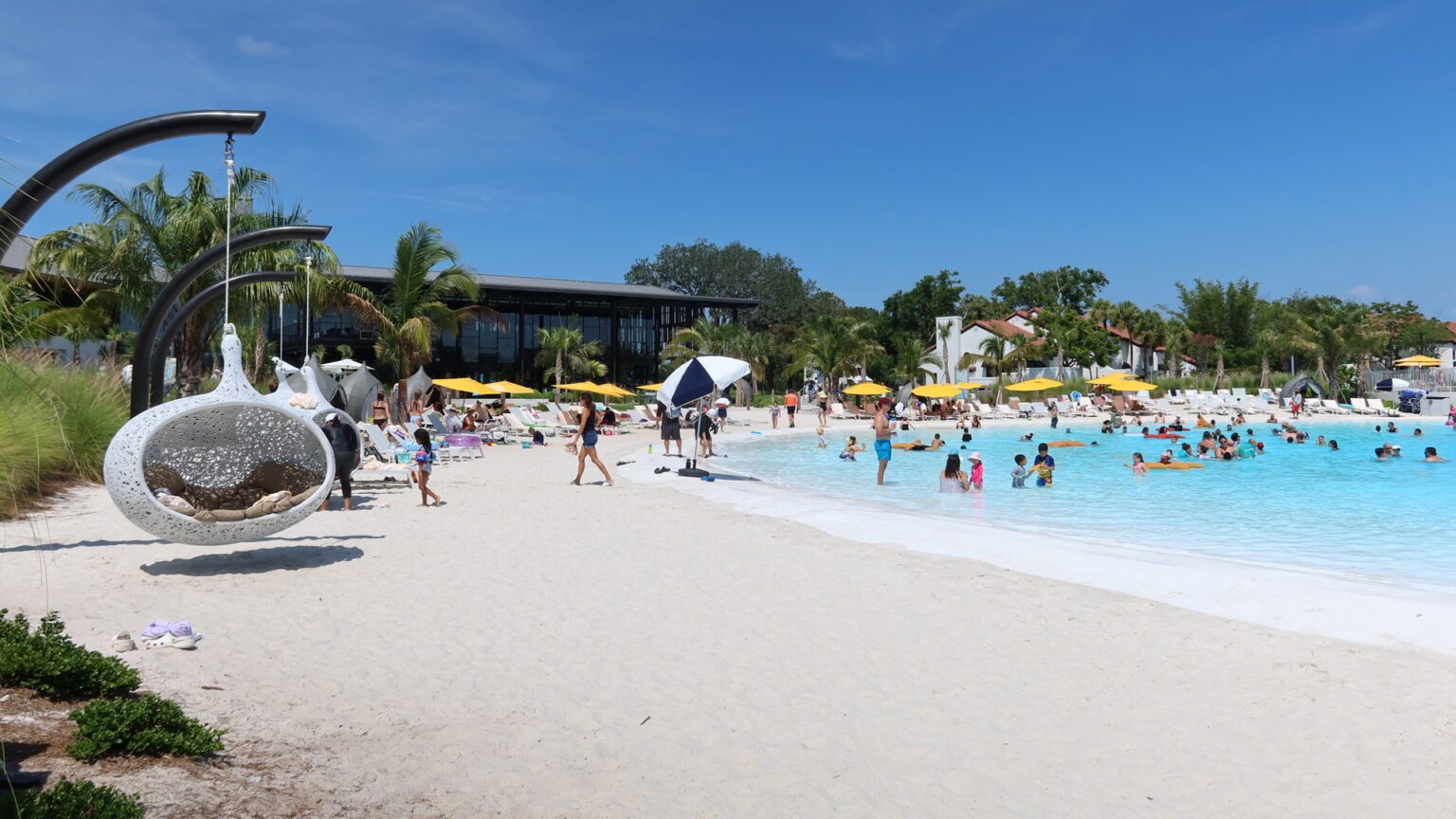
Evermore Bay was built on part of a former golf course, transforming an underutilized piece of land into a vibrant waterfront attraction. Its white-sand beaches and calm waters offer an alternative to coastal trips, without waves, currents, or long-distance travel.

The concept reaches a massive market. Orlando welcomed 75.3 million visitors in 2024 and remained the most visited destination in the United States.

For these travelers, the lagoon offers something new:

  • White-sand beaches just minutes from the theme parks.
  • Swimming, kayaking, and paddleboarding.
  • Cabanas, restaurants, and waterfront bars.
  • Venues for weddings, meetings, and corporate events.
  • A resort experience designed for families and groups.

Why does this amenity transform the project’s profitability?

For a real estate developer, aesthetics are key, but the numbers are what ultimately matter. The experience at Evermore demonstrates that the beach concept directly drives commercial performance:

  • Longer stays: What was once envisioned as a one-day break between theme park visits has become the centerpiece of the trip. Guests stay longer at the resort and spend more at its facilities.
  • New revenue streams: With more than 150,000 square feet of event space, the lagoon serves as a setting for weddings and business meetings. It also features 12 dining options, water activities, and world-class golf courses.
  • International recognition: The project has received awards from Condé Nast Traveler, USA Today, and Meetings Today, validating the value of innovation in the guest experience.
  • Guests themselves describe the experience as a Caribbean getaway in the heart of Orlando. They say they chose the resort because of the lagoon and value being able to see the bottom, swim in calm waters, and wake up to an expansive blue view.

A model that diversifies revenue streams

Evermore was designed as a comprehensive tourism ecosystem. Its current phase features nearly 1,500 rooms across vacation homes, villas, apartments, and the exclusive Conrad Orlando. Meanwhile, the master plan includes more than 10,000 rooms across the full development surrounding the lagoon.

The project generates revenue through:

  • Hotel accommodations and vacation residences.
  • Twelve dining venues.
  • Water and recreational activities.
  • Events, weddings, and corporate gatherings.
  • Two golf courses.
  • Cabanas and premium waterfront experiences.

For a developer, this point is key: the lagoon does not function merely as a visual feature. It acts as the centerpiece of the project, extends guest stays, and connects different business units.

Awards that support its value proposition

Evermore Orlando Resort was recognized by USA Today 10Best as one of the best new hotels in the country and received a Best of Meetings Today Award for its contributions to Orlando’s recreational and corporate offerings.

In 2025, Condé Nast Traveler also named it one of Orlando’s best resorts, highlighting its beach experience, dining, golf, and accommodations for groups.

A benchmark for the hospitality industry

Evermore Orlando Resort demonstrates how a lagoon powered by Crystal Lagoons® technology can transform the positioning of a hospitality development.

It goes beyond simply adding an amenity. It creates a reason to choose the project, stay longer, and spend more within it. That effect redefines hospitality standards and strengthens the presence of Crystal Lagoons in an industry seeking memorable experiences, differentiation, and new sources of profitability.

Orlando already had entertainment. Evermore gave it a beach.

Original content

  • The Epperson project redefined the concept of master-planned communities in the United States. The combination of Crystal Lagoons® technology and the PAL® model transformed a residential development into an entertainment destination capable of driving real estate demand and generating new revenue streams.

Imagine building a residential development on an inland site, far from the coast, and getting people to pay an entrance fee to visit the very place where you are selling homes.

It sounds almost too good to be true. Yet that is exactly what Crystal Lagoons achieved in partnership with Metro Development Group in Wesley Chapel, Florida, through its Epperson project.

Opened in 2018 with an impressive 7.5-acre crystalline lagoon powered by Crystal Lagoons® technology, the initial plan was traditional: an exclusive space for residents. But the visual impact and demand were so massive that the team made a bold decision.

They decided to transform part of the operation toward the Public Access Lagoons® model, also known as the PAL® model. They opened the lagoon to the general public for an entrance fee, and the result exceeded all expectations.

The strategic shift: More value per square foot and accelerated sales

Opening a residential space to the general public might sound contradictory to some developers. Think about it for a second: would it affect the neighborhood’s exclusivity? At Epperson, the exact opposite happened.

Opening the project under the PAL® format worked as a living commercial showcase. Thousands of visitors paid for a ticket to spend the day at a Caribbean-style beach just 35 minutes from Tampa, and while they enjoyed the water, they discovered the real estate project organically.

The data confirms it:

  • Price increase: Homes sold at a 21% higher price compared to direct competitors in the area.
  • Sales velocity: The pace of home sales rose 57% above market averages.
  • Customer acquisition: The daily flow of visitors dramatically reduced the cost of acquiring potential buyers.

Numbers that speak for themselves: US$3.4 million in a single season

The success in home sales and recognition in real estate rankings was only half the story. The other half lies in the profitability generated by the water infrastructure itself.

Through a ticketing model that varies by season, age, and time of day, the lagoon became a coastal lifestyle park. Even during a challenging year like 2020, operating at 40% capacity due to health restrictions (800 people allowed at the same time), the project recorded impressive figures:

  • Massive attendance: Nearly 91,695 visitors during the season.
  • Direct revenue: Revenue was estimated at around US$3.4 million from ticket sales, water activities, and rentals alone.

The public was not only paying for admission. The recreational offering expanded to include kayak and paddleboard rentals, inflatable obstacle courses, and premium spaces such as private cabanas, VIP areas (known as Aquabanas), and Tiki-style areas that can rent for more than US$300 per day during peak season.

Today, the destination includes a swim-up bar, merchandise shops, food trucks, and expanding restaurant offerings. A complete commercial ecosystem that generates continuous cash flow.

The “lagoon effect” in sales and rankings

Epperson’s commercial strength is also reflected in industry rankings.

Over the years, the community has been recognized among the top-selling residential developments in Florida and the United States. In 2023, it ranked No. 36 among the country’s top-selling master-planned communities, according to RCLCO, while in previous years it also ranked among the state’s highest-performing communities.

This positioning confirms a trend that developers are watching with increasing attention: buyers value experiences and lifestyles that cannot be easily replicated through traditional amenities.

Why are real estate developers looking at this case?

Epperson’s business model demonstrated something key for the industry: amenities no longer have to be a cost center funded only through residents’ HOA fees.

By incorporating Crystal Lagoons® technology and enabling controlled public access, real estate developers gain three clear advantages:

  1. Monetization from day one: The lagoon generates independent operating revenue while the real estate project is being built and sold.
  2. Brand positioning and prestige: The project enters and consolidates its position among the top spots in the most important national and international sales rankings (RCLCO and John Burns), attracting highly qualified buyers and investors.
  3. Land flexibility: It makes it possible to bring beach life to lower-cost inland sites that do not have access to the ocean.

Epperson showed that the future of the real estate industry is not only about building homes, but about creating destinations people want to return to again and again.

Original content.

  • Media outlets such as Daily Mail, New York Post, The Sun and This is Money highlighted the impact of Mirada and Epperson, two developments that confirm the power of crystalline lagoons as drivers of sales, community, and real estate differentiation.

Beach life no longer depends on living by the ocean. That idea, which only a few years ago seemed aspirational, is now being highlighted in international media as a concrete trend within the United States real estate market.

New York Post, The Sun, Daily Mail, and This is Money have put the spotlight on Mirada and Epperson, two communities developed by Metro Development Group in Florida that have turned their lagoons powered by Crystal Lagoons® technology into the main attraction. This is not just about an appealing image. It is about an amenity that sells, brings people together, and changes the way residents experience a residential project.

Mirada: The lagoon capturing the attention of the U.S.

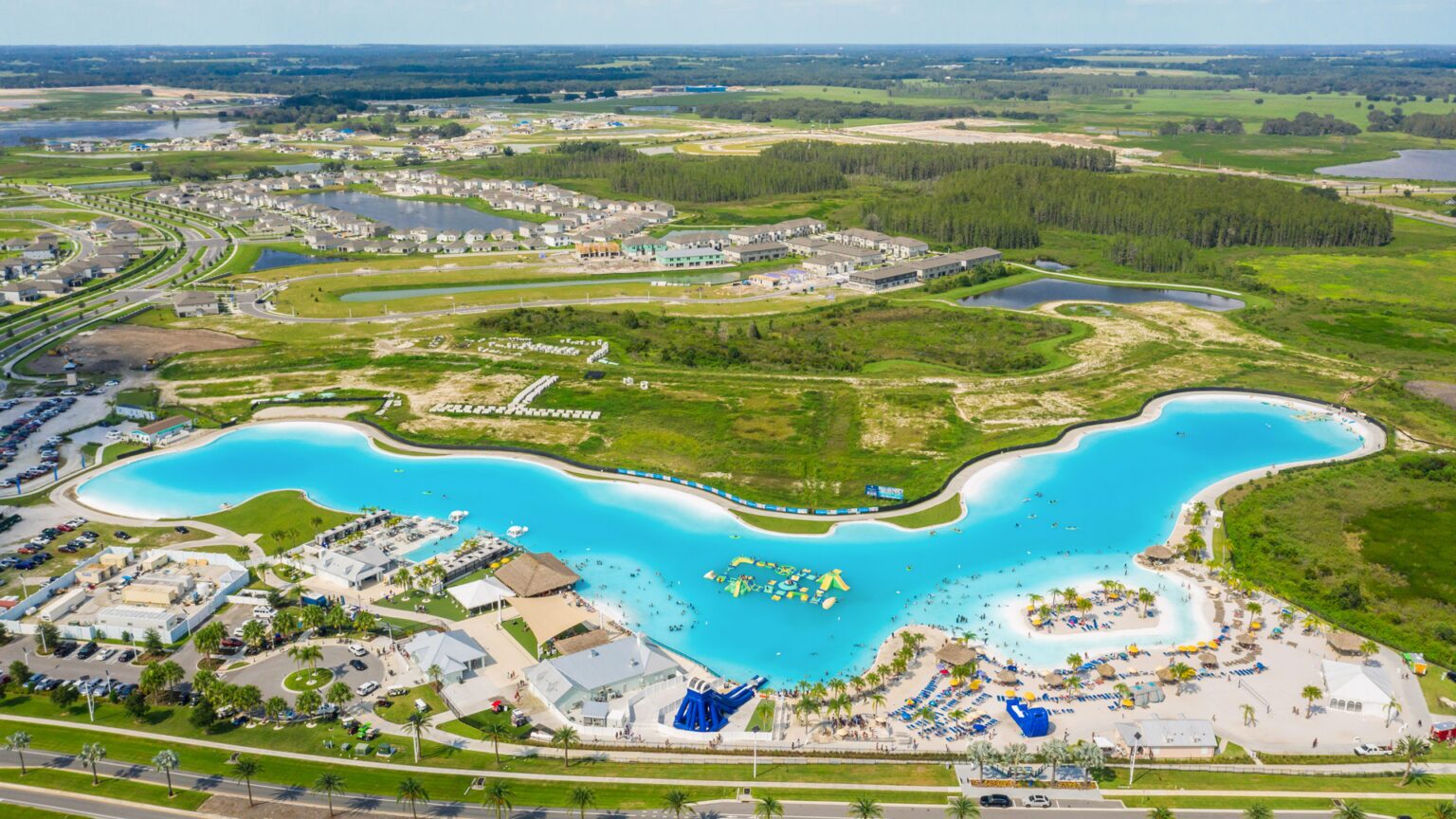
Mirada, located in San Antonio, Florida, is home to a 15-acre lagoon powered by Crystal Lagoons® technology, considered the largest man-made lagoon in the U.S. Its scale is equivalent to nearly 150 NBA basketball courts and offers activities such as kayaking, paddleboarding, relaxing beach areas, a swim-up bar, and a floating obstacle course.

For a real estate developer, the key point is not only its size. It is the impact it generates. According to coverage published by the U.S. edition of The Sun, Metro Development Group describes the lagoon as one of the main drivers of interest in its communities, because it creates immediate excitement and offers something that cannot be found in a traditional neighborhood.

Epperson and Mirada: from amenity to purchase driver

Epperson was the first community in the United States to feature a crystalline lagoon of this kind, paving the way for a new category of residential development: communities that offer a resort-style experience every day.

Mirada took that model to another scale. Metro Development Group highlighted that the community is now making national headlines for its 15-acre lagoon, while Epperson and Beachwalk also stand out as benchmarks for the concept of “lagoon living” in Florida.

This phenomenon makes one thing very clear: a crystalline lagoon does not function as a simple add-on. It functions as the heart of the project.

What makes this model so powerful?

  • It turns inland communities into beach lifestyle destinations.
  • It creates a visual identity that is easy to communicate.
  • It increases appeal for buyers and residents.
  • It activates activities year-round.
  • It builds community, permanence, and a sense of belonging.
  • It differentiates the project from traditional amenities.

The “lagoon effect” is also reflected in the rankings

The commercial impact of developments powered by Crystal Lagoons® technology is also reflected in real estate rankings. In 2025, three communities featuring this technology ranked among the 50 top-selling communities in the United States, according to RCLCO: Sunterra, ranked 5th; Mirada, ranked 14th; and Lago Mar, ranked 47th.

For the industry, this data matters. In a competitive market, where developers need to justify pricing, accelerate sales, and create real differentiation, a crystalline lagoon can become a powerful commercial argument.

An increasingly strong footprint in the United States

The success of Mirada and Epperson is not an isolated case. Crystal Lagoons has a growing presence in the United States with residential, hospitality, and public-access projects, including

Why is the industry betting on this technology?

Beyond the visual appeal that captures media attention, there are solid operational and financial reasons behind this sustained growth:

  • Water and energy efficiency: They consume up to 33 times less water than a conventional golf course and use only 2% of the energy required by a traditional swimming pool filtration system.
  • Land transformation: They make it possible to turn inland sites into locations with value comparable to beachfront properties.
  • Proven value appreciation: Lots and homes surrounding the lagoon register consistent price increases, often outperforming area averages.
  • International recognition: An innovation backed by multiple global awards in innovation, sustainability, and intellectual property.

The new standard for real estate amenities

International coverage of Mirada and Epperson confirms a trend developers are already seeing on the ground: buyers are not just looking for a home. They are looking for experience, a sense of community, and a more memorable everyday life.

That is where the value of Crystal Lagoons lies. Its crystalline lagoons transform real estate projects into destinations, create a competitive advantage that is difficult to replicate, and deliver something the market immediately recognizes: living with a vacation feeling every day.

New York Post