- Crystal Lagoons has turned Colombia into one of its most promising markets in Latin America, demonstrating how a crystalline lagoon can accelerate sales, increase real estate value, and respond to the demand for beach life.
Colombia has become one of the most dynamic markets for Crystal Lagoons in Latin America. The combination of a privileged climate, urban growth, a strong tourism vocation, and high demand for differentiated experiences has created the ideal setting for Crystal Lagoons® technology to transform real estate projects into beach lifestyle destinations.
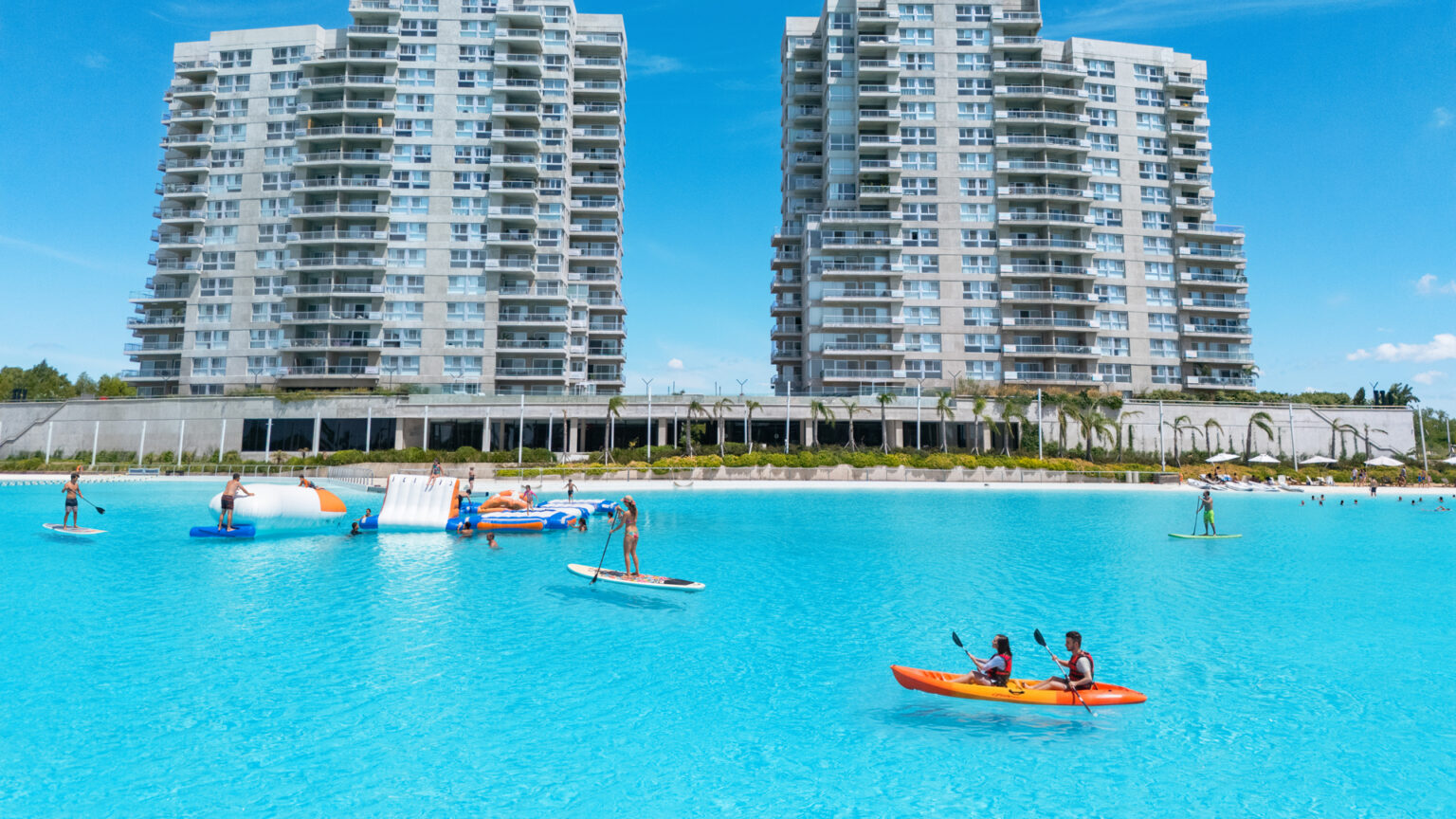
The best example is Baía Kristal, in Cartagena de Indias, the first development in the country featuring a crystalline lagoon powered by Crystal Lagoons® technology. Its commercial performance confirms the so-called “lagoon effect”: the ability of this anchor amenity to increase attraction, accelerate sales, and elevate a project’s perceived value.
Baía Kristal and the commercial power of a crystalline lagoon
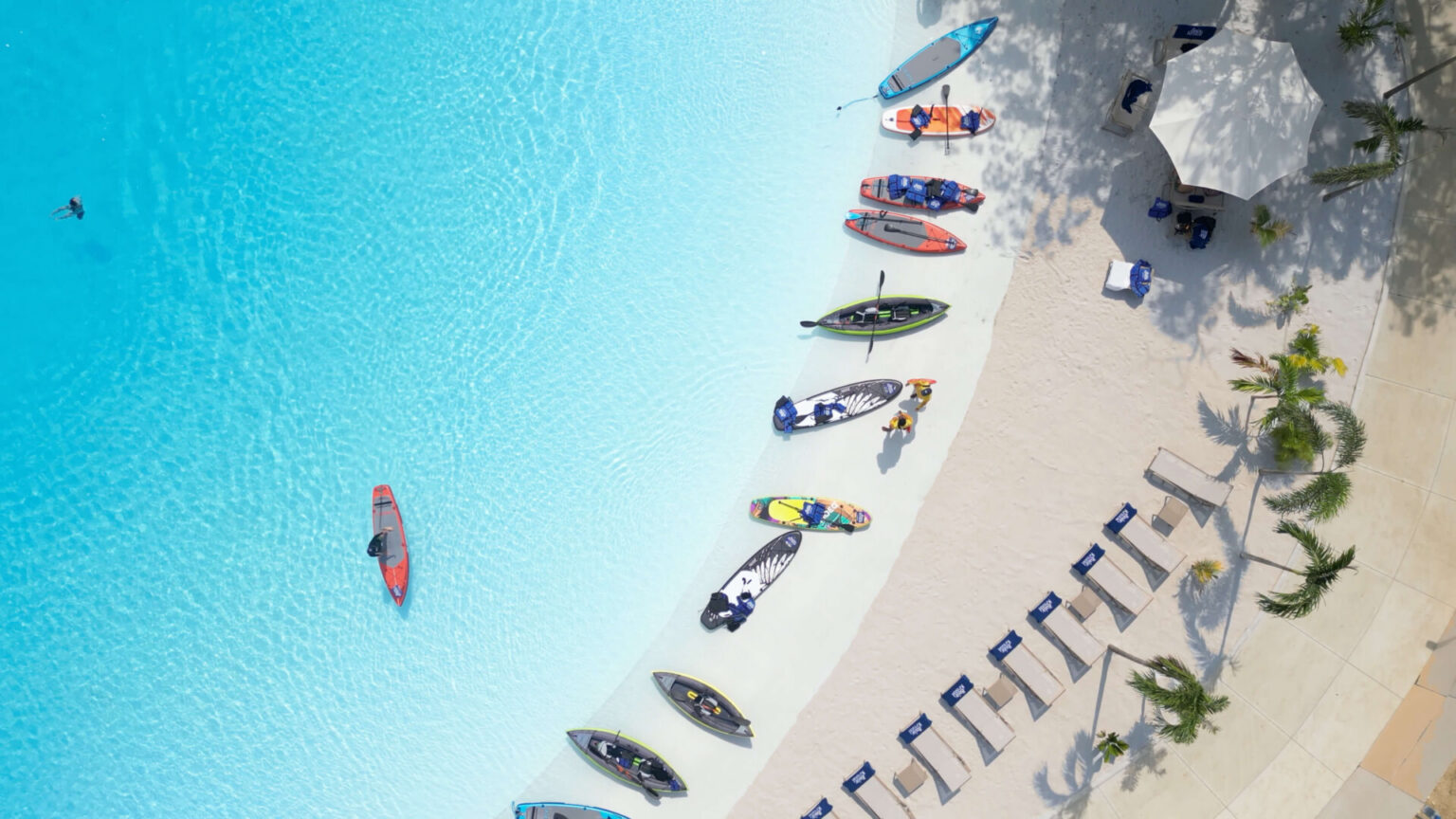
Baía Kristal, developed by AED Constructores, marked a turning point in the Colombian market. Its 7.93-acre crystalline lagoon, equivalent to 6.1 American football fields or 25.7 Olympic swimming pools, became the visual, social, and commercial heart of the project.
The figures are compelling:
- 1,560 apartments sold in just 2.3 years, equivalent to an average of 56 homes sold per month.
- The top-selling project through the close of its commercialization in December 2023.
- The sales value per square meter of the project’s homes doubled over a 2.3-year period, compared to similar projects that grew between 5% and 15%.
- The average sales price per square meter increased by 33.77% between 2022 and 2023, when the Crystal Lagoons® amenity began operating.
- The first stage had a target of selling 60% in one year, which was achieved in just 45 days.
- The first phase of the project quickly reached 95% of homes sold, leading the developer to launch a second commercialization phase.
- Units sold grew by 150% since launch.
- AED Constructores had projected a seven-year sales period for the first phases of the project, which sold out in just 2.3 years.
- The project’s sales success led the developer to sign a master agreement with Crystal Lagoons for 13 new lagoon projects across Colombia.
- Baía Kristal commands a significant premium, generating, on average, 25.34% more value compared to similar projects in the Northern Zone and surrounding areas, highlighting amenities as a key competitive advantage.
- The project’s exceptional financial validation drove the creation of Kristal Malls, a 120,000 m² “Shopping Resort” in Cartagena that will feature a new lagoon as its commercial epicenter.
- Baía Kristal has been recognized as a Best Community Practice by the Colombian Chamber of Construction (Camacol) and as a Sustainable Urbanism Success Story during Biopolis 2024, held within the framework of COP16, among other awards.
For real estate developers, these results demonstrate that a crystalline lagoon is not just a landscape feature. It is a tool for positioning, differentiation, and sales velocity.
“The turquoise lagoon was a decisive differentiating factor that contributed to the exceptional organic positioning of this project,” explains Juan Pablo García, CEO of AED Constructores.
Colombia seeks year-round beach lifestyle
The success of Crystal Lagoons in Colombia responds to a clear need: buyers are not only looking for square meters, but for experiences. They want wellness, recreation, community, connection with water, and a lifestyle associated with tourist destinations.
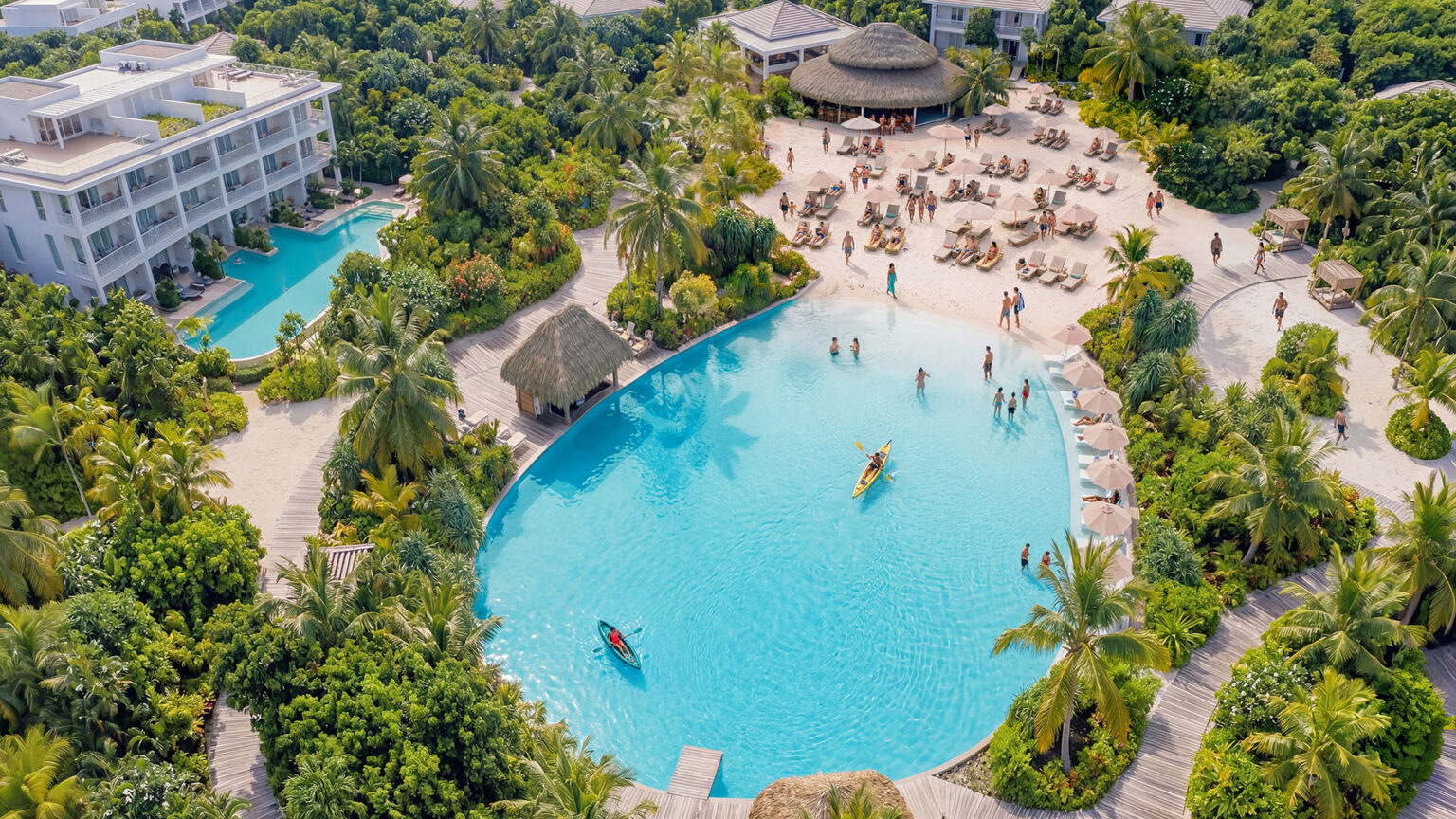
In coastal cities such as Cartagena, the lagoon enhances the natural appeal of the surroundings. In inland areas, it can bring beach life to places far from the sea, creating an aspirational experience that is difficult to replicate.
This combination turns Crystal Lagoons® technology into a competitive advantage for residential, tourism, mixed-use, and commercial projects.
Kristal Malls and the reinvention of retail in Colombia
The impact of Crystal Lagoons in Colombia is not limited to the residential segment. Kristal Malls, in Cartagena de Indias, represents a new stage: the transformation of traditional retail into a destination for entertainment, tourism, shopping, and beach life.
The project is positioned as the largest shopping center in the Colombian Caribbean and the country’s first Shopping Resort. Its centerpiece will be a large crystalline lagoon developed under the Public Access Lagoons® model, also known as PAL® projects, which will allow ticketed access and recreational activities year-round.
Kristal Malls brings together figures that reinforce its scale:
- The project began its construction phase with an impressive 55% of its units sold in advance.
- A case that demonstrates how turquoise-water technology can save and reinvent the shopping center industry in the face of e-commerce growth, transforming malls into multifunctional, publicly accessible entertainment destinations.
- A 731-acre development.
- 110,000 m² of leasable area.
- A crystalline lagoon of more than 20,000 m².
- More than 100 national and international brands associated with the project.
- A 150-room hotel.
- Offices, apartments, healthcare centers, a movie theater, an amusement park, restaurants, and event spaces.
This progress confirms that the “lagoon effect” can also be capitalized on in retail. The lagoon not only attracts visitors; it redefines the shopping experience and transforms the mall into a multifunctional destination.
A scalable model for new markets
The success of Baía Kristal led to new agreements to develop projects in cities such as Barranquilla, Santa Marta, Pereira, and Cartagena de Indias. In addition, Crystal Lagoons has moved forward with new complexes in regions such as Cundinamarca, Meta, Tolima, and Valle del Cauca, reinforcing the country’s potential as an expansion platform.
The key lies in scalability. Crystal Lagoons® technology makes it possible to create large crystalline bodies of water with low resource consumption, using up to 33 times less water than an 18-hole golf course, up to 100 times fewer chemicals than a traditional swimming pool, and only 2% of the energy required by conventional swimming pool filtration systems.
Colombia as a regional showcase
The Colombian case demonstrates that crystalline lagoons can transform the logic of real estate development. Baía Kristal proved its impact on sales and property appreciation. Kristal Malls is demonstrating its ability to reinvent retail and create new urban hubs for entertainment.
For real estate developers, the opportunity is clear: to incorporate an anchor amenity capable of accelerating sales, strengthening the project’s identity, and responding to the growing demand for beach life.
In Colombia, Crystal Lagoons is not only changing the real estate landscape. It is demonstrating that the beach can become the center of a new way of living, investing, and developing cities.
Original content.