Peruvian Finance Newspaper Features Crystal Lagoons® Expansion in Peru

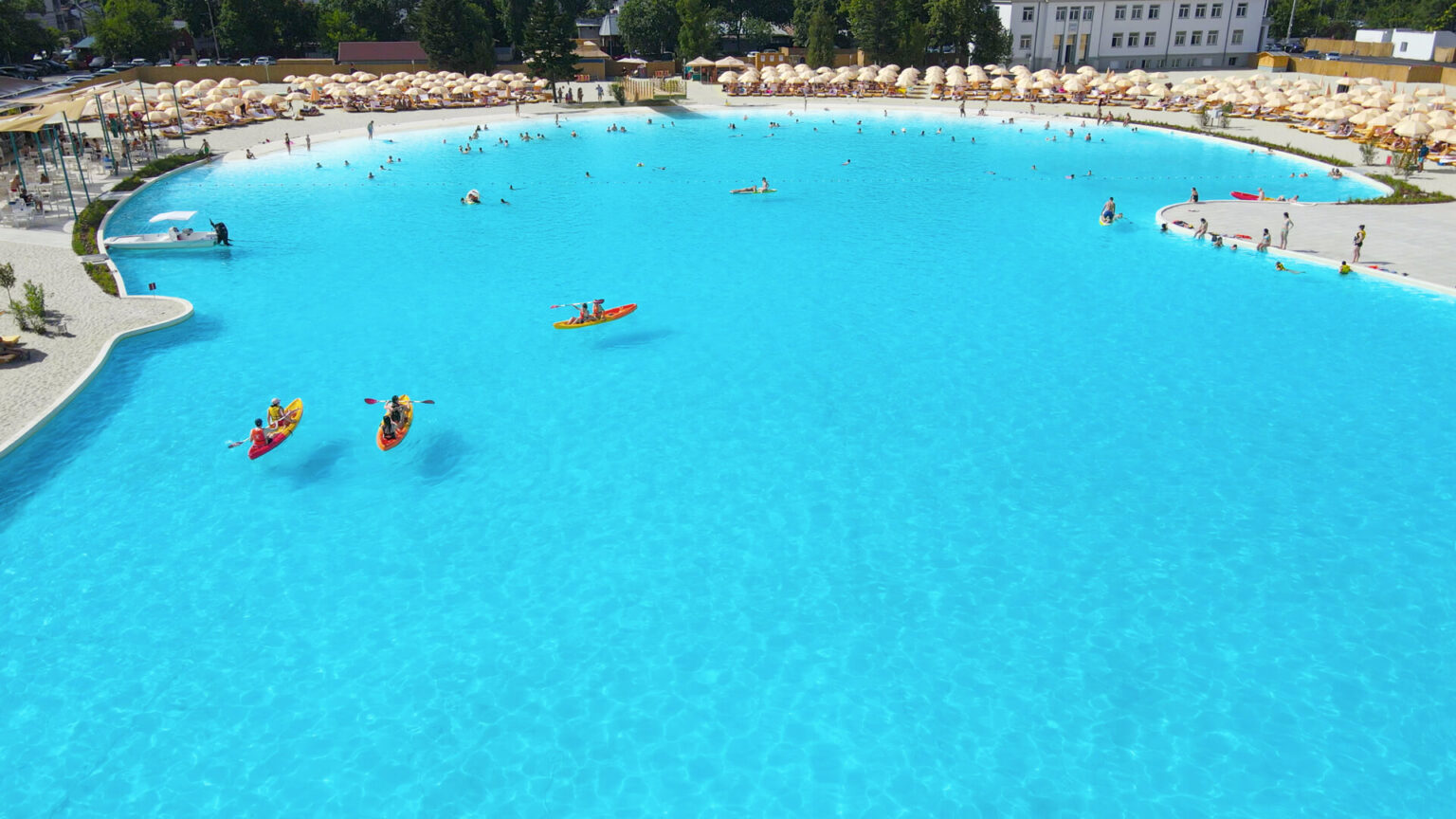
Up to 20 crystalline water lagoons could be built in Peru as of 2021. According to an article by Gestion.pe, the country’s leading financial newspaper, the Miami-based multinational Crystal Lagoons® will be expanding in the Latin American country with several projects in the pipeline.

Crystal Lagoons plans between 15 and 20 manmade lagoons to be built in different cities of Peru over the course of the next 10 years, is currently in negotiations with two real estate developers, explained Cristián Lehuedé, executive director at the multinational, during a recent interview with Gestion.pe.

Public Access Lagoons can be accessed via ticketed entry that, on average, could cost between US $10 and US $15, according to estimates made based on the experience of this business model applied in other Latin American cities.

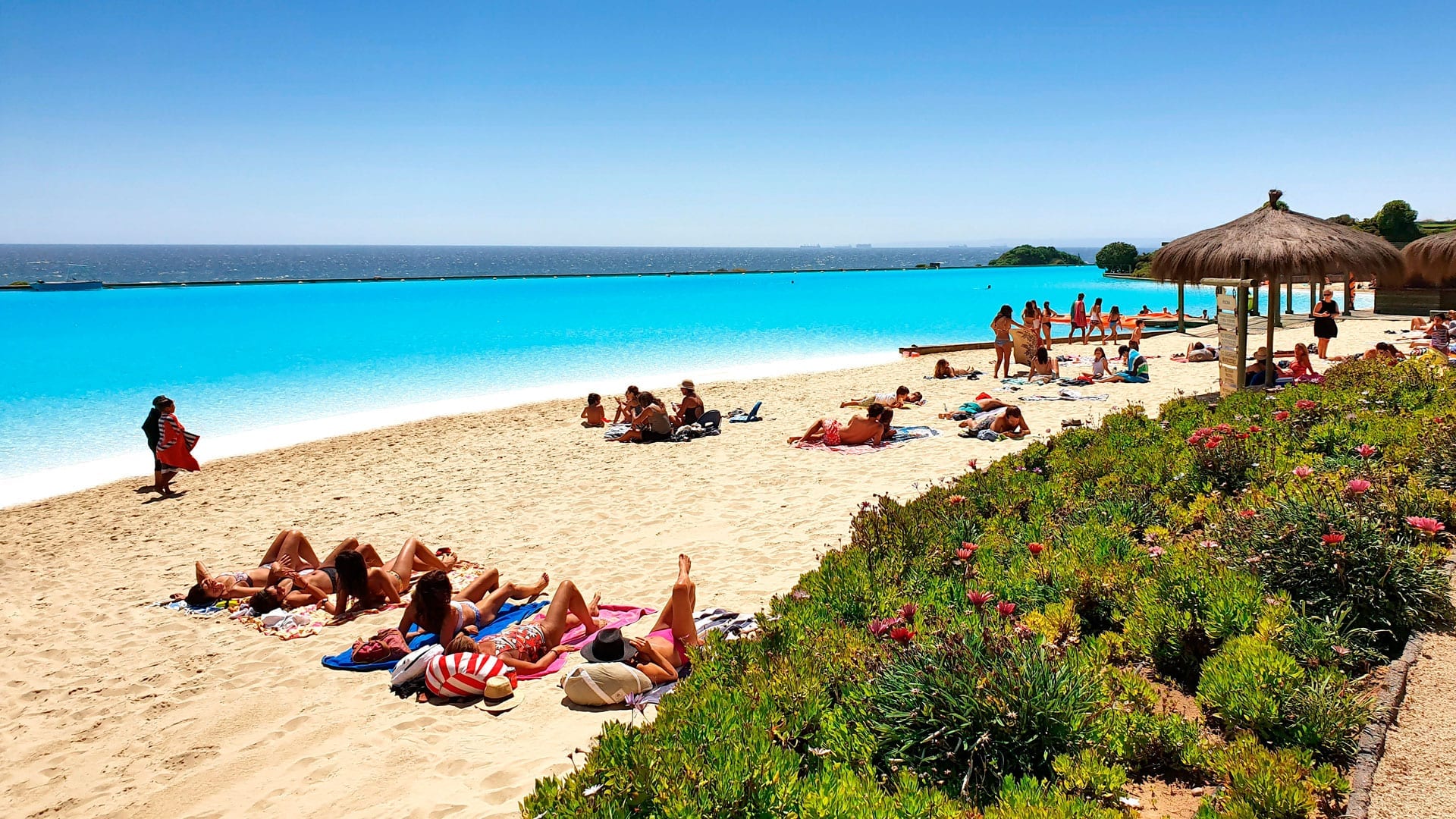
Crystal Lagoons provides the technology for the development of large manmade crystalline lagoons with white sand beaches, which are built in association with companies typically connected to the real estate or leisure industries.

Unlike pools or other artificial lagoons, the technology used to power Crystal Lagoons amenities allows much larger bodies of water to be built and maintained in crystalline condition without incurring in excessive costs, Lehuedé added.

Peru already has two such lagoons powered with this unique technology, although they do not offer public access. They are found in the multifamily developments known as La Jolla de Asia (Lima) and Hacienda La Joya (Arequipa) and can only be enjoyed by residents and homeowners. This was the company’s original business model: providing the technology for the construction of lagoons in real estate projects, which in turn ensures the developments added value.

However, the firm is now aiming to bring Peru its new business model, known as Public Access Lagoons, which can be accessed by the general public via ticketed entry. Likewise, they are surrounded by several services and amenities: facilities, beach area, retail premises, etc. “Our goal is to generate a very interesting and attractive hub for the cities in which these lagoons are located,” detailed Lehuedé.

Company estimates indicate that Peru has the capacity to build 15 or 20 Public Access Lagoons, considering its climate, population, and the touristic areas it already has to offer. The lagoons would average between 5 and 7,5 acres.

At least four of the amenities would be developed in Lima, another four in Arequipa, while the remaining lagoons would be divided up between Tacna, Piura, Trujillo and Ica.

We provide the technology. The development of these lagoons requires an alliance with a company that can build, operate, and take care of their maintenance, while managing the leasing of the businesses that are located around the lagoon as well as security, etc. We are looking for an exclusive partner to oversee investment in these projects in Peru,” added Lehuedé.

The company is currently in “relatively advanced conversations” with two real estate developers, however, these negotiations have been delayed due to the difficulties associated with the quarantine the country is undergoing to mitigate contagion due to coronavirus. The construction of each lagoon would require an investment ranging between US $10 million and US $15 million.

“We hope that when this happens, our estimates indicate that could be next year, we will be signing a contract with one of them and after that it would take us a further two years to have the first Public Access Lagoon built (…). I think that once this stage of social distancing has passed, people will be very eager to go out and socialize on weekends in a beautiful setting that is close to their town. And that is what we aim to provide,” he said.

Lehuedé also noted that the company has signed a further eight projects with real estate developers for the construction of private lagoons, which are currently in the planning stage. “These are projects that normally take a long time and could certainly take a little longer due to current quarantine restrictions,” he added.

Gestion.pe

Outstanding news

These are developments where anyone can enjoy an idyllic beach lifestyle through ticketed entry. Moreover, they transform any piece of land into the meeting point of the 21st century and the best business opportunity.

Public Access Lagoons® projects, also known as PAL® developments, developed by Crystal Lagoons, are redefining the concepts of entertainment, tourism, and urban development. These crystalline lagoons, accessible to all through ticketed entry, transform any piece of land into both the best business opportunity and the meeting point of the 21st century, creating destinations that combine technology, sustainability, and profitability.

The vision of Crystal Lagoons goes beyond offering a crystalline lagoon; it is about creating complete experiences that generate lasting value. With the ability to bring a tropical beach just steps away from people’s homes, PAL® complexes have become unparalleled attraction hubs, capable of hosting a wide variety of activities and events throughout the year.

The Heart of a New Lifestyle

PAL® lagoons are much more than a visual attraction: they are the social, recreational, and economic center of modern communities. These developments can host event centers, concerts, festivals, food fairs, sports activities, and many other initiatives throughout the year, becoming true hubs of entertainment and social interaction.

Examples of Projects Transforming Cities

  • Lagoon Park Bucharest (Romania): An urban oasis located in the heart of Bucharest, featuring a 2.2-acre crystalline lagoon that debuted with sold-out tickets more than a week in advance.
  • Epperson Lagoon (USA): With its 7.3-acre crystalline lagoon, it became the first real estate project transformed into a PAL® development.
  • Angel Lagoon (USA): Anchored by a 4.2-acre crystalline lagoon, it has been described as “a paradise just 40 minutes from Houston.”

A Profitable and Sustainable Business Model

PAL® projects generate multiple sources of revenue, making them a unique opportunity for investors and real estate developers. Among the most common models are:

  • Sale of daily tickets and annual memberships
  • Rental of spaces for events and corporate activities
  • Operation of restaurants, bars, shops, and beach clubs
  • Commercialization of naming rights and brand sponsorships

All of this is achieved through a scalable and sustainable operational model that reduces maintenance costs and maximizes long-term profitability.

Crystal Lagoons® Sustainable Technology

The patented Crystal Lagoons® technology allows large bodies of crystalline water to be maintained with minimal resource consumption:

  • Uses any type of water: fresh, salt, or brackish
  • Consumes up to 33 times less water than a golf course
  • Uses only 2% of the energy required by conventional filtration systems
  • Requires up to 100 times fewer chemicals than a traditional swimming pool

This efficiency makes PAL® projects a globally recognized model of sustainability and water efficiency.

Developments Anywhere in the World

One of the greatest advantages of PAL® projects is their geographical versatility. They can be developed in urban, rural, or inland areas and adapted to different scales and audiences.

Master Agreements: A Model for Global Expansion

Crystal Lagoons drives the growth of its PAL® projects through Master Agreements, strategic alliances that allow local partners to develop multiple lagoons under a single license.

This model:

  • Facilitates rapid expansion in key markets
  • Optimizes investment and development timelines
  • Guarantees the exclusive use of Crystal Lagoons® technology in each region

In this way, partners can capitalize on the enormous commercial potential of crystalline lagoons, benefiting from the global recognition of the Crystal Lagoons® brand.

Original Content

The project will become the largest urban beach in Europe, fulfilling a long-awaited aspiration for Madrid’s residents. It will be developed under the Public Access Lagoons® model, also known as PAL® projects, accessible to all through ticketed entry.

For a long time, the inhabitants of Madrid, Spain’s capital, have longed to experience beach life within the city. Today, that dream will come true thanks to Crystal Lagoons, as the municipal council of the town of Alovera has approved a project that will enable the development of the largest urban beach in Europe. This will put an end to the wait, allowing Madrid’s residents to enjoy crystalline waters and white sandy beaches.

The project

This is Alovera Beach, a new Public Access Lagoons® development, also known as a PAL® project, located just 30 minutes from Madrid. Its centerpiece will be a 5.2-acre lagoon powered by Crystal Lagoons® technology, accessible to all through ticketed entry. The body of water will be suitable for swimming and water sports, and will be surrounded by 16,000 m² of white sand beaches. 

Contribution to the Community

The complex will represent an investment of over € 20 million and create more than 140 direct jobs. In addition to the crystalline lagoon, it will feature a range of infrastructure characteristics from the PAL® model. This will include:

  • Sports facilities
  • Water park with slides and children’s pools
  • Water sports school – kayaking, paddleboarding –
  • Dining services
  • Events
  • Beach Club
  • Among other amenities, the project is expected to set a benchmark for aquatic entertainment in central Spain.

The project is an innovative concept that will transform the municipality of Alovera and boost tourism in the Guadalajara area, positioning it on the European map of technology, innovation, and sustainability, while establishing it as a unique reference for outdoor water sports. The complex will be open year-round and is expected to receive around 350,000 visitors annually.

Bringing the Beach to the City

Alovera Beach’s proximity to Madrid and its excellent accessibility will make this entertainment park an attractive option for thousands of people who would otherwise travel hundreds of kilometers to enjoy a beach experience, resulting in a significant reduction in CO2 emissions.

Sustainability as a Cornerstone

Like all lagoons developed by the multinational innovation company, Alovera Beach will be no exception and will feature Crystal Lagoons® sustainable technology, which:

  • It uses any type of water: fresh, salt, or brackish water, that has no alternative use
  • It consumes 33 times less water than an 18-hole golf course and 40% less water than a park of the same size
  • Its filtration system uses only 2% of the energy required by conventional systems
  • It employs up to 100 times fewer chemicals than a swimming pool

The Partnership and Urban Contribution

The complex is being developed by Grupo Rayet in partnership with Crystal Lagoons, becoming a model of urban regeneration that will revolutionize the local landscape with a high social impact.

Construction is scheduled to begin at the end of 2025, with a partial opening of the park expected in the spring of 2027.

Europa Press

The alliance will accelerate the evaluation and development of Eco-Heated Lagoons by Crystal Lagoons™ projects worldwide, fostering seamless integration and synergy between the technologies of both companies.

Crystal Lagoons and MintGreen, two global leaders in sustainability innovation, have teamed up to advance the assessment and development of Eco-Heated Lagoons by Crystal Lagoons™ projects – heated crystalline lagoons powered by eco-friendly, high efficiency solutions.

Agreement Objective

Through a Memorandum of Understanding (MOU), both companies will collaborate on multiple Crystal Lagoons projects worldwide. This partnership aims to create efficient integration between their technologies, enabling crystalline lagoons to be heated while simultaneously cooling high-performance computing systems used for cryptocurrency mining.

Eco-Heated Lagoons by Crystal Lagoons™

Crystal Lagoons has developed its patented Eco-Heated Lagoons by Crystal Lagoons™ technology, which enables sustainable cooling through crystalline lagoons while harnessing residual heat from facilities such as data centers to warm the lagoon.

Some key benefits include:

  • Leveraging existing bodies of water for dual use, including cooling cryptocurrency mining equipment.
  • Operating in a closed-circuit system, avoiding water waste.
  • Significantly reducing carbon footprint.
  • Capturing waste heat that would otherwise be released into the atmosphere.
  • Providing low-maintenance, low-cost cooling compared to traditional chillers.

MintGreen’s Digital Boiler™ Technology

MintGreen is the inventor of the Digital Boiler™, a patented technology that recovers and repurposes heat from high-performance computing (e.g., Bitcoin mining, AI processing) to deliver hot water for district energy systems, pools, resorts, and other facilities. This solution uses energy twice: first for computing, then for heating.

Its high-efficiency hot water system:

  • Recovering >97% of computing energy as usable heat.
  • Supplying water temperatures up to 185°F (85°C).
  • Operating on low-carbon electricity.
  • Preventing up to 1,800 tonnes of CO₂ emissions per MW annually compared to natural gas.

This makes it one of the world’s most cost-effective and reliable low-carbon heat sources.

Expected Results

The Crystal Lagoons and MintGreen alliance will deliver transformative benefits, including: 

  • Harnessing thermal energy from Bitcoin mining to heat crystalline lagoons.
  • Repurposing lagoon water for multiple applications.
  • Extending the swimming season into colder months.
  • Showcasing the future of decentralized, sustainable energy infrastructure.

Original content