San Alfonso del Mar: 5 Key Milestones of the Lagoon that Launched Crystal Lagoons® Technology to the World

More than a world record: How the project that “seemed impossible” validated a business model that is now redefining global real estate development.

For real estate developers and leaders in the hospitality industry, innovation is not just a buzzword; it is the difference between a project that stalls and one that redefines the market. In the modern history of real estate amenities, there is a clear “before and after” marked by a specific turning point: the inauguration of the crystalline lagoon at San Alfonso del Mar in Chile.

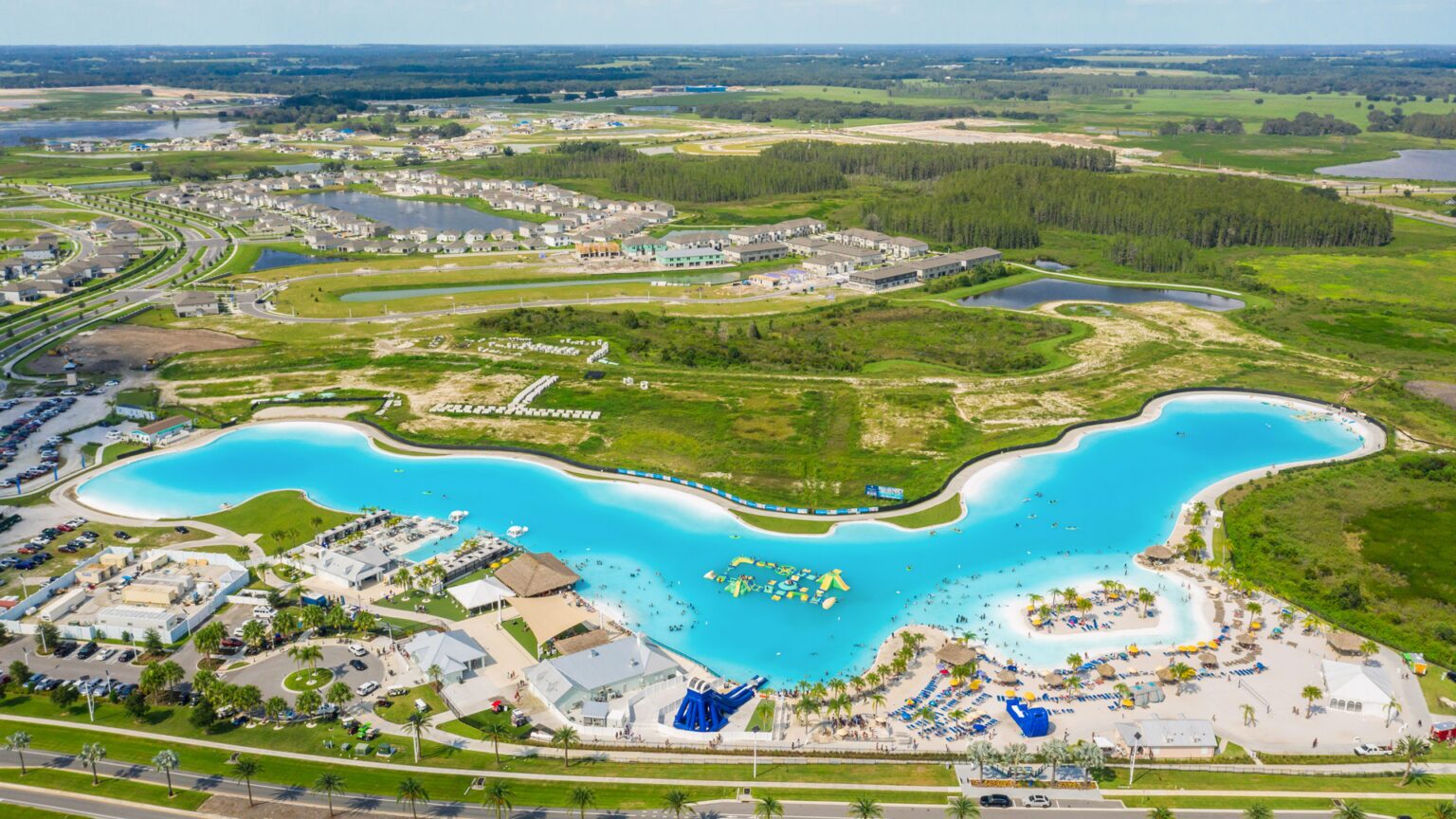
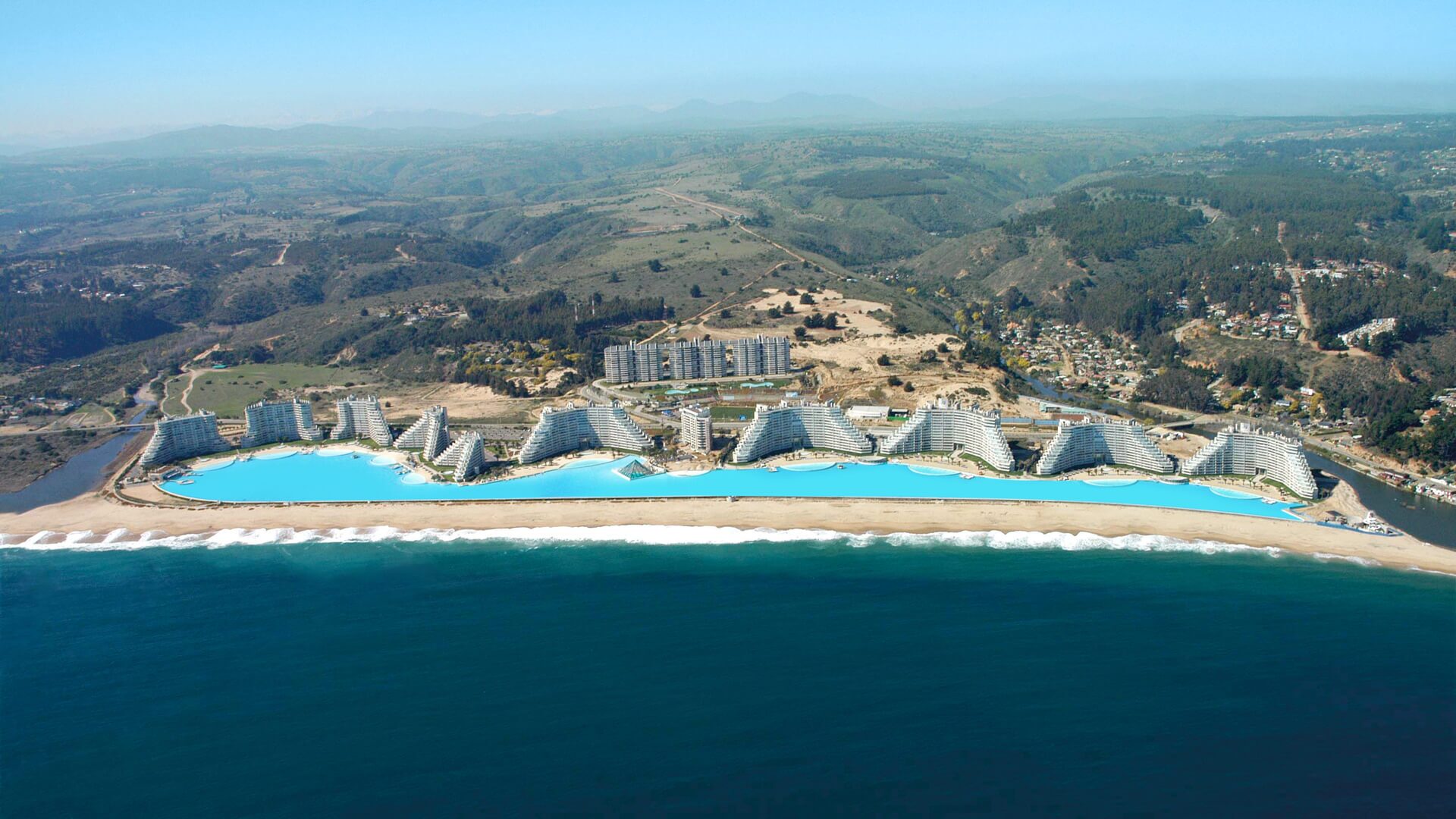
Located in Algarrobo, about 90 km from Santiago, Chile, this second-home complex was built around an approximately 20-acre crystalline lagoon powered by Crystal Lagoons® patented technology. From that point on, the paradigm changed forever. San Alfonso del Mar was not just the first large-scale project; it was the ultimate proof of concept, the living laboratory that demonstrated to the financial and real estate world that the “lagoon effect” was real, profitable, and sustainable.

San Alfonso del Mar: the lagoon that changed the amenities industry

Before San Alfonso del Mar, the idea of maintaining a crystalline body of water, even of limited size, was economically unfeasible. The innovation developed by Fernando Fischmann made it possible to create and operate monumental lagoons with low water, energy, and chemical consumption, opening up an entirely new amenity category.

Today, that first lagoon triggered an expansion to more than 1,000 projects in different stages of development and negotiation across over 60 countries, consolidating Crystal Lagoons as a global benchmark.

The 5 key milestones of the San Alfonso del Mar lagoon

Milestone 1: The first crystalline lagoon with Crystal Lagoons® technology

San Alfonso del Mar was the world’s first project to incorporate Crystal Lagoons® technology to create a large lagoon with turquoise waters and high transparency next to the Pacific Ocean.

For developers, this meant something unprecedented:

  • Testing, at real scale, a technology that made it possible to build lagoons of virtually unlimited size.
  • Transforming a traditional coastal site into a second-home resort with controlled and safe “beach life.”

This first pilot became the “before and after” for the company and for the entire aquatic amenities market.

Milestone 2: Guinness World Record and unprecedented scale

In 2007, the San Alfonso del Mar lagoon was awarded the Guinness World Record as the world’s largest crystalline lagoon/pool, thanks to its dimensions:

  • More than 1,013 meters in length.
  • Approximately 20 acres of surface area.
  • 250 million liters of seawater.

Although Citystars Sharm El Sheikh in Egypt later surpassed it, the symbolic impact of the record remains: it proved that Crystal Lagoons® technology could successfully operate at scales that were previously considered impossible.

For the positioning of real estate and hospitality projects, this record meant:

  • Turning the amenity into global news.
  • Associating the development with a worldwide milestone, raising its perceived value and tourist appeal.

Milestone 3: From pilot to one of the most successful second-home resorts in the region

Originally, San Alfonso del Mar was conceived for around 400 apartments. The success of the crystalline lagoon led the project to grow to approximately 1,400 units, all with views of the ocean and the lagoon.

The lagoon:

  • Transformed Algarrobo into one of Chile’s most successful beach resorts.
  • Positioned the complex as the most successful second-home resort in the region, doubling the initial sales prices.

For a developer, this milestone demonstrates that a crystalline lagoon can:

  • Accelerate the sales velocity.
  • Justify higher prices per square meter.
  • Extend the high season and overall occupancy.

Milestone 4: A global media icon that positioned the brand

More than two decades after its inauguration, San Alfonso del Mar continues to appear in international media, rankings, and lists of “places you must see at least once in your life.”

Media outlets from different countries have described it as:

  • “A portion of ocean encapsulated” or “the most impressive swimming pool in the world.”

This media magnetism turned the lagoon into:

  • The global calling card for Crystal Lagoons® technology.
  • A case study in organic marketing for the company and for the resort itself.

For developers and hospitality operators, this translates into:

  • Global reach without an equivalent additional investment in media.
  • An amenity that generates constant organic content (photos, videos, social media) created by the visitors themselves.

Milestone 5: Platform for global expansion and model for new developments

San Alfonso del Mar was not just a one-off success: it became the reference model that allowed Crystal Lagoons to scale its business to more than 1,000 projects in different stages across over 60 countries, from the Middle East to the United States, Asia, and Europe.

From this project onward, the technology was applied to:

  • Residential and second-home developments.
  • Luxury resorts and hotels.
  • Public Access Lagoons® projects, also known as PAL® developments, a public-access model that opens up new revenue streams through ticketing, events, dining, and retail.

For investors and developers, the strategic message is clear:

  • San Alfonso del Mar served as a successful “prototype,” proving the technical, economic, and commercial viability of the technology.
  • This success story now supports large-scale projects around the world, reducing the perceived risk for banks, funds, and hotel chains.

The lagoon that opened a new chapter for resorts and amenity-driven developments

San Alfonso del Mar proved that a large-scale crystalline lagoon can:

  • Change the destiny of a project and an entire city.
  • Generate added value, faster sales velocity, and global positioning.
  • Be the starting point for a scalable, sustainable, and highly profitable technology for real estate and hospitality developments.

For developers, the question is no longer whether a Crystal Lagoons® amenity works, but how to replicate the “San Alfonso del Mar effect” in their next project and turn an amenity into the true value driver of the master plan.

Original content.
Outstanding news

  • Crystal Lagoons continues expanding its presence in the hospitality sector with the inauguration of a crystalline lagoon at Hyatt Regency Hill Country Resort and Villas in San Antonio, Texas. The new amenity is part of the resort’s large-scale redevelopment and reflects a growing trend among hospitality operators: transforming underutilized resort assets into high-impact experiential destinations.

Crystal Lagoons continues to strengthen its leadership in the hospitality and luxury tourism sector with the inauguration of a spectacular crystalline lagoon at Hyatt Regency Hill Country Resort and Villas in San Antonio, Texas.

This project marks a strategic milestone for the company: it is the first time a Crystal Lagoons® amenity has been incorporated into a resort in the central United States. By bringing a beach experience to an inland destination with no natural access to the sea, the development illustrates how hotels can redefine their value proposition through experiential amenities.

The partnership and the renovation

The development is the result of a partnership between Crystal Lagoons, Woodbine Development Corporation, and Hyatt, as part of an ambitious resort renovation plan aimed at enhancing the guest experience with new spaces and world-class amenities.

The opening took place as part of the resort’s comprehensive transformation, following a renovation costing more than US$100 million. In this context, the new lagoon, known as The Big Spring, stands out as the most iconic element of the renovation and as a new benchmark for the development of distinctive tourist destinations in inland markets.

An iconic amenity that elevates the resort’s value proposition

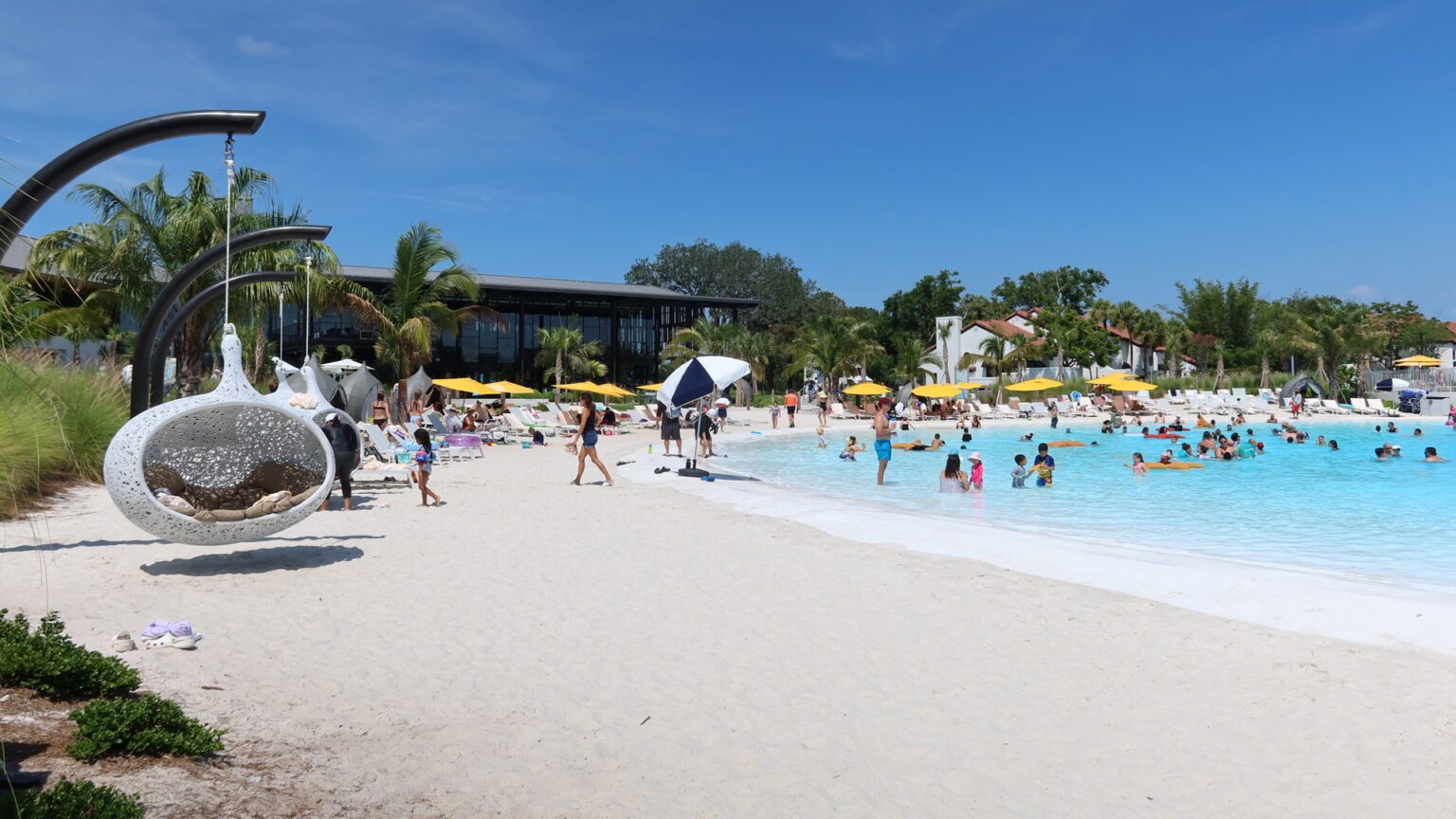
The new lagoon features Crystal Lagoons® technology in a 2.2-acre format and is surrounded by white-sand beaches, creating a beach-style destination experience in the heart of the Texas Hill Country. This offering allows guests and visitors to enjoy an environment that combines recreation, relaxation, and visual appeal without the need to be near the sea.

What does the new lagoon bring to the Hyatt Regency Hill Country?

The addition of this amenity significantly expands the resort’s offerings, which already featured first-class recreational facilities, adding value to a proposal that includes:

  • White-sand beaches
  • Premium cabanas
  • Water sports such as kayaking
  • New opportunities for events, weddings, and corporate gatherings by the water

This lagoon also becomes part of a well-established ecosystem that already offers:

  • Multiple pools
  • Water slide
  • Lazy river
  • FlowRider experience
  • Spa and titness center
  • 27-hole golf course

In terms of positioning, the lagoon does not replace existing amenities; rather, it enhances them and reorganizes them around a new experiential centerpiece for the project.

A Growing Trend: Redeveloping Resorts with Crystal Lagoons® Amenities 

For real estate developers, the Hyatt Regency Hill Country Resort and Villas case confirms a key trend: the hospitality market no longer competes solely on location, brand, or room inventory. Increasingly, it competes on memorable experiences and amenities capable of transforming a hotel asset into a destination in itself.

The partnership between Crystal Lagoons, Woodbine Development Corporation, and Hyatt demonstrates how a disruptive amenity can be integrated into a large-scale repositioning strategy. Woodbine incorporated the lagoon into a broader improvement plan that included renovated guestrooms, upgraded meeting spaces, new standalone villas, and a waterfront event venue.

Why Hospitality Leaders Choose Crystal Lagoons

For a real estate developer or hotel operator, incorporating this technology is not an expense, but a high-return investment. Data confirms three fundamental pillars:

1. Increased ADR and Occupancy (RevPAR)

The presence of a crystalline lagoon allows luxury hotels to justify higher average daily rates (ADR). By offering a “destination within a destination,” it increases year-round demand, reducing the resort’s seasonality.

2. Differentiation in a Competitive Market

In a saturated hospitality market, the “Lagoon Effect” acts as a unique commercial magnet. While other resorts offer conventional pools, Hyatt Regency Hill Country now delivers a beach resort experience in the middle of Texas, accelerating bookings and strengthening customer loyalty.

3. Sustainability: The Key to Modern Operations

Crystal Lagoons® technology is the perfect ally for the ESG (Environmental, Social, and Governance) goals of major corporations:

  • Efficient Water Consumption: It uses up to 33 times less water than a golf course and 40% less than a park of the same size.
  • Low Maintenance: Telemetry systems and ultrasonic filtration drastically reduce the use of chemicals and energy.

Crystal Lagoons consolidates its presence in hospitality

With a presence in more than 60 countries and over 1,000 projects in different stages of development and negotiation, Crystal Lagoons continues to revolutionize the way tourist destinations and real estate developments are designed.

Among the hospitality projects of the multinational innovation company, the following stand out:

  • AVA Resort Cancun, Mexico: This luxury all-inclusive resort features a 2.89-acre crystalline lagoon at its heart, offering guests an exclusive aquatic amenity in a controlled and relaxing environment. The lagoon is not just a visual centerpiece; it’s a driver of value, experience, and guest satisfaction.
  • Evermore Orlando Resort, USA: At Evermore, located next to Walt Disney World, a former golf course was redeveloped to incorporate a 7.78-acre lagoon, creating one of the most innovative inland resort concepts in the United States.

With this inauguration, Crystal Lagoons reaffirms its progress in the global luxury hospitality segment, confirms that paradise is a matter of technology rather than location, and reinforces a narrative that is becoming increasingly important for the real estate business: the creation of experiential destinations in locations where it was previously impossible to offer a world-class beach experience.

For real estate developers, the lesson is clear: in an environment where differentiation defines competitiveness, integrating a disruptive amenity like Crystal Lagoons can transform a project’s value proposition, elevate its positioning, and turn a resort into an iconic destination.

Yahoo!

  • With 17 signed projects and more than 120 in different stages of development and negotiation, this innovation has positioned itself as a true alternative for hotels and resorts to bring an idyllic beach lifestyle to space-constrained sites.

In the hotel industry, securing an oceanfront location is becoming increasingly difficult and expensive. However, Crystal Lagoons has changed the game.

With the launch of its new Small Lagoons by Crystal Lagoons™ model, it is now possible to bring a paradise-like beach lifestyle to any location, regardless of site size.

This innovation has been an immediate commercial success: in just four months since its announcement, there are already 17 signed projects and more than 120 under negotiation worldwide. The reason? Because it can transform hotels, boutique resorts, and space-constrained properties into world-class tourist destinations at a fraction of the cost of a traditional pool. 

Technology that is redefining the key metrics of the hotel business.

1. The “Beach Effect” in Limited Spaces

Historically, crystalline lagoons were associated with large residential master plans. The revolution behind Small Lagoons by Crystal Lagoons™ technology lies in its adaptability: it makes it possible to develop turquoise water bodies ranging from 0.25 acres up to 1 acre.

This opens up a new investment horizon for:

  • Hotels: Transforming pool areas or inner courtyards into a beach oasis.
  • Boutique projects: Maximizing the value of compact sites without sacrificing a luxury experience.
  • Asset renovations: Revitalizing existing hotels by replacing outdated pools or underused green areas with a private beach.

2. Direct Impact on RevPAR and ADR

For an asset manager or hotel owner, aesthetics are secondary if they don’t move the revenue needle. Integrating a crystalline lagoon has a direct impact on the most important financial indicators:

  • Higher ADR (Average Daily Rate): Rooms with lagoon views or direct beach access (“Lagoon View”) can be positioned as premium products, allowing hotels to charge higher rates compared to standard rooms.
  • Improved RevPAR (Revenue per Available Room): By offering a unique amenity in the area, occupancy can remain more stable throughout the year, reducing seasonality and supporting a more consistent revenue stream.

3. Boosting F&B and Events Revenue

Unlike swimming pools, lagoons aren’t just a place to swim; they become hubs of activity and social interaction that drive guest engagement. The setting of a safe beach and turquoise waters energizes other hotel revenue streams:

  • Food & Beverage (F&B): Restaurants and bars located lagoon-front can see higher foot traffic and a higher average check. Guests tend to stay on the property longer, spending within the hotel instead of going elsewhere.
  • Corporate events and weddings: The exclusivity of having a “private beach” in the middle of the city turns the hotel into an ideal venue for high-end events, opening a highly lucrative revenue line.

4. Lower cost than a traditional pool (with superior visual impact)

Small Lagoons by Crystal Lagoons™ technology offers:

  • Up to 4 times lower construction cost than a pool of the same size
  • Up to one-third of the maintenance cost of a traditional pool
  • Virtually negligible replacement costs for hydraulic equipment (compared to pools)

5. Operational Efficiency and Sustainability

Unlike traditional pools, which require complex machine rooms and intensive use of chemicals and energy, Small Lagoons by Crystal Lagoons™ technology operates under a patented technology-driven efficiency model.

For hotel operators, this translates into controlled operating expenses (Opex):

  • Lower input consumption: Uses up to 100 times fewer chemicals than a conventional pool and only 2% of the energy of traditional filtration systems.
  • Lower water consumption: Consumes up to 33 times less water than a golf course and 40% less water than a park of the same size, and it can use fresh, salt, or brackish water.
  • Telemetry: Water quality is monitored and controlled remotely from the Crystal Lagoons Control Center, reducing the need for specialized technical staff on-site.

6. More activities = more revenue opportunities

A small lagoon makes it possible to program experiences that drive traffic and on-property spending, for example:

  • Events and celebrations
  • Water sports and recreational activities
  • Lagoon-front dining experiences

7. Faster implementation thanks to standardized models

Crystal Lagoons offers standardized models that reduce design time, simplify permitting, and speed up implementation, while preserving the benefits of its large-scale lagoons.

In addition, the system uses a patented technology that avoids filtering the entire body of water, significantly reducing the energy and equipment required.

8. Year-round experience (optional)

One of the classic challenges in hospitality is seasonality. With Eco-Heated Lagoons by Crystal Lagoons™ technology, lagoons can be heated using waste-heat from data centers or cryptocurrency mining, enabling a “thermal beach” experience year-round with no additional energy consumption.

The Future of Hospitality Is Turquoise

The rapid adoption of the Small Lagoons by Crystal Lagoons™ model shows that the market understands the value of this innovation.

It’s no longer just about offering a bed to sleep in; it’s about selling an experience. For hospitality developers, incorporating a crystalline lagoon is the most effective strategy to increase asset value, improve guest satisfaction, and secure long-term profitability.

Original content

  • How do you revitalize shopping malls, racetracks, amusement parks, or underused land? The answer is turquoise water. Three Public Access Lagoons® project examples reveal the power of Crystal Lagoons® technology to drive massive traffic and steady revenue streams through a sustainable entertainment model unlike anything else in the world.

“Beach life” is no longer a geographic privilege. Today, Crystal Lagoons Public Access Lagoons® developments, also known as PAL® projects, are bringing turquoise waters and white-sand beaches to urban environments, creating destinations that serve as engines for attraction, activation, and business.

The concept is disruptive: bringing idyllic beach lifestyle into the city and making it accessible to everyone through ticketed entry. In simple terms, it’s not just an amenity. It’s about creating a 365-day entertainment hub, capable of generating revenue streams and increasing the value of the surrounding area.

It’s no longer necessary to buy a property in a real estate development to enjoy the turquoise waters of Crystal Lagoons. Today, the PAL® model transforms underused land, shopping malls, public parks, racetracks, amusement parks, golf courses, and more into the most sought-after entertainment destinations in the area.

What is the PAL® model and why is it growing?

The PAL® model enables developers to create an “urban beach” close to where people live, monetizing both access and programming. In practice, it opens up a new asset category: beach + water sports + activities + events + food & beverage + retail, all in one place.

From amenity to business: revenue and activation year-round

The model is built on ticketed entry and an entertainment agenda that can include:

  • Kayaks, stand-up paddleboarding, and other water sports
  • Concerts and events
  • Weddings
  • Day clubs
  • Restaurants, retail, and brand experiences

And for seasonal markets, Eco-Heated Lagoons by Crystal Lagoons™ technology makes it possible to keep lagoons comfortably heated year-round without additional energy consumption, using the waste heat generated by data centers.

Why it works in cities: experience + sustainability

In urban and mixed-use developments, the winning formula usually comes down to two ingredients: mass demand (short getaways, “staycations,” families, events) and sustainable operations.

Crystal Lagoons® sustainable technology can operate with:

  • Up to 100x fewer chemicals and only 2% of the energy used by conventional swimming pool systems
  • Low water consumption: up to 33x less than a golf course and 40% less than a park of the same size
  • Different water sources, including seawater, salt water, and brackish water 

This kind of environmental performance is key to scaling “destination-style” projects within cities and dense suburbs.

Three examples of Public Access Lagoons® projects that are changing the rules of the game

1. Epperson (Wesley Chapel, Florida, USA): Proof of Commercial Success

Epperson was not only the first community in the United States to feature a Crystal Lagoons® amenity, it also pioneered the transition to the PAL® model. What started as a residential amenity proved to generate such overwhelming external demand that it reshaped the business model.

  • The Model: While it serves residents, a portion of the lagoon is opened to the public through a day-pass system.
  • The Result: Record-breaking attendance. During its first public events, tickets sold out within hours, generating revenue not only from ticket sales, but also from cabana rentals, water-sports equipment rentals, and food truck spending.
  • Impact on the Surrounding Area: Epperson proved that people are willing to travel and pay for “a day at the beach” without driving to the coast, creating a recurring and long-term revenue stream for the developer.

2. Lago Mar (Texas City, Texas, USA): The “Mega-Project” of Entertainment

If Epperson was the proof, Lago Mar is the confirmation of scalability. Located in Texas, this 11.49-acre lagoon is far more than a body of water; it’s a full-scale entertainment hub.

Lago Mar has taken the PAL® concept to the next level by integrating a robust commercial offering around its turquoise waters:

  • Revenue Diversification: The project includes concert areas, lagoon-view dining, and venues for corporate events and weddings.
  • “Staycation” Tourism: It has positioned itself as the number-one destination for Houston residents looking for a vacation experience without leaving the metro area.
  • Key Data: Its success has been so significant that it has spurred the development of adjacent hotels and commercial zones, increasing land value throughout the project’s surrounding area.

3. Lagoon Park (Bucharest, Romania): Urban Regeneration in a Landlocked Capital

If the previous cases proved tourist-oriented areas, Lagoon Park Bucarest is the ultimate proof of the technology’s versatility. Located in a “Mediterranean” major European capital with no access to the sea, this project has achieved the seemingly impossible: bringing an ocean-like experience to the heart of a concrete metropolis.

Opened in mid-2024, this development is a perfect case study in urban regeneration.

  • From Industrial Zone to Turquoise Paradise: The project transformed a 40,000 m² abandoned industrial platform into a sustainable oasis. The 10,000 m² lagoon and its white-sand beaches not only beautified the area, but also boosted the value of the entire surrounding district (Sector 1).
  • Immediate Commercial Success: Market appetite was voracious. During its pre-opening phase, tickets sold out a week in advance, welcoming more than 1,000 visitors per day willing to pay for an experience that previously required hours of travel to the Black Sea.
  • The Anchor of a Mega-Development: Lagoon Park doesn’t operate on its own; it is the heart of Central District Lagoon City, a carbon-neutral certified mixed-use development that will feature a 5-star Radisson hotel, Class A offices, and build-to-rent apartments. The lagoon acts as the magnet that drives hotel occupancy and office demand.
  • Key Fact: Lagoon Park Bucharest demonstrates that the PAL® model is one of the most effective tools for repurposing underutilized urban land, delivering immediate social and economic ROI in landlocked cities.

Why it matters for PAL® developers

  • It demonstrates the “dual impact”: real estate value uplift plus revenue/attraction potential by opening (fully or partially) to the public.
  • It’s a clear example of transforming an amenity into a destination-style experience.

The Beach Around the Corner

The PAL® project phenomenon has democratized access to an idyllic beach lifestyle. For real estate developers and entertainment operators, it represents the opportunity to turn low-value square footage into the most profitable asset in the city.

Whether in Florida, Texas, or Bucharest, the conclusion is the same: where there is a crystalline lagoon, there is business.

Original content