Crystal Lagoons: The Most Spectacular Lagoons in the World

Once again, the international press highlights crystalline lagoons as the most impressive and largest globally. This time, El Observador newspaper spotlighted two iconic projects from the multinational innovation company.

One of the most iconic developments is Citystars Sharm El Sheikh, which has held the second Crystal Lagoons Guinness World Record since 2015. It features a monumental 30-acre crystalline lagoon with turquoise waters. With this body of water, Crystal Lagoons surpassed its first Guinness World Record, set in 2007, when the San Alfonso del Mar lagoon was recognized as the largest in the world.

The Citystars Sharm El Sheikh project results from an association with the Sharbatly family, one of the most prominent in the Middle East and Africa. Thanks to Crystal Lagoons® technology, undevelopable desert lands were transformed using saline water from wells with no other use, creating an aquatic paradise in the heart of the Sinai Desert. The artificial lagoon, which recreates tropical seas in an arid environment, has become a global benchmark.

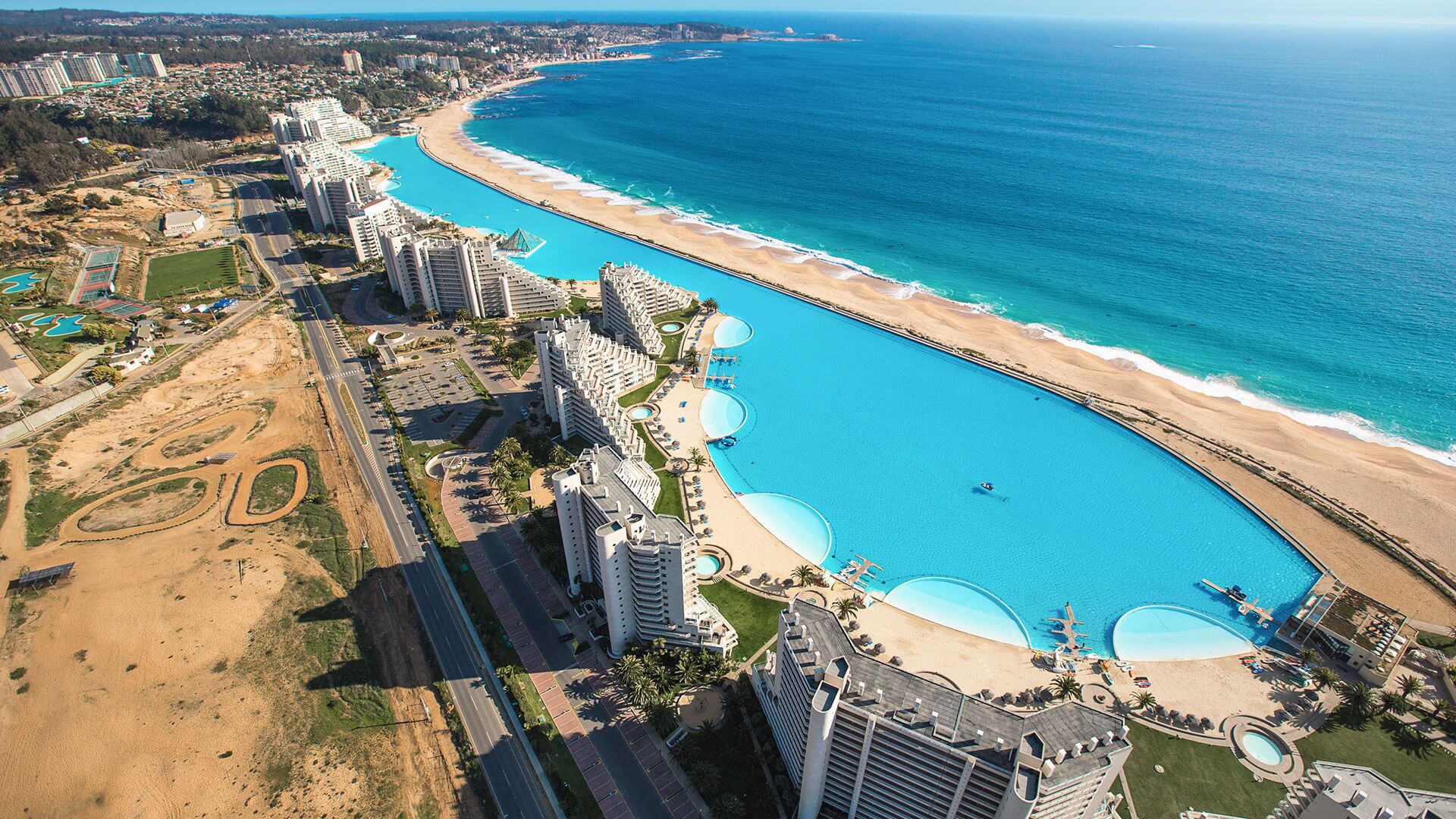
Meanwhile, the San Alfonso del Mar lagoon, covering 19 acres and extending 1 kilometer in length, marked a milestone for Crystal Lagoons. It revolutionized the second-home tourism industry in Chile by providing a safe environment for swimming and water sports and spectacular views and recreational activities. Crystal Lagoons® patented technology was key to developing this lagoon, equivalent to 6,000 traditional swimming pools containing 250 million liters of seawater.

Since its inauguration, San Alfonso del Mar has established itself as one of the most successful projects worldwide and continues to attract the attention of international visitors and media.

El Observador

Outstanding news

Crystal Lagoons is transforming the U.S. real estate market. Here are the three most innovative projects (Epperson, Evermore, and Cotino) showcasing the ROI, sustainability, and impact of this disruptive technology.

In the world’s most competitive real estate market, the United States, differentiation is no longer optional; it’s a matter of survival. Master-planned community developers and hospitality projects are facing growing demand for unique, sustainable experiences that justify a premium price. In this context, the “standard amenity” (the clubhouse, the traditional pool, the golf course) has lost much of its pulling power.

Crystal Lagoons has burst onto the scene not only as an alternative but as a revolution. This patented technology, capable of bringing an idyllic beach lifestyle anywhere, even far from the coast, has become the “World’s Top Amenity,” generating an undeniable global impact.

Crystal Lagoons in the U.S.

The success of Crystal Lagoons in the United States has been meteoric, validating a business model that combines sustainable technological innovation with an unprecedented return on investment (ROI). Below are three projects that best illustrate how this technology is rewriting the rules of U.S. real estate development.

The Turquoise Revolution: Technology as a Business Driver

Before diving into the projects, it is essential to understand why they are effective. For the U.S. developers, focused on the bottom line and increasingly aware of ESG (Environmental, Social, and Governance) criteria, the value proposition is irresistible.

It’s not just about aesthetics; it’s about data-driven operational efficiency:

  • Water Sustainability: Crystal Lagoons® amenities can use any type of water (fresh, brackish, or saltwater) and consume up to 33 times less water than a golf course and 40% less water than a park of the same size.
  • Low Operating Cost (OpEx): Thanks to its ultrasound filtration system, the technology uses only 2% of the energy and up to 100 times fewer chemicals than conventional swimming pool filtration systems.

This technological foundation is what makes the following innovative megaprojects possible.

The three Game-Changing Projects in the U.S.

These developments have not only been commercial successes; they have also served as proof of concept for different business models (purely residential, large-scale hospitality, and branded mega-communities), demonstrating the versatility of Crystal Lagoons® technology.

Epperson (Wesley Chapel, Florida): The Pioneer that Validated the Residential Model

The Challenge: Located inland in the Tampa, Florida area, far from the state’s famous coastal beaches, developer Metro Development Group needed a radically differentiator to attract buyers to a landlocked location.

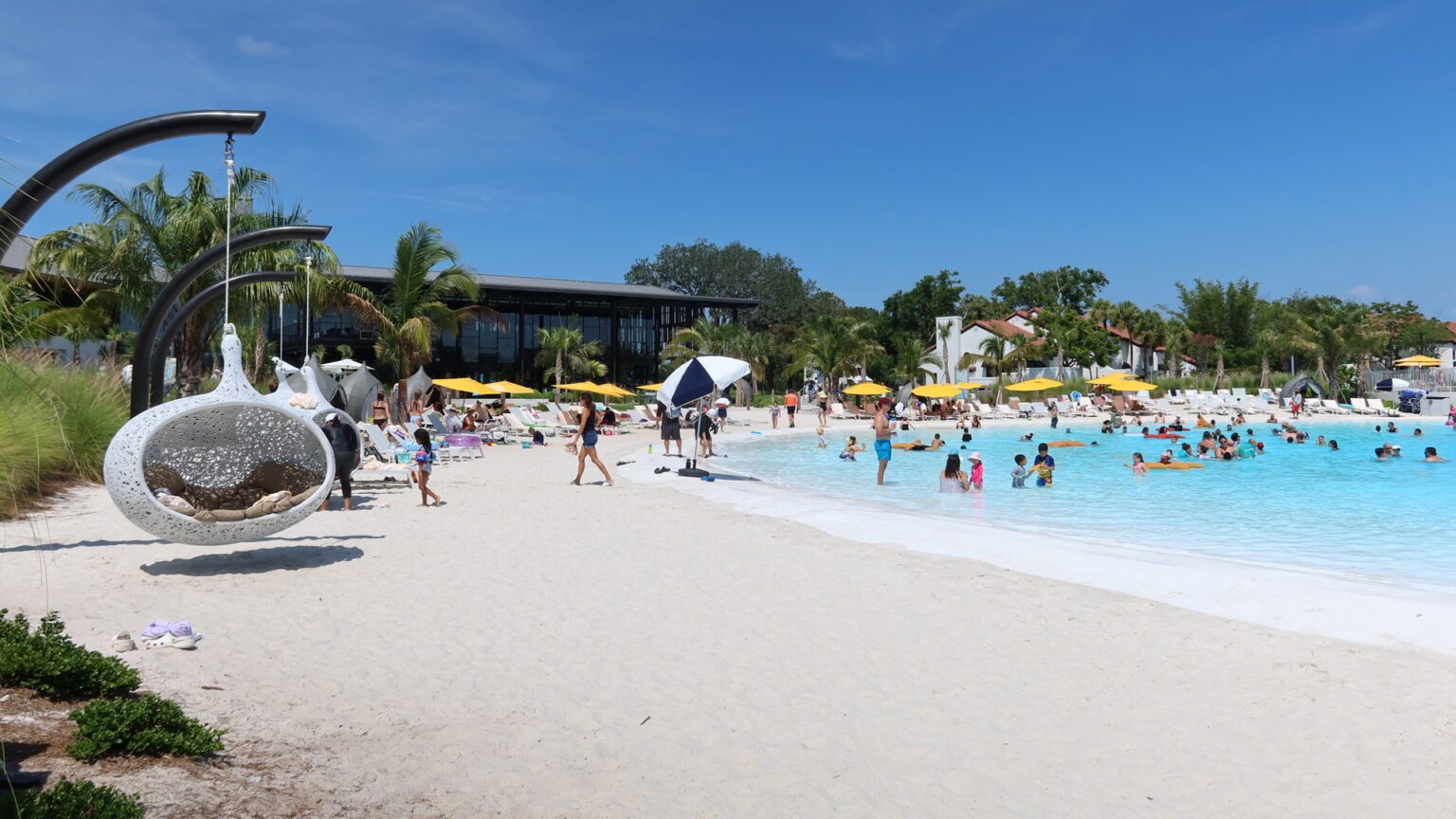
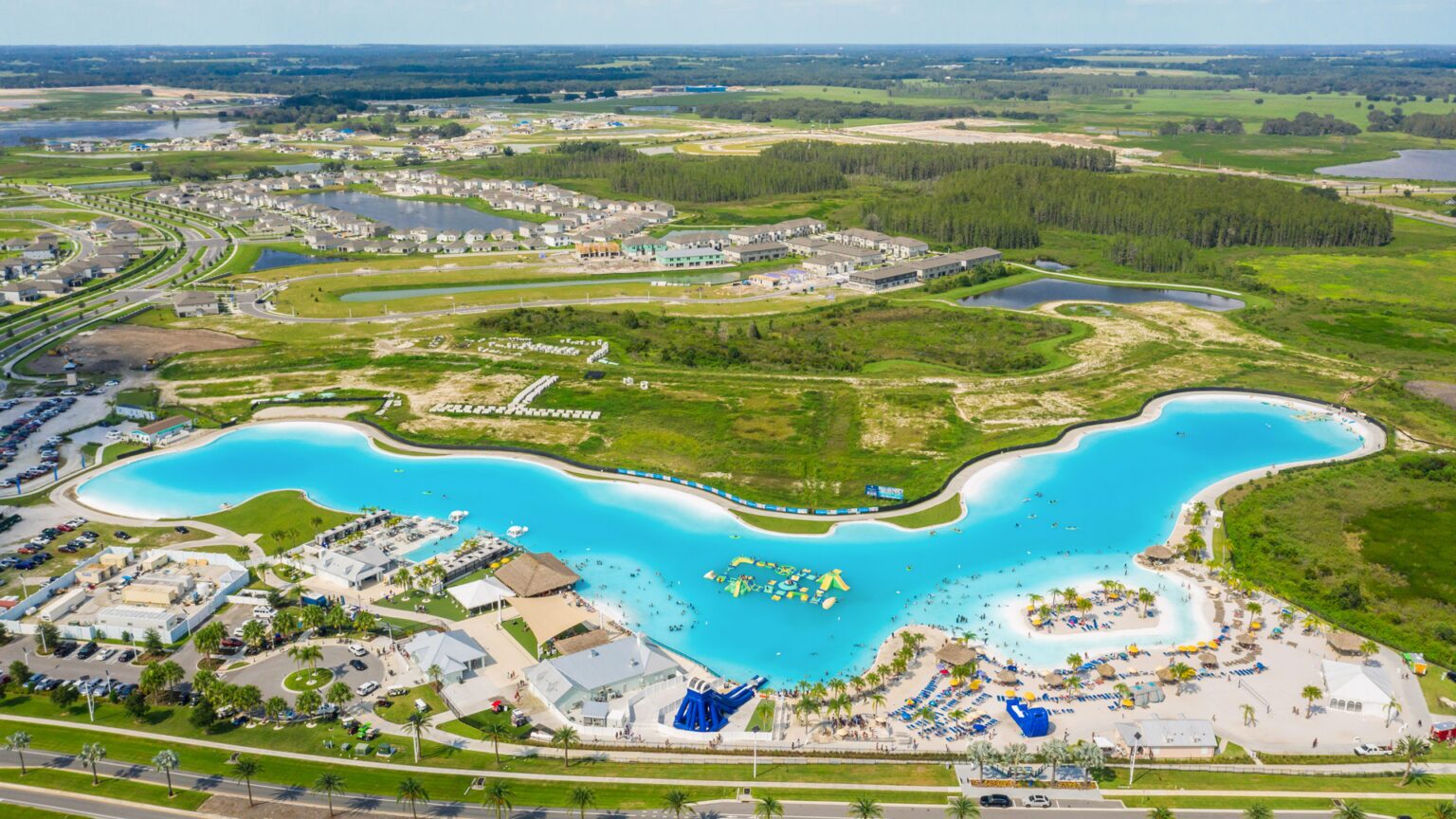
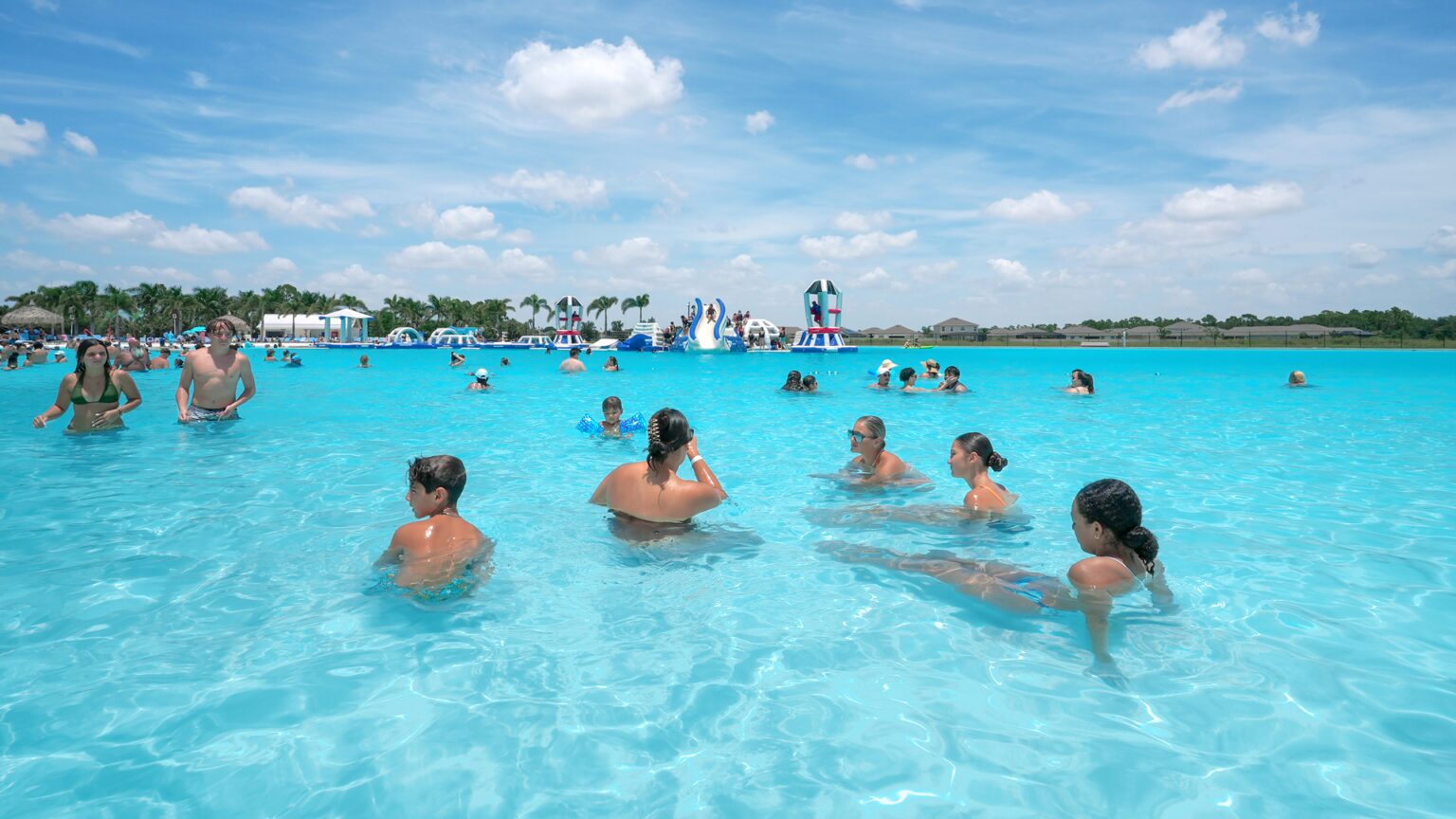
The Innovation: Epperson was the first project of Crystal Lagoons in the United States. The opening of its 7.36-acre lagoon instantly transformed a landlocked community into a premium beach destination.

The Business Impact: Epperson empirically proved the “lagoon effect” in the U.S. market. The results were immediate:

  • Record Sales Velocity: Before the lagoon, sales pace was in line with the local market. After the lagoon was announced, sales increased by +174%, and Epperson became the fastest-selling community in the Tampa area, dramatically outperforming the competition.
  • Premium pricing: The project was able to sustain above-market prices per square meter, demonstrating that buyers were willing to pay for the unique “beach living” lifestyle without being on the coast.
  • Evolution into a hybrid model: Part of the lagoon is open to the public, making it one of the first real estate developments to transition into Public Access Lagoons® model.
Epperson, Wesley Chapel, Florida

Evermore Orlando Resort (Orlando, Florida): Disruption in the World Capital of Tourism

The Challenge: Orlando is arguably the most saturated hospitality market in the world, dominated by theme parks and hundreds of resorts competing for families’ attention. How do you differentiate right next to Walt Disney World®?

The Innovation: Evermore Orlando Resort (built on the former Villas of Grand Cypress site) replaced golf course views with a monumental 8-acre Crystal Lagoons® amenity and 20 acres of white-sand beaches. It is the centerpiece of a US$1.5 billion luxury resort complex.

The Business Impact: This project redefines the concept of a “resort amenity” at massive scale.

  • Guest Attraction: It offers something even theme parks don’t have: an authentic Caribbean-style beach experience in the heart of Florida, with safe swimming and non-motorized water sports.
  • Longer Stays: By creating a destination within a destination, Evermore encourages guests to spend full days at the resort, thereby increasing on-site spending on food, beverages, and activities, rather than using the hotel solely as a place to sleep between park visits.
Evermore Orlando Resort, Orlando, Florida

Cotino™, a Storyliving by Disney Community (Rancho Mirage, California): The Fusion of Iconic Brands in the Desert

The Challenge: In the arid landscape of California’s Coachella Valley, Disney needed a centerpiece for its first branded residential community, “Storyliving by Disney.” The amenity not only had to be spectacular, but also viable in a desert environment with strict water regulations.

The Innovation: The choice was a nearly 24.67-acre Crystal Lagoons® amenity. This project is highly innovative because it represents the ultimate validation of the technology by one of the world’s most demanding entertainment and experience brands.

The Business Impact: Cotino demonstrates the technology’s ability to elevate global brands and perform in challenging environments.

  • Sustainability in the Desert: Choosing Crystal Lagoons® technology underscores its water efficiency. The lagoon will consume significantly less water than the golf courses that traditionally dominate the Palm Springs landscape.
  • The Heart of the “Story”: The lagoon isn’t just a body of water; it’s the main stage for the “Storyliving” experience, designed to host recreational activities, themed events, and a ticketed public-access area (Parr House), demonstrating the technology’s versatility to create immersive experiences that justify premium home pricing in a luxury branded community.
Cotino™, a Storyliving by Disney Community, Rancho Mirage, California

The Future of Real Estate Development Is Turquoise

The success of Epperson, Evermore, and now Cotino in the United States sends a clear message to the global industry: sustainable innovation is the path to profitability in modern real estate.

Crystal Lagoons® technology is no longer a bet; it has become a benchmark of excellence for developers, from local giants to global brands like Disney, who want to lead their markets by offering not just properties, but also transformative lifestyles that enhance the environment and captivate demand.

Original content

These are compact-sized lagoons that outperform traditional pools, generating greater value for real estate developers and hospitality projects with a sustainable, iconic, and highly profitable amenity.

In real estate and hospitality development, the choice of aquatic amenity is no longer just an architectural decision; it is a financial and strategic one. The difference between a traditional swimming pool and a Small Lagoons by Crystal Lagoonscan determine the project’s positioning, its sales velocity, its economic sustainability, and, ultimately, its return on investment.

Small Lagoons by Crystal Lagoons combine the “wow” effect of a Crystal Lagoons® amenity (turquoise waters, beaches, and a resort-like atmosphere) with an optimized format in terms of area, investment, and operation, ideal for projects that do not require a large-scale lagoon but do need a top-level, differentiating amenity.

What is a Small Lagoons by Crystal Lagoons™?

These compact-sized lagoons are smaller-scale crystalline lagoons, designed specifically for:

  • Medium- or high-density real estate projects (residential buildings, condominiums, mixed-use).
  • Hotels and boutique resorts that need a major differentiator without a large footprint.
  • Urban or second-row developments that require a Crystal Lagoons® amenity, but with more contained economic and financial indicators.

They retain all the attributes of Crystal Lagoons® technology:

  • Turquoise, crystalline water.
  • Closed-circuit operation with low water and energy consumption.
  • Versatility for swimming, non-motorized water sports, and recreational use.

But at a scale that facilitates its integration into more compact sites, with faster execution times and lower initial investment.

Small Lagoons vs. traditional pools: the comparison that matters to investors

  1. CapEx and OpEx: efficiency per square meter of amenity

At first glance, a traditional pool may seem like the “safe” option. However, when you analyze the value generated for every dollar invested, the equation changes.

Traditional pools

  • They are perceived as standardized: guests or residents consider them as something basic, not as a plus.
  • To create visual impact, they require greater depth and surface area, which means more structure, more concrete, and more equipment.
  • Filtration and chemical costs increase in direct proportion to the volume of water.

Small Lagoons by Crystal Lagoons

  • They offer a much greater visual and experiential impact thanks to their horizontal scale, turquoise color, and natural-lagoon design.
  • They allow for optimized water and energy use through Crystal Lagoons® technology, specifically engineered to reduce consumption and operating costs.
  • They generate a perception of a “premium” amenity, comparable to that of a luxury beachfront resort, even on inland or second-row sites.

In simple terms, a Small Lagoons by Crystal Lagoonsturns the “pool” budget into a flagship asset of the project, not just a checklist cost.

  1. Perception of value: from “having a pool” to “living in front of a lagoon”

From the end user’s perspective (unit buyer, guest, or tourist), the difference is radical:

  • A traditional swimming pool is an expected amenity.
  • A Small Lagoons by Crystal Lagoons is a lifestyle promise:
    • Your own beach within the project.
    • Space for recreational and family activities.
    • An iconic landscape visible from apartments, rooms, and common areas.

For the investor, this translates into:

  • Greater willingness to pay for units facing the lagoon versus those facing a standard pool.
  • Better commercial positioning on listing sites, with brokers, and in campaigns (it’s not the same to promote a “pool” as a “crystalline lagoon with beaches”).
  • Higher price per square meter for units with views of or close access to the Small Lagoon.
  1. Profitability in hospitality: revenue beyond the room

In hospitality projects, a Small Lagoons by Crystal Lagoons can become the centerpiece of an entire revenue ecosystem:

Direct impact

  • Higher ADR (Average Daily Rate): the hotel or resort can charge higher rates by offering a differentiated and visually striking experience.
  • Higher occupancy: a smaller-scale lagoon becomes a travel motivator in itself, not just an additional service.

Indirect impact

  • Increase in F&B revenue (restaurants, bars, and beach clubs by the lagoon).
  • Opportunity for waterfront events (weddings, brand launches, boutique concerts).
  • Possibility of special packages and experiences (sunset experiences, water sports, day passes).

While a traditional swimming pool rarely generates storytelling, Small Lagoons by Crystal Lagoonsfuels campaigns, content, and commercial partnerships.

  1. Sustainability and ESG: a key argument for banks and funds

ESG criteria have become a decisive factor in evaluating real estate and hospitality projects. Here, Small Lagoons by Crystal Lagoons offer clear advantages over many large-scale traditional pools:

  • Closed-circuit operation, with replacement only of the water lost through evaporation.
  • Possibility of using fresh, salt, or brackish water, avoiding competition with potable water resources, which is especially relevant in areas of water stress.
  • Treatment and filtration technology designed to reduce energy and chemical use compared to conventional systems.

For the institutional investor or financing bank, this strengthens the project as:

  • More environmentally responsible assets, with a stronger ESG narrative.
  • Projects with long-term amenities that are less exposed to regulatory or social scrutiny.

For the institutional investor or financing bank, this strengthens the project as:

When does a Small Lagoons by Crystal Lagoons™ make more sense than a traditional swimming pool?

These smaller lagoons are especially recommended when the investor is looking to:

In real estate developments

  • Differentiate a condominium or residential building in saturated markets.
  • Increase land value in inland urban plots or in second-row beachfront sites.
  • Create a premium amenity in mixed-use projects (retail + residential + offices).

In hospitality projects

  • Elevate a hotel or resort into a destination category without relying on a prime beachfront location.
  • Renovate an existing asset by replacing an unappealing traditional pool with a high-impact Small Lagoons by Crystal Lagoons
  • Reposition a hotel as a regional benchmark for innovation and vacation experience.

Small Lagoons by Crystal Lagoons™: Maximum return per cubic meter of water

In a context where every CapEx decision must justify its impact on sales, rates, occupancy, and resale value, Small Lagoons by Crystal Lagoons offer investors something a traditional swimming pool can hardly deliver:

  • A true market differentiator.
  • An iconic amenity that enhances the project’s positioning.
  • A catalyst that accelerates the project’s sales velocity.
  • The justification for a price premium per square meter.
  • An asset aligned with demand for high-end vacation experiences, as well as sustainability and ESG criteria.

In today’s market, true innovation isn’t about building bigger; it’s about building smarter. Small Lagoons by Crystal Lagoons represent that applied intelligence, delivering a high–value-added real estate investment that combines luxury, sustainability, and profitability at any scale.

Original content

More than a world record: How the project that “seemed impossible” validated a business model that is now redefining global real estate development.

For real estate developers and leaders in the hospitality industry, innovation is not just a buzzword; it is the difference between a project that stalls and one that redefines the market. In the modern history of real estate amenities, there is a clear “before and after” marked by a specific turning point: the inauguration of the crystalline lagoon at San Alfonso del Mar in Chile.

Located in Algarrobo, about 90 km from Santiago, Chile, this second-home complex was built around an approximately 20-acre crystalline lagoon powered by Crystal Lagoons® patented technology. From that point on, the paradigm changed forever. San Alfonso del Mar was not just the first large-scale project; it was the ultimate proof of concept, the living laboratory that demonstrated to the financial and real estate world that the “lagoon effect” was real, profitable, and sustainable.

San Alfonso del Mar: the lagoon that changed the amenities industry

Before San Alfonso del Mar, the idea of maintaining a crystalline body of water, even of limited size, was economically unfeasible. The innovation developed by Fernando Fischmann made it possible to create and operate monumental lagoons with low water, energy, and chemical consumption, opening up an entirely new amenity category.

Today, that first lagoon triggered an expansion to more than 1,000 projects in different stages of development and negotiation across over 60 countries, consolidating Crystal Lagoons as a global benchmark.

The 5 key milestones of the San Alfonso del Mar lagoon

Milestone 1: The first crystalline lagoon with Crystal Lagoons® technology

San Alfonso del Mar was the world’s first project to incorporate Crystal Lagoons® technology to create a large lagoon with turquoise waters and high transparency next to the Pacific Ocean.

For developers, this meant something unprecedented:

  • Testing, at real scale, a technology that made it possible to build lagoons of virtually unlimited size.
  • Transforming a traditional coastal site into a second-home resort with controlled and safe “beach life.”

This first pilot became the “before and after” for the company and for the entire aquatic amenities market.

Milestone 2: Guinness World Record and unprecedented scale

In 2007, the San Alfonso del Mar lagoon was awarded the Guinness World Record as the world’s largest crystalline lagoon/pool, thanks to its dimensions:

  • More than 1,013 meters in length.
  • Approximately 20 acres of surface area.
  • 250 million liters of seawater.

Although Citystars Sharm El Sheikh in Egypt later surpassed it, the symbolic impact of the record remains: it proved that Crystal Lagoons® technology could successfully operate at scales that were previously considered impossible.

For the positioning of real estate and hospitality projects, this record meant:

  • Turning the amenity into global news.
  • Associating the development with a worldwide milestone, raising its perceived value and tourist appeal.

Milestone 3: From pilot to one of the most successful second-home resorts in the region

Originally, San Alfonso del Mar was conceived for around 400 apartments. The success of the crystalline lagoon led the project to grow to approximately 1,400 units, all with views of the ocean and the lagoon.

The lagoon:

  • Transformed Algarrobo into one of Chile’s most successful beach resorts.
  • Positioned the complex as the most successful second-home resort in the region, doubling the initial sales prices.

For a developer, this milestone demonstrates that a crystalline lagoon can:

  • Accelerate the sales velocity.
  • Justify higher prices per square meter.
  • Extend the high season and overall occupancy.

Milestone 4: A global media icon that positioned the brand

More than two decades after its inauguration, San Alfonso del Mar continues to appear in international media, rankings, and lists of “places you must see at least once in your life.”

Media outlets from different countries have described it as:

  • “A portion of ocean encapsulated” or “the most impressive swimming pool in the world.”

This media magnetism turned the lagoon into:

  • The global calling card for Crystal Lagoons® technology.
  • A case study in organic marketing for the company and for the resort itself.

For developers and hospitality operators, this translates into:

  • Global reach without an equivalent additional investment in media.
  • An amenity that generates constant organic content (photos, videos, social media) created by the visitors themselves.

Milestone 5: Platform for global expansion and model for new developments

San Alfonso del Mar was not just a one-off success: it became the reference model that allowed Crystal Lagoons to scale its business to more than 1,000 projects in different stages across over 60 countries, from the Middle East to the United States, Asia, and Europe.

From this project onward, the technology was applied to:

  • Residential and second-home developments.
  • Luxury resorts and hotels.
  • Public Access Lagoons® projects, also known as PAL® developments, a public-access model that opens up new revenue streams through ticketing, events, dining, and retail.

For investors and developers, the strategic message is clear:

  • San Alfonso del Mar served as a successful “prototype,” proving the technical, economic, and commercial viability of the technology.
  • This success story now supports large-scale projects around the world, reducing the perceived risk for banks, funds, and hotel chains.

The lagoon that opened a new chapter for resorts and amenity-driven developments

San Alfonso del Mar proved that a large-scale crystalline lagoon can:

  • Change the destiny of a project and an entire city.
  • Generate added value, faster sales velocity, and global positioning.
  • Be the starting point for a scalable, sustainable, and highly profitable technology for real estate and hospitality developments.

For developers, the question is no longer whether a Crystal Lagoons® amenity works, but how to replicate the “San Alfonso del Mar effect” in their next project and turn an amenity into the true value driver of the master plan.

Original content.