Francisco Matte, regional director of Crystal Lagoons: “PAL™ project to bring beach life to Madrid”

Although Madrid, the second most populous city in the European Union, is recognized as a major tourist hub for its diverse gastronomic and cultural heritage, the city has no beach life. That until now, because on the outskirts of that city, Crystal Lagoons will build Alovera Beach, its first Public Access Lagoons™ project on the Iberian Peninsula. Elsewhere in Europe the company is already developing PAL™ projects in the Czech Republic, Poland, Romania, Hungary and Turkey, as well as having already developed two real estate complexes in Spain (Costa del Sol and Murcia).

What are the main characteristics of this iconic project?

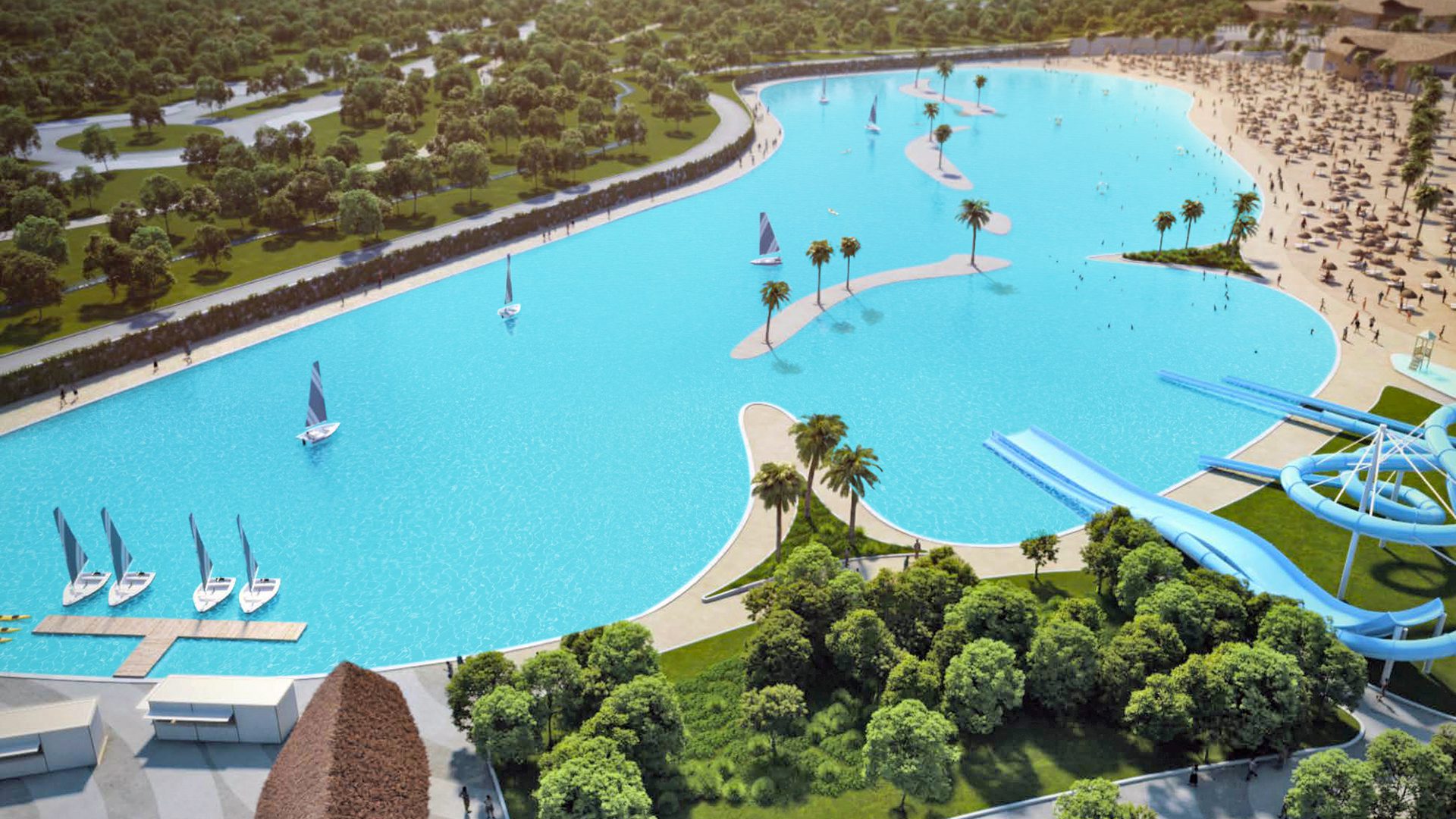
Alovera Beach will be the largest artificial beach in Europe, located in a Mediterranean urban area less than 40 minutes from the center of Madrid. The centerpiece of this resort will be a 2.1-hectare turquoise lagoon that will be open to the general public for the price of an entrance fee.

What benefits will this new complex bring to the region?

The project is an innovative concept, which will transform the municipality of Alovera and boost tourism in the Guadalajara area, positioning itself on the European map of technology, innovation and sustainability and as a unique reference point in outdoor water sports. The complex will be open all year round and expects to receive around 350,000 visitors annually.

The project, which will be developed by Crystal Lagoons in partnership with Grupo Rayet, will become a model for urban regeneration that will change the local landscape in a revolutionary way, have a high social impact and generate more than 330 direct and indirect jobs.

How will local residents benefit with the project?

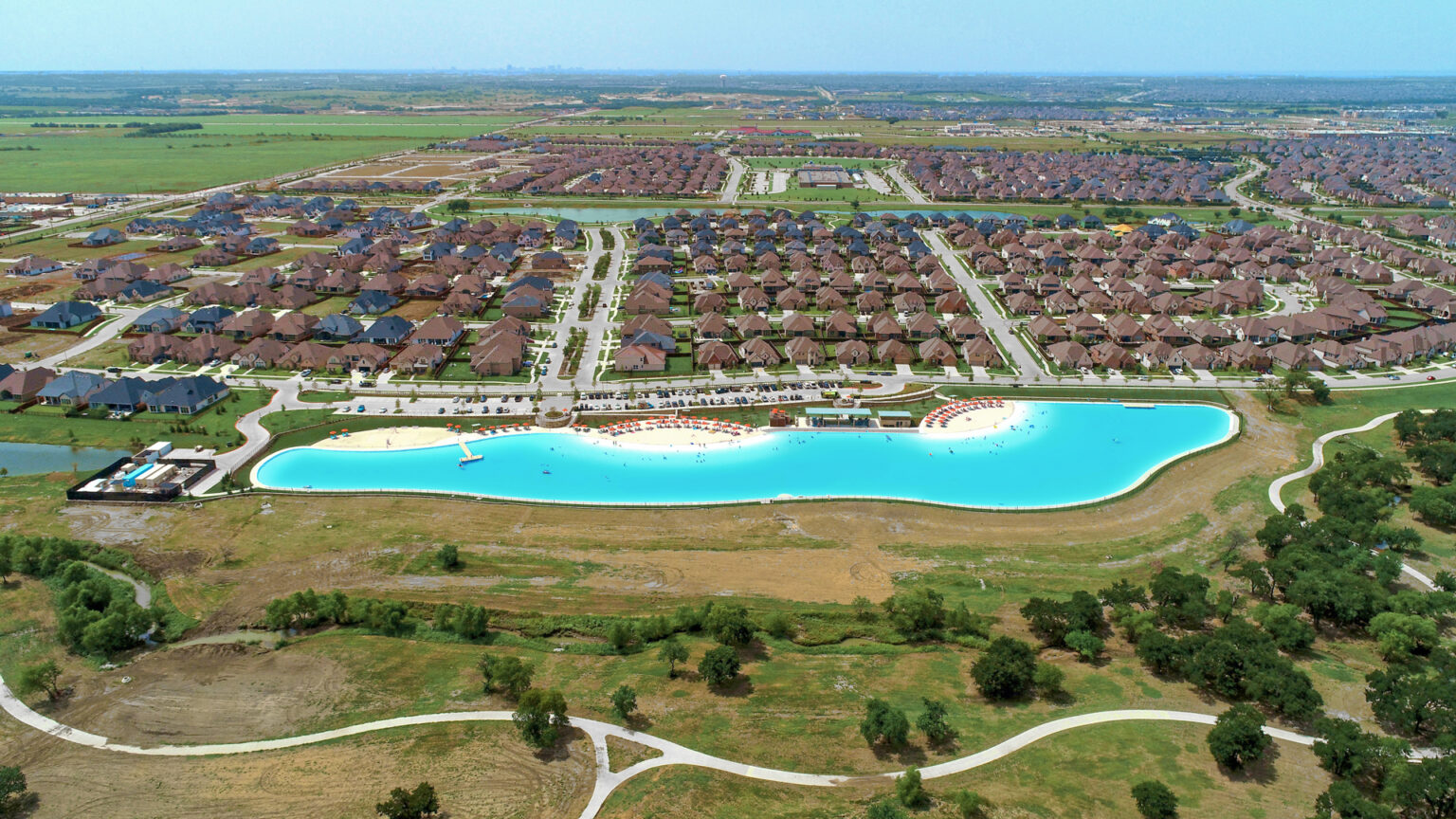
Public Access Lagoons™ projects, also known as PAL™ developments, drastically change people’s lifestyles. They bring beach life and water sports possible in a city context, making going to the beach as close and as normal as going to the local park is today.

The body of water will be surrounded by an extensive, 1.6-hectare, white sandy beach and include sports facilities, a water park with slides and children’s pools, a water sports school for kayaking and paddle boarding and gastronomic services.

How do you address the current need to be a sustainable amenity?

Like all of Crystal Lagoons projects, the Alovera Beach lagoon will include the multinational’s sustainable technology, which allows the use of any type of water, consumes 30 times less water than a golf course and only half that of a park of the same size. Its filtration system uses only 2% of the energy of a conventional system and up to 100 times less chemicals than a swimming pool.

What are the main projects of Crystal Lagoons in Spain and Europe?

Alovera is the firm’s third project in Spain, which include the Alcazaba Lagoon (Costa del Sol) and Santa Rosalía (Murcia) residential developments. Meanwhile, elsewhere in Europe, Crystal Lagoons has just signed a master agreement to develop six PAL™ complexes in Prague, Warsaw, Budapest and Bucharest. The company also has a project in Turkey and is in advanced negotiations for projects in Italy (Milan, Verona, Rome and Naples), Portugal, Greece and Georgia.

Original content

Outstanding news

  • Public Access Lagoons® projects are redefining urban life by bringing turquoise-water beaches to the heart of cities, creating new hubs for entertainment, wellness, and real estate value.

Around 200 years ago, at the height of the Industrial Revolution, England made a decision that would change urban development forever: bringing a piece of the forest into the heart of London through the creation of large public parks. That innovation not only transformed the gray landscape shaped by factories; it also democratized access to nature and dramatically improved citizens’ quality of life.

Today, major cities are facing a transformation of similar magnitude. The accelerated pace of urban life and the environmental crisis demand an evolution in the way public spaces are planned.

The answer to this global challenge does not come in the form of traditional green spaces, but through crystalline water and white-sand beaches. It is the boom of urban beachfront living, driven by the most disruptive business model of Crystal Lagoons® technology: Public Access Lagoons® developments, also known as PAL® projects. These complexes open up a unique opportunity:

  • Create memorable destinations within the city.
  • Increase the appeal of urban or suburban land.
  • Incorporate an anchor amenity capable of generating a constant flow of visitors.
  • Differentiate real estate projects from the competition.
  • Activate new revenue streams year-round.

Beach life within everyone’s reach

One of the greatest attributes of Public Access Lagoons® projects is their ability to democratize access to world-class recreational spaces. Unlike private amenities, this model allows anyone to access these spaces by purchasing a ticket and enjoy experiences traditionally associated with resorts or tourist destinations.

These projects can integrate multiple activities in a single place:

  • Swimming and water sports.
  • Kayaking, paddleboarding, and recreational activities.
  • White-sand beaches.
  • Restaurants, bars, and terraces.
  • Events, concerts, and brand experiences.
  • Family activities and wellness programs.
  • Venues for weddings, fairs, and corporate gatherings.

Thus, the lagoon becomes a hub for social gathering, entertainment, and wellness.

Fewer trips, lower carbon footprint

The impact is not only urban or real estate-related. It is also environmental. By bringing the beach experience closer to cities, PAL® projects reduce the need for long-distance travel to coastal destinations.

This model can generate a reduction of more than 40% in the carbon footprint associated with tourism and transportation to beaches, equivalent to nearly 14 million tons of CO₂.

For developers and investors, this makes PAL® projects an alternative aligned with the new demands for:

  • Sustainability.
  • Urban efficiency.
  • Reduction of travel distances.
  • Environmental responsibility.
  • Creation of social and territorial value.

From vacant land to entertainment hubs

Another strategic advantage of the model is its ability to transform underutilized spaces. Vacant land, unused shopping malls, amusement parks, racetracks, golf courses, casinos, zoos, aquariums, and even inactive urban areas can be repurposed into vibrant entertainment destinations.

For real estate developers, this opens up a new asset category: projects capable of generating traffic, recurring revenue, and value for the surrounding area.

The lagoon functions as both a visual and commercial anchor, while the ecosystem surrounding it activates multiple revenue streams:

  • Ticket sales.
  • Food and beverage.
  • Events.
  • Space rentals.
  • Water sports.
  • Retail.
  • Naming rights.
  • Memberships and special programs.

An internationally recognized model

PAL® projects have also received international recognition for their environmental and urban contribution. Among them are the Green World Awards and the Green World Champion of Champions, which recognized the potential of these developments to reduce the carbon footprint and promote a more sustainable entertainment model.

These awards reinforce a key idea: this is not just about creating artificial beaches. It is about developing high-impact urban infrastructure capable of improving quality of life, activating local economies, and offering memorable experiences year-round.

An opportunity for real estate developers

In an increasingly competitive market, developers need value propositions that combine differentiation, profitability, and purpose. Public Access Lagoons® projects meet this demand with a model that transforms the relationship between the city, water, and entertainment.

Urban beachfront living is no longer a distant aspiration. It is a new way of designing destinations within the city, bringing water closer to millions of people and creating value for communities, investors, and territories.

Powered by Crystal Lagoons® technology, PAL® projects are setting the new standard for real estate amenities: accessible, sustainable, memorable, and commercially powerful spaces.

The beach no longer has to be far away. Now it can be at the heart of the city.

Original content.

  • From 5,400 sq ft to 1 acre: Small Lagoons by Crystal Lagoons™ is emerging as the new amenity trend for urban, multifamily, and boutique projects, offering a more efficient value proposition and leaving commercial swimming pools as a thing of the past.

Leading international media outlets are highlighting a groundbreaking concept in architecture and urban development: Small Lagoons by Crystal Lagoons™. This time, it was Clarín, one of Argentina’s most important newspapers, that featured it as a new trend in the real estate market, with the conversation already amplified through republished articles on other platforms.

However, the attention is not limited to a single country: the smallest format of these crystalline lagoons has already generated significant media reach, with coverage across multiple outlets in the U.S., Germany, the United Kingdom, France, Spain, Latin America, Indonesia, Vietnam, and other markets.

Why they are becoming a trend: when the amenity stops being “decoration”

The logic behind the editorial interest is clear: the traditional swimming pool has become commoditized. When “everyone offers the same thing,” the amenity stops moving the needle in terms of sales, pricing, and preference. In this context, Clarín describes Small Lagoons by Crystal Lagoons™ as an alternative to traditional swimming pools and conventional amenities, precisely because of its ability to create a beach-like experience in compact spaces.

For real estate developers, this translates into a practical advantage: an amenity that creates identity, strengthens the commercial narrative, and helps sustain the project’s perceived value in competitive markets.

What is Small Lagoons by Crystal Lagoons™ (and what sizes are available)?

Small Lagoons by Crystal Lagoons™ is a sustainable, patent-protected product designed to allow projects of different scales to incorporate a beach lifestyle experience. The proposal is based on standardized formats that accelerate design and implementation.

The standard sizes available for Small Lagoons are: 5,400 sq ft, 0.25 acres, 0.5 acres, 0.75 acres, and 1 acre. 

The technological difference compared to a commercial swimming pool

Part of the “why” (and of the media interest) lies in the construction and operational paradigm shift behind these smaller lagoons. Instead of following the traditional logic of painted concrete + large filtration systems + machine rooms, Small Lagoons by Crystal Lagoons™ incorporates:

  • A liner system, eliminating the need for repainting and concrete repairs.
  • Ultrasonic flocculation, reducing the infrastructure and energy associated with filtration.
  • The 5,400 sq ft model, positioned as a replacement for traditional commercial swimming pools.

Benefits for developers: commercial impact + efficiency per square foot

The advantage of this multinational innovation company’s latest model is not merely aesthetic. The proposal is designed to maximize the return on common areas, turning the heart of the project into a destination amenity, an anchor that drives foot traffic, encourages visitors to linger, and sparks conversation.

Key benefits for real estate:

  • Construction and maintenance costs: significantly lower construction cost of a swimming pool of the same size.
  • Less infrastructure complexity thanks to its construction and operational logic.
  • More than swimming: a beach-like experience, recreational uses, and social activation. 

In marketing terms, the value is usually concentrated in three “levers”:

  1. Immediate differentiation through visual iconicity: turquoise waters + white sand.
  2. Stronger commercial storytelling: selling a “lifestyle,” not just amenities.
  3. Versatility across project types: urban, multifamily, boutique, mixed-use, and hospitality.

Sustainability and efficiency: a key factor in permitting, CAPEX, and ESG

Crystal Lagoons® technology is a sustainable solution thanks to its resource efficiency. It requires up to 50 times less energy than traditional filtration systems. It also consumes up to 100 times fewer chemicals than conventional swimming pools, 33 times less water than a golf course, and 40% less water than a park of the same size.

This is complemented by a relevant point for developers’ risk management: the company has a portfolio of more than 2,200 patents in 135 countries, supporting standardization, know-how, and technological protection.

Argentina: from mega-projects to compact formats

The coverage in Argentina provides context for two simultaneous movements:

  • The growth of the compact format (5,400 sq ft–1 acre) as a trend.
  • The continuity of larger-scale lagoon projects in gated communities and residential developments, with cases mentioned in the local market such as Terralagos, Lagoon Pilar, Openn Pilar and Remeros Beach.

A new standard in amenities

Market demands have changed, and consumers are unquestionably prioritizing developments that offer immersive, safe, and environmentally responsible experiences. For real estate developers focused on high profitability and innovation, the size options ranging from 5,400 sq ft to 1 acre represent more than just an aesthetic upgrade; they are a proven business strategy that redefines the standard of urban and suburban living worldwide.

Clarín

  • From residential communities to luxury resorts and shopping centers transformed into urban destinations, Crystal Lagoons consolidates its impact in Latin America with projects that combine innovation, sustainability, and profitability for real estate developers.

Latin America has become one of the most dynamic markets for Crystal Lagoons, driven by real estate developers seeking to differentiate their projects with sustainable, iconic amenities capable of generating measurable commercial value. In an industry where simply building square meters is no longer enough, the true competitive advantage lies in creating destinations.

Crystal Lagoons® technology addresses precisely that need: it enables the development of large-scale crystalline lagoons suitable for swimming and water sports, with low water, energy, and chemical consumption. This amenity uses only 2% of the energy required by conventional swimming pool filtration systems, requires up to 100 times fewer chemicals, is filled only once, and operates in a closed circuit. In addition, it uses 33 times less water than an 18-hole golf course, 40% less water than a park of the same size, and can use any type of water: fresh, salt, or brackish.

For real estate and hospitality developers, this changes the equation. A crystalline lagoon no longer functions merely as a landscape feature: it becomes an anchor amenity capable of increasing property value, accelerating sales, improving occupancy, and positioning a project as a destination.

Why Latin America Is Key to the Growth of Crystal Lagoons

The impact of Crystal Lagoons in Latin America reflects a global trend: consumers are seeking beach experiences, wellness, recreation, and social life, even in locations far from natural coastlines. At the same time, developers need solutions that combine differentiation, operational efficiency, and sustainability.

In this context, the region has brought together projects that showcase the technology’s versatility: from residential communities and luxury resorts to shopping centers transformed into urban entertainment destinations.

1. San Alfonso del Mar, Chile: The Project That Changed the History of Amenities

The First Major Laboratory for Real Estate Innovation

San Alfonso del Mar, located in Algarrobo, Chile, was the project that marked the beginning of a new category of amenities for real estate and hospitality developments. Opened in 2005, this residential complex features 11 buildings and 1,300 apartments facing the ocean and the lagoon. Its centerpiece is a 19.64-acre lagoon, approximately 0.61 miles long, containing 66 million gallots of seawater.

What made this case innovative was not only its scale. San Alfonso del Mar demonstrated that it was possible to create a safe and controlled beach experience in an area where the ocean has strong currents and low temperatures, conditions that make swimming and water sports difficult.

Why It Is Relevant for Real Estate Developers

San Alfonso del Mar proved, at real scale, that a crystalline lagoon could become the center of gravity of a master plan. It was the proof of concept that demonstrated that the “lagoon effect” was real, profitable, and sustainable.

For the industry, this project delivered three key lessons:

  • An iconic amenity can transform the entire positioning of a development.
  • A beach experience can be created even where natural conditions do not allow it.
  • Sustainable innovation can become a driver of property value, sales, and media visibility.

2. AVA Resort Cancún, Mexico: Luxury Hospitality with Sustainable Technology

A New Way to Elevate the Hotel Experience

AVA Resort Cancún represents the application of the multinational water innovation company’s technology to the large-scale hospitality segment. Located in Cancún, Mexico, the resort features 1,622 oceanfront rooms and suites, with a 2.89-acre turquoise lagoon powered by Crystal Lagoons® technology at its heart.

This case is especially relevant because it demonstrates how a crystalline lagoon can be integrated into the architectural and operational design of a resort, not only as a visual attraction, but as a central guest experience. The lagoon enables activities such as swimming and water sports in a safe, family-friendly, and controlled environment.

The Value for Hotel Operators and Developers

In the hospitality industry, differentiation increasingly depends on memorable experiences. AVA Resort Cancún shows how Crystal Lagoons can transform a hotel into a destination in itself, increasing the project’s appeal and creating a stronger value proposition compared to other all-inclusive resorts.

For developers and operators, the model offers clear advantages:

  • Greater differentiation from traditional resorts.
  • A controlled, safe, and visually iconic aquatic experience.
  • Potential to increase length of stay, satisfaction, and perceived value.
  • Integration of sustainability as part of luxury positioning.

3. Kristal Mall Cartagena, Colombia: The Country’s First “Shopping Resort”

When Retail Becomes Urban Entertainment

Kristal Mall, in Cartagena de Indias, is one of the most innovative Crystal Lagoons projects in Latin America because it brings the technology into the world of retail and public entertainment. The project features a 5.43-acre crystalline lagoon under the Public Access Lagoons® model, also known as PAL® developments.

The initiative seeks to transform the largest shopping center in the Colombian Caribbean into the country’s first “Shopping Resort,” combining retail, leisure, gastronomy, events, and beach life in one place.

A New Revenue Model for Developers

The strategic value of Kristal Mall lies in the fact that it expands Crystal Lagoons’ reach beyond traditional residential or tourism projects. Under the PAL® model, anyone can access the beach experience through ticketed entry, memberships, events, gastronomy, retail, concerts, fairs, and recreational activities.

For real estate developers, this model opens new opportunities:

  • Transforms commercial spaces into experiential destinations.
  • Generates recurring traffic and longer dwell time.
  • Diversifies revenue streams.
  • Increases appeal for brands, operators, and visitors.
  • Repositions urban assets through sustainable entertainment.

What These Projects Teach the Real Estate Industry

San Alfonso del Mar, AVA Resort Cancún, and Kristal Mall Cartagena show three different paths for the same innovation:

  • Residential real estate: turning a community into a high-value destination.
  • Hospitality: elevating the guest experience through an iconic amenity.
  • Public entertainment and retail: transforming urban assets into centers of experience and consumption.

In all cases, Crystal Lagoons serves as a differentiation platform, capable of changing perceptions of the project, improving its positioning, and generating new business opportunities.

Latin America as a Global Showcase for Sustainable Innovation

The impact of Crystal Lagoons in Latin America confirms a decisive trend for the future of real estate: the most competitive developments will be those capable of combining experience, profitability, and sustainability.

For real estate developers, the lesson is clear. Innovation is no longer just about building more or designing better. It is about creating memorable, efficient, and commercially powerful destinations. In this transformation, Crystal Lagoons is positioned as a technology capable of redefining the value of real estate, tourism, hospitality, and public entertainment projects in Latin America and around the world.

Original Content